A Transformative Shift: Ukraine’s War and the Rise of Robotics
The conflict in Ukraine, now in its prolonged and intense phase, has radically transformed the landscape of warfare. As the war drags on, technology has emerged as a crucial ally, granting Ukraine a strategic edge even amid dwindling manpower. On the front lines, robots are not only replacing traditional troops but also playing an increasingly pivotal role in the survival and operational efficiency of Ukrainian forces.
This conflict, often termed a "war of attrition," has seen deep strikes into Russian territory. What used to be a nightly torment felt only in Ukrainian cities has expanded its reach, unsettling even the Kremlin. Warfare has entered a brave new realm, characterized by the integration of drones and automated systems—a stark embodiment of the concept that survival breeds innovation.
Dubbed the "road of life," the challenges faced by Ukrainian forces are immense. Civilians and soldiers alike navigate this perilous path with heightened caution. Attack drones dominate the skies, and the simplest journeys become fraught with danger. Movement is safest by foot, as vehicles become prime targets for the enemy’s aerial arsenal. Combatants adapt by turning fibers of optic cables into lifelines, as these serve to connect drones to their controllers across vast distances, counteracting jamming attempts by Russian forces.
The battlefield has been irrevocably altered in just a year’s time. It is now a given that few dare to drive unless absolutely necessary; the risks associated with traversing the terrain have escalated dramatically. Where tanks once rolled freely, they now sit largely abandoned, replaced in function by increasingly sophisticated automated resupply systems.
Amid this dramatic shift, Ukrainian forces have developed strategies to counter drone threats. Networks designed to offer protection serve a critical role in maintaining some semblance of safety. The grim reality is that each mission taken carries the weight of countless unseen risks, as even the slightest error can lead to catastrophe.
Casualties on both sides have mounted alarmingly, with Ukrainian estimates suggesting staggering losses for Russian troops—around 35,000 dead and wounded monthly. This relentless attrition complicates the conflict, transforming logistical efforts into high-stakes missions. Resupply routes, once mundane, are now prime targets, necessitating fast, efficient, and automated operations to mitigate risk.
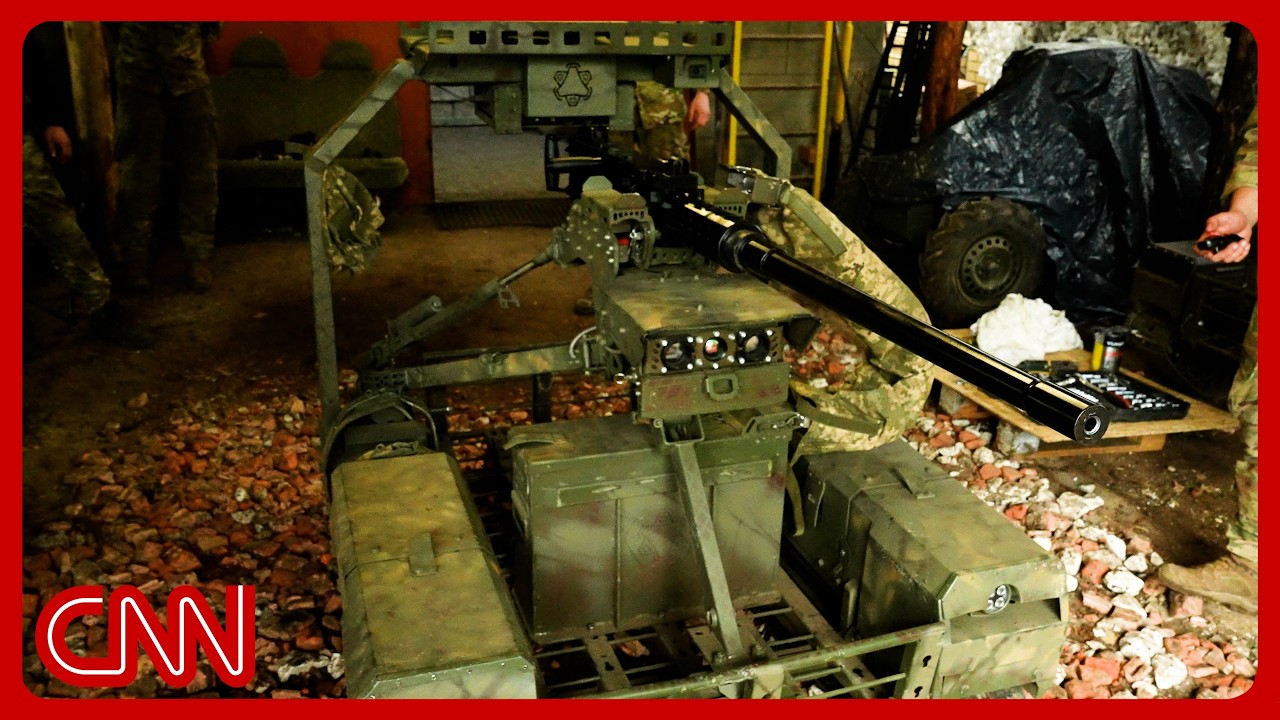
Automation is not merely a tool but a lifeline for Ukrainian forces. The effectiveness of ground attack robots highlights the ongoing revolution in military logistics. These machines now handle tasks that previously required hundreds of personnel, all while exposing their human counterparts to significantly less danger.
However, the human aspect of warfare remains indispensable. Soldiers who have endured nearly a year in the trenches talk of their tribulations—both physical and emotional. The mental toll is palpable; connections with loved ones fray amidst relentless combat.
Yet, even in this sobering context, the innovations do not stop. Ukrainian forces have turned their sights deep into Russian territory, capable of executing strikes against Russian military assets. A recent operation involved launching waves of drones designed to penetrate Russian airspace, overwhelming its defenses and causing embarrassment to Moscow. As advances in technology allow Ukraine to develop new capabilities, its military landscape shifts rapidly, challenging long-held preconceptions about warfare.
What was once sought-after military equipment is now increasingly being designed and built within Ukraine. These transformations layer complexity onto the conflict, as traditional military paradigms are upended by new technologies.
Indeed, Ukraine’s situation reflects a broader narrative about adaptation and resilience in the face of adversity. Where once it was dependent on external military support, Ukraine has evolved into an innovative force, capable of developing and deploying robotic systems to offset their manpower crisis.
In an era where speed and adaptability are paramount, Ukraine’s advancements may serve as a lesson for other nations grappling with similar challenges. The cycle of escalation—where each leap forward is quickly countered—illustrates the necessity of constant evolution in military strategy.
As the conflict continues, the stakes remain high. Each technological leap forward not only encapsulates Ukraine’s pursuit of survival but also paints a vivid picture of modern warfare’s future—characterized by machines and human ingenuity working concurrently to redefine the battlefield.