The Weight of Witnessing: A Reflection on Community and Justice
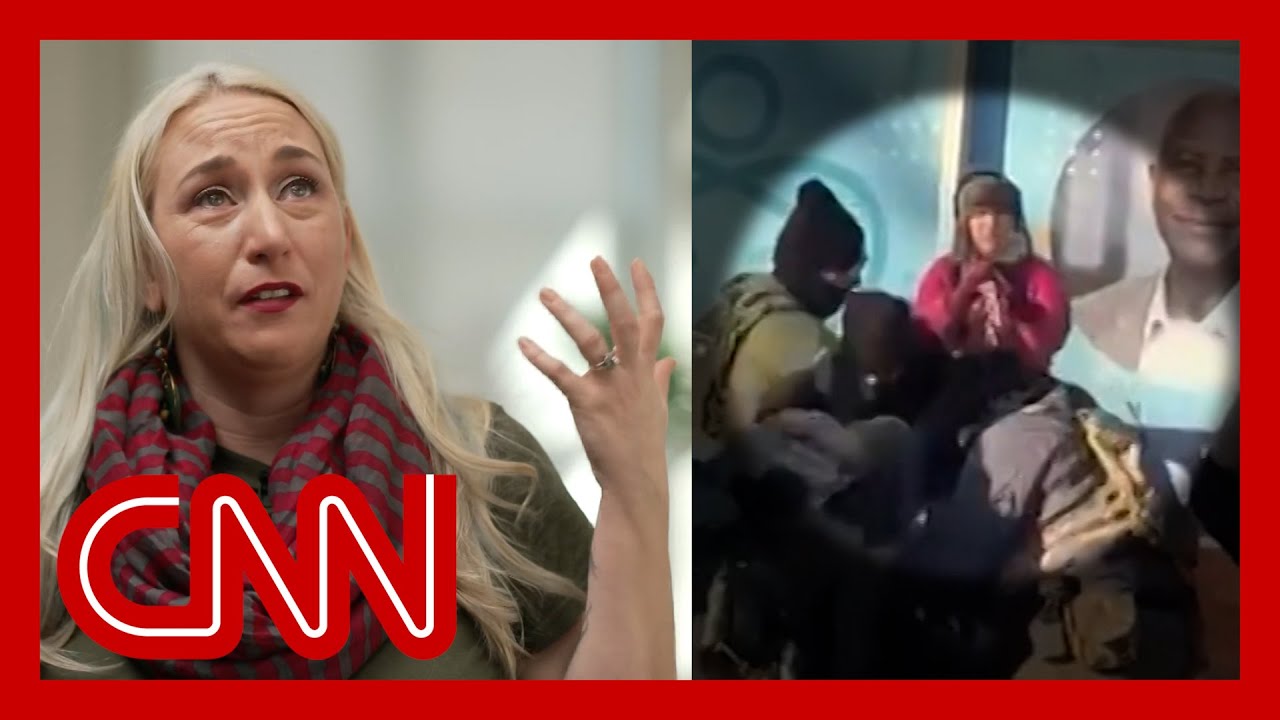
Stella Carlson’s experience during a recent tragedy in Minneapolis exemplifies the complex interplay of vulnerability and courage in the face of disturbing events. The children’s entertainer, known simply as "the woman in the pink coat," found herself at the center of a national story when she recorded the harrowing moments following the shooting of Alex Peretti by Department of Homeland Security (DHS) officers. Her account raises profound questions about community, accountability, and the very fabric of justice in America today.
Carlson’s video captured the aftermath of a shocking event—a life taken in broad daylight, an act that was not only a personal tragedy but also a community wound. As she watched the medical responders manipulate Peretti’s body, her disbelief turned into sorrow. It felt, she remarked, as though they were treating him like game rather than a human being—a macabre ritual that stripped away dignity in a moment of tragedy. “I knew he was gone,” she said, yet she stood firm, refusing to abandon the scene. “I was not going to leave Alex undocumented,” she asserted defiantly, emphasizing the moral imperative she felt to document the truth.
In today’s society, where media and technology are deeply embedded in daily life, the act of documenting such instances of violence has become an essential form of advocacy. Carlson’s decision to record the events reveals a stark reality: the need to ensure accountability in a system often designed to obscure truth. “This is not just about me,” she stated, framing her actions in the broader context of community responsibility. “I care about my community, my state, and my country.”
In the wake of the shooting, Carlson noted a distinct lack of engagement from the Minneapolis Police Department (MPD), with officers seemingly disengaged from the community’s pain. “You work for us,” she urged, reflecting a sentiment echoed by many who feel that police officers serve to protect their constituency but often fall short of that duty. The disconnection between law enforcement and the community has never been more palpable, and Carlson’s experience serves as a testament to the urgent need for reform.
While federal investigations are reportedly underway, Carlson has voiced skepticism about the intentions behind these efforts. “I do not have confidence in a federal investigation,” she stated bluntly, reflecting a pervasive distrust that has bubbled up in communities across the nation. This weariness is compounded by the feeling that those tasked with protecting the public often prioritize self-preservation over ensuring justice.
Carlson’s testimony is a call to action. She recognizes the inherent risks involved in speaking out, questioning whether her openness makes her a target. Yet, she remains resolute. “I hope that my coming forward allows others to do the same,” she reflected, recognizing that in sharing her story, she may inspire collective action. Her bravery resonates, serving as a reminder that engagement is more important than ever in the pursuit of justice.
The aftermath of violence generates a unique kind of fear, not just for individuals directly involved but for entire communities that bear witness. Carlson’s experience underscores the fragility of social trust and the dire need for empathetic leadership. As she articulated, “What can we do? What is in our constitutional rights that don’t seem to matter?”
This is a moment of reckoning for Minneapolis and communities across America. As the community grapples with these visceral memories, the onus falls on leaders and institutions to prioritize transparency, engage in meaningful dialogue, and ultimately share the truth.
In an environment where the narrative is often shaped by powerful institutions, ordinary citizens like Stella Carlson become vital players in confronting a narrative fraught with bias and misinformation. Through her lens, we are reminded of the importance of community solidarity, collective responsibility, and the ongoing fight for justice in an era characterized by its division.
The hope emerging from this ordeal is that through the courage of individuals like Carlson, a path toward healing and accountability can be forged—an indispensable step in building a more just society for all.