The Conflict in Ukraine: Four Years Later
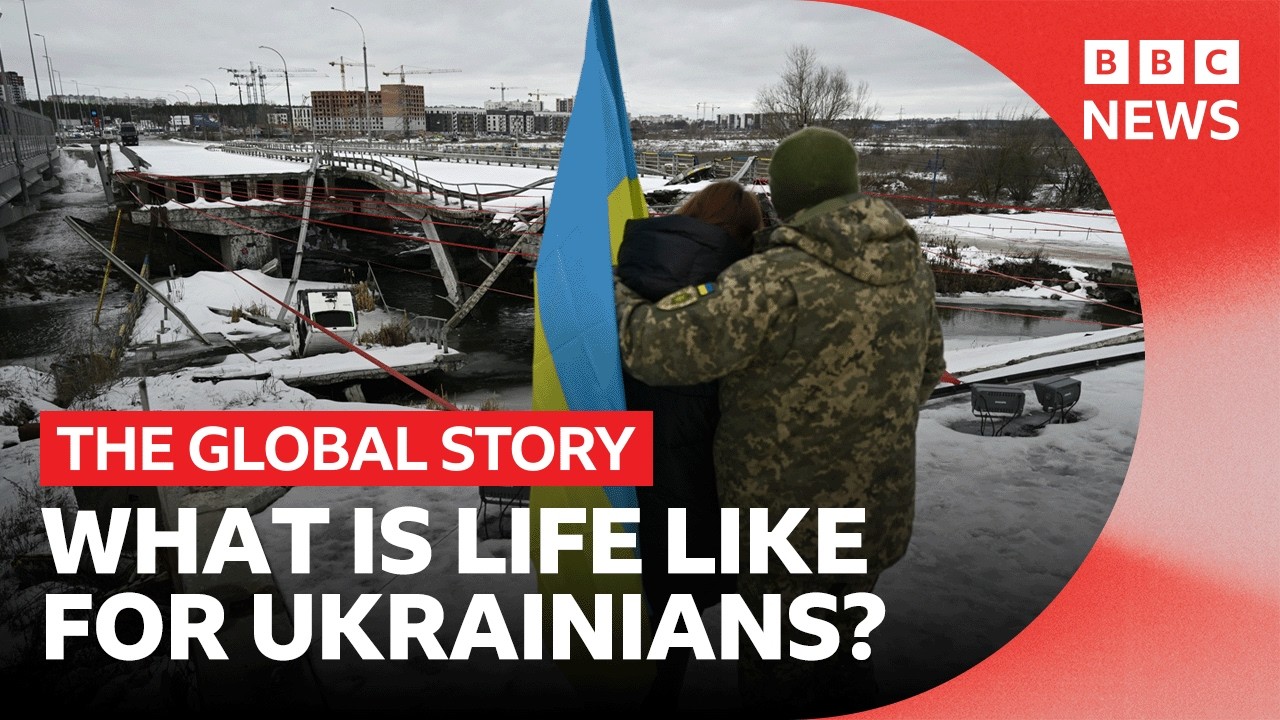
As the world reflects on the four years since Russia’s full-scale invasion of Ukraine, the scale of human loss is staggering. Estimates suggest Ukraine has suffered around 55,000 military deaths, while Russian casualties exceed 180,000. Civilian casualties are also distressingly high, with tens of thousands reportedly killed and millions displaced. This conflict has emerged as Europe’s most significant since World War II, marking a seismic shift in both regional and global geopolitics.
The BBC’s international editor, Jeremy Bowen, has spent considerable time on the ground in Ukraine, engaging with soldiers and civilians amid the ongoing turmoil. His recent travels began in Lviv, located in western Ukraine. "The journey from Poland to Lviv is necessary due to the war," Bowen noted, emphasizing the challenges faced in daily life. The stark reality of loss became palpable for Bowen as he visited a cemetery filled with flags marking the graves of countless soldiers. Most of those interred were military personnel, reflecting a nation mourning its fallen heroes.
In contrast, Bowen found himself in eastern Ukraine, particularly in regions like Donetsk—where the fiercest battles are still being waged. The landscape has transformed into a war zone, marked by netting installed to counter drone attacks. This simple yet effective defense mechanism involves high nets placed over vulnerable roads, designed to entangle drones equipped with explosives. Interestingly, much of this netting comes from repurposed fishing nets, donated by fishermen in Scotland and France. Such adaptive measures highlight the ingenuity and resilience of the Ukrainian people.
During his travels, Bowen met a diverse array of individuals, including a remarkable Christian minister named Oly, who runs a bakery in a frontline town. Despite significant destruction and danger, Oly’s bakery serves as a lifeline, producing 17,000 loaves of bread weekly. He delivers bread, often under perilous conditions, to outlying villages that have been largely abandoned. When asked about the ongoing demands from Russia for territorial concessions, Oly’s response was powerful: “Why should we just give it to him? Give it to this guy.” His conviction underscores the deep-rooted determination among Ukrainians to resist ceding any part of their homeland.
As the war drags on, Ukraine’s President Volodymyr Zelensky continues to engage with international leaders, striving for peace amidst a complex web of negotiations. Recent discussions have yielded no significant breakthroughs. The United States appears to advocate for a timeline to end the conflict, coinciding with domestic political considerations like the midterm elections. From a Ukrainian perspective, such timelines seem not just alien but absurd.
The emotional toll of the conflict is palpable. With casualties numbering in the tens of thousands, families are devastated by loss, and many veterans contend with life-altering injuries. The psychological scars run deep, affecting not only those at the front lines but also the wider civilian population grappling with uncertainty. While public opinion polls indicate a collective will to resist Russian invasion, there is an undeniable sense of fatigue amongst both soldiers and civilians.
Despite this weariness, the resilience of the Ukrainian people is remarkable. Surveys show a prevailing belief that they cannot turn back the clock or cede ground to Russia. Putin’s vision of a restored Russian empire stands in stark contrast to the determination of Ukrainians to maintain their independence. This existential struggle shapes how they perceive both friends and foes on the global stage.
The trajectory of Ukraine over these four tumultuous years has been profound. Millions have fled, not just risking their lives but also altering their futures. The demographic crisis looms large, with the population decreasing significantly. And while some analysts predict impending collapse, others maintain that Ukraine’s resolve remains strong.
In conclusion, four years into this unimaginable conflict, the question of when it will end remains unanswered. The suffering endured can never be quantified in mere numbers, as the emotional and psychological ramifications will last for generations. The conflict has irrevocably altered Ukraine, both in terms of its national identity and its place in the global order, presenting a grim yet resilient narrative that continues to unfold.