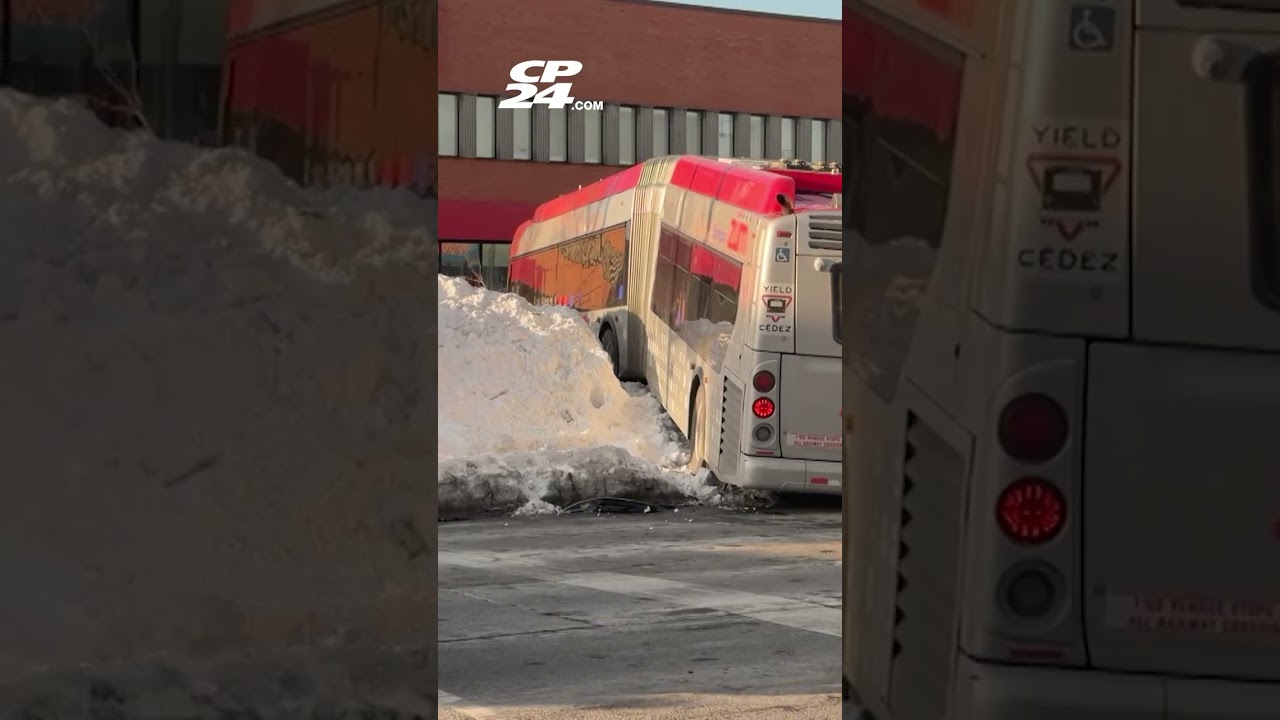
On a chilly afternoon in Brampton, Ontario, a transit bus was involved in a significant multi-vehicle accident, resulting in a rapid emergency response. Reports indicate that ten individuals were taken to the hospital, all sustaining minor injuries. The accident occurred at the intersection of Queen Street and Hansen Road, where the bus ultimately came to rest partially buried in a snowbank.
The incident attracted substantial media attention, captured vividly by Chopper 24, which provided aerial views of the chaotic scene. The snowbank became the bus’s unintended final resting spot, illustrating the potential hazards that winter conditions can pose to vehicular safety. As authorities pieced together the series of events leading to the crash, the focus remains on understanding how such a collision could occur amid challenging weather conditions.
Paramedics arrived on the scene promptly, attending to the injured individuals with efficiency. Thankfully, reports suggest that all injuries sustained were minor, providing a measure of relief amid a troubling situation. This aspect of the incident is a testament to the effectiveness of emergency response teams, who are trained to manage crises where every second counts.
Despite the fortunate outcome regarding injuries, the implications of such accidents extend beyond the immediate physical harm. Multi-vehicle crashes often raise questions about traffic safety, road infrastructure, and commuter behavior. At this stage, the investigation into the cause of the crash is ongoing, with local authorities scrutinizing various factors that may have contributed.
Weather conditions are frequently at the forefront of discussions surrounding such accidents. Brampton, like many regions of Canada, often faces winter challenges, including snowfall and icy roads. These conditions can significantly impede vehicle maneuverability, and the need for caution becomes critical. The effectiveness of road maintenance and preparedness for winter weather is a vital aspect of public safety that will likely be evaluated in light of this incident.
While the investigation continues, the incident serves as a stark reminder for commuters to adhere to safety protocols, especially in adverse conditions. Drivers are urged to maintain appropriate speeds, increase following distances, and exercise heightened awareness when navigating roadways during winter months. The lessons learned from accidents like this can aid in developing strategies focused on reducing risks associated with public transportation and commuter traffic in evolving weather conditions.
As more details emerge, stakeholders—including transport officials, local government, and law enforcement—will undoubtedly engage in a dialog on enhancing safety measures for public transit systems. Given that buses often carry numerous passengers, any incident involving them can have widespread implications for community safety and public trust in transit services.
In conclusion, while ten individuals were fortunate to escape with minor injuries, the Brampton bus crash serves as a critical reminder of the ongoing challenges associated with transportation safety in winter. As the investigation unfolds, the community awaits insights that could lead to improved safety protocols and greater awareness about the need for vigilance on the roads. In the wake of this event, the focus on ensuring a secure transit environment for all commuters is more vital than ever.