Unraveling U.S. Foreign Policy: The Greenland Gambit
In an unexpected twist on the international stage, President Donald Trump has recently announced a potential framework for a deal concerning Greenland, a semi-autonomous territory of Denmark. This announcement, shared on his Truth Social platform, arrived shortly after a notable meeting with NATO Secretary General Mark Rutte at the World Economic Forum in Davos. The stakes appear high, with the promise of change rippling through diplomatic circles.
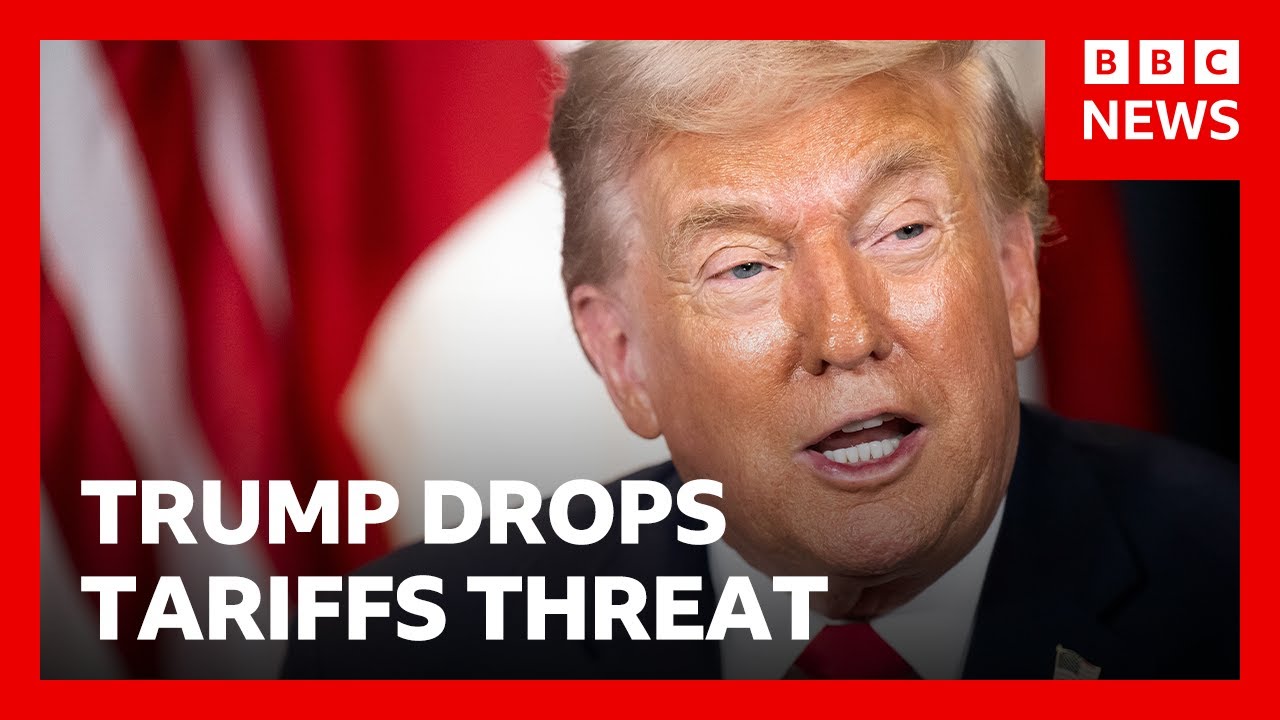
Initially, Trump had hinted at the possibility of using force to secure control over Greenland. However, his latest statements suggest a significant shift in tone. He emphasized, "Based on a very productive meeting… we formed the framework of a future deal with respect to Greenland and… the entire Arctic region." This statement delineates an apparent pivot from aggressive posturing to a more diplomatic approach.
During the same address, Trump alleviated concerns about impending tariffs on U.S. allies in Europe, a move that had drawn considerable ire from both Canadian and European leaders. This apparent reconciliation begs the question: what transpired during his discussions with Rutte that facilitated such a rapid change of heart?
Chief North America Correspondent Gary O’Donoghue offered insights into this rapid evolution of policy. He described the situation as "head-spinning" and filled with uncertainty. Trump, in previous remarks leading up to the meeting, had expressed a belief in the necessity of U.S. ownership of Greenland for both national and international security. His mention of a "reasonable price" implied a transactional nature to his intentions. Thus, his decision to forego talk of ownership in this new announcement raises eyebrows.
The lack of clarity around the agreement is notable. O’Donoghue pointed out that despite the optimistic wording in Trump’s announcement, specifics remain elusive. The U.S. administration has not provided any detailed outline of what this framework entails. Without concrete details, the current situation resembles a political theater rather than a solid diplomatic breakthrough.
Reactions to Trump’s earlier proposals had been overwhelmingly negative. Canadian leaders and European allies had pushed back against his rhetoric, leading to widespread skepticism about his handling of foreign relations. Such a backlash may have influenced Trump, but historically, he has shown little concern for international criticism. He often seeks to provoke both adversaries and allies alike, embracing a narrative of American unilateralism.
The pivot away from the idea of military action is particularly striking. Many analysts viewed the prospect of using force to acquire Greenland as untenable. However, the abrupt abandonment of tariffs on European allies underscored a willingness to recalibrate strategies when faced with oppositional diplomatic currents. This highlights Trump’s duality—an unpredictability that can lead to both aggressive stances and unexpected conciliatory gestures within a short time frame.
Critics of the administration might argue that this erratic behavior raises questions about the stability of American foreign policy under Trump. The brevity with which he moved from threatening tariffs to expressing a desire for cooperation with NATO allies is bewildering. Analysts await further clarification on what, if any, concessions were made during his discussions with Rutte.
Looking ahead, the situation remains fluid. As O’Donoghue cautioned, new developments could emerge that completely alter the current narrative. One can envision a scenario where Trump, in a matter of hours, reverts to earlier aggressive postures or introduces new demands.
In conclusion, the unfolding story of Greenland highlights the complexities and anomalies of modern diplomacy. The interplay of assertive rhetoric and surprising flexibility reflects the unpredictable nature of current U.S. foreign policy. As the global community reflects on these recent developments, one thing remains certain: the political landscape is anything but stable, and the stakes are undeniably high. Further clarity and direction will be necessary as the U.S. and its allies navigate this uncharted territory.