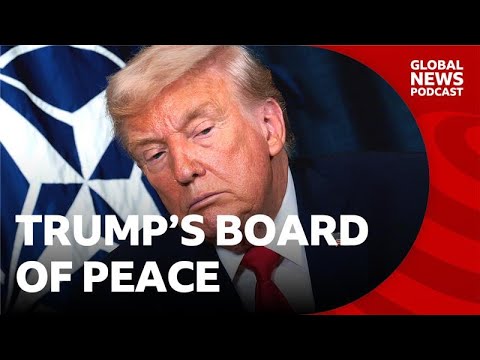
The Broader Ambitions of Trump’s "Board of Peace"
In recent discussions, the so-called "Board of Peace" proposed by Donald Trump has stirred intrigue and skepticism alike. Initially conceived as a mechanism to address the ongoing conflict in Gaza, its scope has seemingly expanded to encompass international conflicts more broadly. Ambitious indeed, but what does this evolving initiative signify?
As our Middle East analyst Sebastian Usher points out, initial perceptions focused heavily on Gaza. Yet as components of the Board emerged, it became clear that this idea has metamorphosed into a more complex structure. It now seeks to unite various world leaders under a single umbrella, albeit with questions swirling around the feasibility and effectiveness of such a collaboration. After all, the notion of peace can become elusive when diverse leaders congregate.
Invitations to participate have been dispatched globally. Some nations, including Israel, have shown interest, while others, notably France, voiced cautious skepticism, particularly if this Board is perceived as a substitute for the United Nations Security Council. The likes of President Putin are still weighing their options, reflecting the ambivalence felt by many nations.
The underpinnings of this initiative are intricate. Currently, invitations have extended to countries like Hungary, Argentina, Morocco, and Vietnam, all aiming to form a coalition that branches beyond Gaza. This raises critical inquiries: Does the “Board of Peace” serve as a legitimate diplomatic venue, or does it merely reinforce President Trump’s agenda?
The establishment of this Board appears to centralize power under Trump’s leadership. This scenario seems reminiscent of the UN Security Council’s veto dynamics, now potentially replaced by a singular figure wielding significant influence. The Trump administration has long criticized the UN’s efficacy, striving instead for an alternative structure that aligns more closely with its foreign policy goals.
The makeup of the Board also raises eyebrows. Key figures such as Steve Wickoff and Jared Kushner, both closely tied to Trump, dominate the executive board. This may lead to accusations of partisanship rather than impartial diplomacy. Furthermore, the inclusion of prominent personalities like former British Prime Minister Tony Blair further complicates the narrative, especially given the contentious political waters surrounding Gaza.
Interestingly, the intricacies don’t end there. There exists another executive board dedicated solely to Gaza’s recovery, indicating a bifurcation of focus. Regional leaders from Egypt and Turkey have joined this separate entity, ostensibly to oversee Gaza’s reconstruction. However, this arrangement implies a dilution of immediate action regarding urgent humanitarian needs in the region, causing concern among advocates for peace.
Equally notable is the draft of the charter for the Board, which conspicuously lacks any explicit mention of Gaza. This omission casts doubt on the sincerity of the Board’s intent to address the pressing crises afflicting the territory. How effectively can an initiative be viewed if its charter sidesteps the very issue it initially aimed to tackle?
Furthermore, the Board invites scrutiny regarding its credibility. Countries like Russia—currently embroiled in the conflict in Ukraine—are welcomed into this fold. Such contradictions may ultimately undermine the Board’s legitimacy in the eyes of the international community, potentially alienating nations that remain wary of engaging with a platform perceived as biased or impractical.
A notable aspect of the Board also concerns financial commitments. Permanent membership reportedly demands a billion dollars. This hefty price tag mirrors exclusive membership models, like those found in private clubs, raising allegiances based on monetary backing rather than genuine diplomatic cooperation. It also suggests a financial strategy aimed at supporting actions parallel to the UN’s efforts on the ground—though the sustainability and ethical implications of this approach remain to be scrutinized.
In conclusion, Trump’s "Board of Peace" raises numerous questions that echo louder than its initial intentions. The expanded focus may offer opportunities for dialogue, yet the underlying power dynamics and exclusion of immediate crises complicate its purpose. As this initiative unfolds, observers will be keen to assess not just its efficacy, but also its commitment to genuine peace, particularly in regions long ignored. The world watches closely, and the future of peacebuilding lies precariously in the balance.