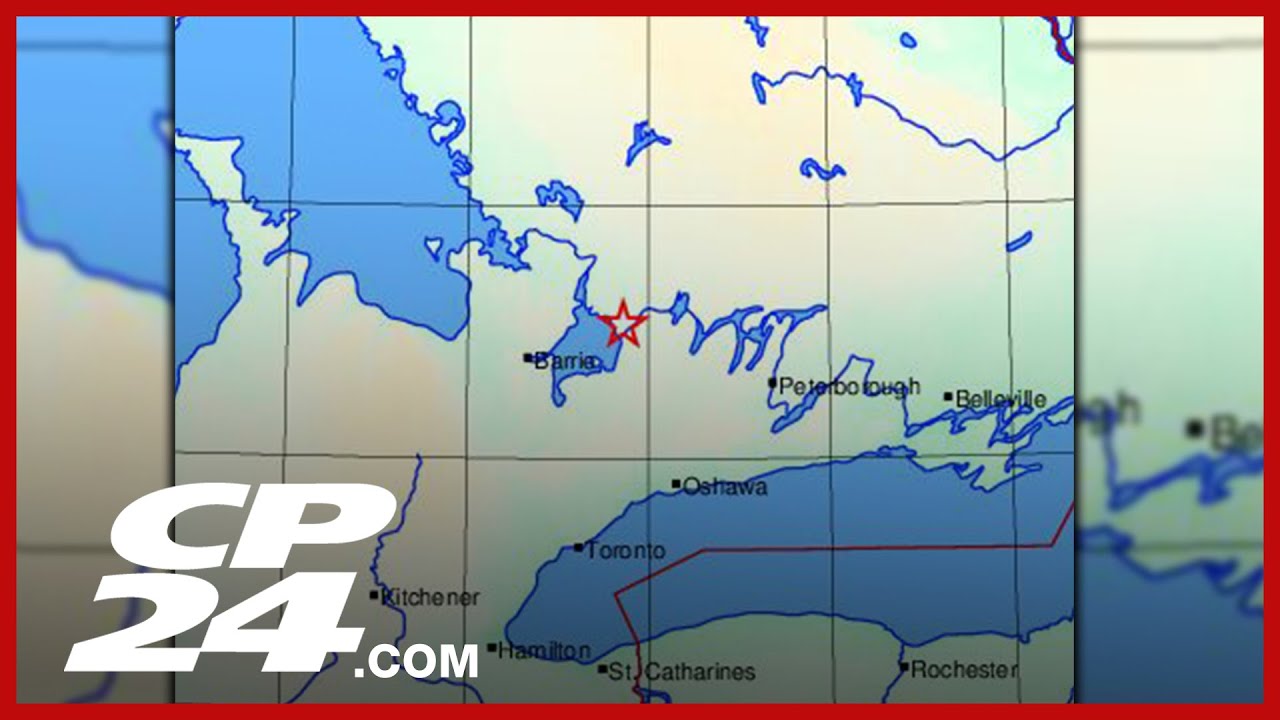
In a rare geological event, a 3.7 magnitude earthquake shook Southern Ontario on a recent Wednesday, with its epicenter located near Aurelia, just north of Toronto. This seismic occurrence, striking at precisely 11:59 AM Eastern Time, was felt across a significant portion of the region, prompting discussions and curiosity regarding its implications. While Ontario is not recognized as a hotspot for seismic activity, the tremor served as a reminder of the hidden dynamics of the Earth’s crust that can lead to unexpected geological events.
### The Uncommon Nature of the Event
Seismologists generally anticipate earthquakes along well-known fault lines, which are fractures in the Earth’s crust resulting from tectonic plate movements. Southern Ontario, however, rests within the sturdy confines of the North American tectonic plate, largely away from any major fault systems. Thus, residents experiencing this tremor found it both intriguing and unsettling. Reports of the tremor reached as far south as Toronto and Niagara, with many eager individuals chiming in on social media to share their experiences. “I felt it, too!” became a common refrain, underscoring the communal nature of this unexpected event.
### Understanding the Earth’s Structure
To grasp why such an earthquake occurred in a seemingly stable region, it’s essential to understand the dynamics of tectonic plates. The North American plate encompasses a vast area, extending from the Atlantic coast to the Pacific coast, as well as spanning up to the Arctic and down to the Caribbean. Imagine this plate as a solid, frozen chocolate bar; while it may appear unyielding, microscopic cracks exist within its structure. As stress accumulates over time, these cracks can yield and eventually result in small-scale seismic activity, much like the sudden snap of a chocolate bar under pressure.
Despite the infrequency of earthquakes in this region, they are not entirely unheard of. Historical records indicate only a handful of significant seismic events in Southern Ontario, promoting a sense of both wonder and anxiety when one does occur. Indeed, if you felt the tremor on Wednesday, you joined an exclusive club of individuals who have experienced firsthand the complexities of our planet’s geology.
### The Science Behind the Sensation
Why did so many feel the tremor over such a wide area? The answer lies in the age and temperature of the North American plate. Unlike younger, more active tectonic plates, the North American plate is both ancient and cold, properties that facilitate the propagation of seismic waves. When stress is released—whether due to tectonic movements or internal pressure—the resulting shock waves can travel further than in warmer, more fragmented plates. This meant that even those situated in urban centers like Toronto were able to feel the effects of an earthquake hundreds of kilometers away from the epicenter.
### Embracing the Unexpected
As cities and communities reflect on this occurrence, it serves as an opportunity for education. Many people remain unaware of the geological history of their region, which can harbor ancient, dormant forces waiting to be unleashed. This recent earthquake invites both dialogue and curiosity about the Earth’s underlying mechanisms. While seismic events in Southern Ontario may be rare, they serve as powerful reminders of nature’s unpredictable character.
In conclusion, the 3.7 magnitude earthquake that rattled Southern Ontario is an intriguing case study in geology. It encapsulates the complexities of the Earth’s crust and the hidden dynamics within tectonic plates. Though it was a mild tremor, the excitement generated by such occurrences signifies a community eager to learn more about the world beneath their feet. As we reflect on this event, we are reminded of the delicate balance between stability and chaos inherent in our planet’s structure.