President Trump Implements New Tariff Strategy Following Supreme Court Ruling
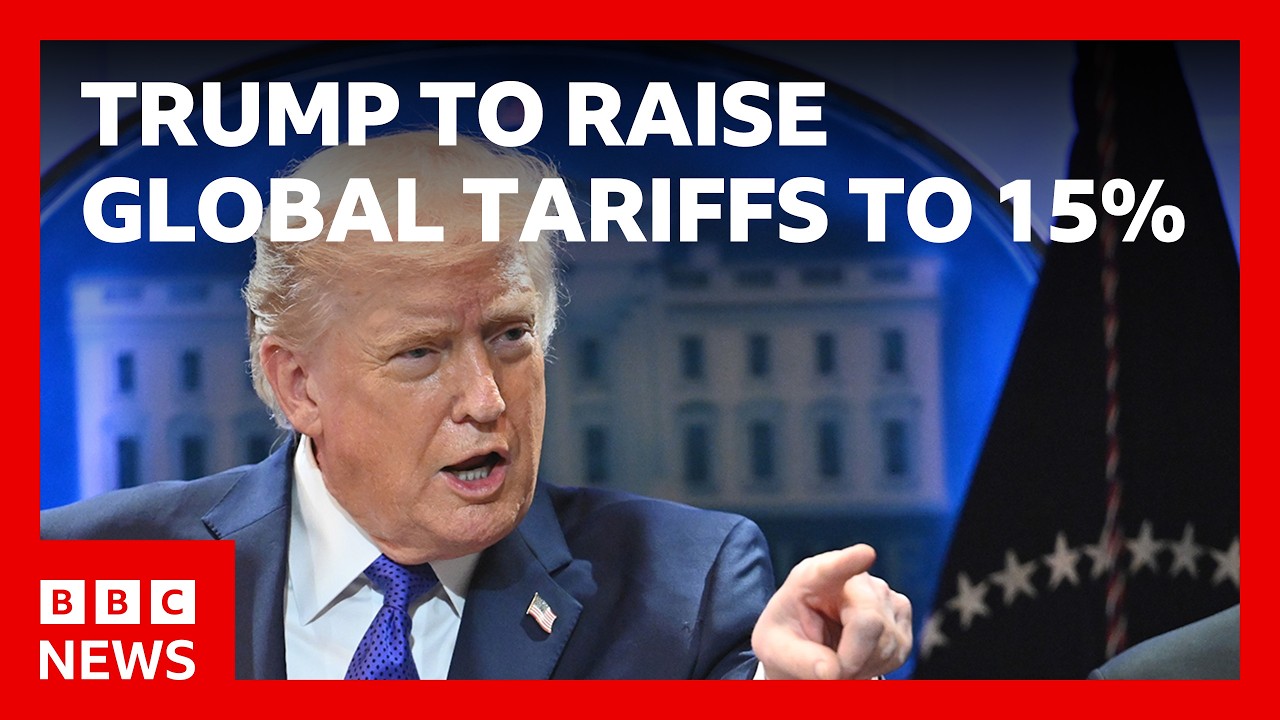
In a surprising turn of events, President Trump has announced a significant increase in the temporary global tariff rate on imported goods from 10% to 15%. This decision follows a recent ruling by the United States Supreme Court, which deemed his earlier tariff policy illegal. The court found that Trump had overstepped the bounds of his presidential authority, a decision that has reverberated across economic and political circles.
During a press interaction at the White House, Trump expressed his commitment to implement the new tariff strategy, positing it as a continued effort to “make America great again.” The initial 10% tariff announced yesterday was intended to last 150 days, extending through the summer months. In light of the court’s ruling, the president indicated that his administration will now work to determine new tariffs that are legally permissible.
This announcement comes just a day after the Supreme Court rendered a 6-3 decision against Trump’s tariffs, a ruling that included dissent from some Republican justices. Trump’s vocal frustration with the decision was palpable. He described his discontent with the judges who voted against him, which further showcases the contentious relationship between his administration and the judiciary.
On his social media platform, Truth Social, Trump labeled Justices Brett Kavanaugh, Clarence Thomas, and Samuel Alito as his “new heroes” for their support in favor of his tariff policies. This positioning reveals the president’s strategy of rallying his base by creating a narrative of judicial betrayal and loyalty among certain justices.
However, the new implementation of tariffs presents complex challenges. One primary concern is the impact of these changes on existing global trade agreements, especially those negotiated in the aftermath of Trump’s initial tariffs. Businesses had previously scrambled to adapt to the economic climate created by the tariffs, some viewing them as beneficial while others called for their removal.
Business correspondent Simon Brown highlighted the tumultuous atmosphere surrounding these tariff changes. The Supreme Court’s ruling marks a significant setback for Trump’s economic strategy, which has relied heavily on tariffs as a tool for increasing U.S. revenue. Since their introduction, these tariffs have generated approximately $130 billion, indicative of their economic impact.
Yet, as the court did not provide guidance on how to refund businesses impacted by the tariffs, uncertainty looms large. “How would the process of refunding what businesses have paid work?” asks Brown, emphasizing the murky waters surrounding the new policies. Additionally, with a 150-day timeframe on the recent 10% tariff, questions remain about the future of these tariffs and the viability of new proposals.
Global markets have responded to these developments with caution. Countries are likely to reassess their trade strategies with the U.S., particularly given the tumultuous nature of the current tariff landscape. The disruption caused by the Supreme Court’s ruling has prompted a reevaluation of long-term trade relationships.
The potential ramifications for the U.S. economy and its trading partners will undoubtedly be significant. As President Trump navigates these challenges, he faces the dual task of maintaining his administration’s economic agenda while complying with judicial limits. As noted by Brown, it is crucial not to move too hastily in response to these developments.
In conclusion, President Trump’s recent announcement to elevate the global tariff rate to 15%, propelled by a contentious Supreme Court ruling, signals a robust continuation of his administration’s economic policies. The implications of this decision are yet to be fully understood, but they certainly mark a pivotal moment in the ongoing discourse around U.S. trade policy. As political and economic stakeholders digest these changes, the global economy watches closely, awaiting clarity on what the future holds.