NASA’s Artemis II Mission: A New Leap Toward Lunar Exploration
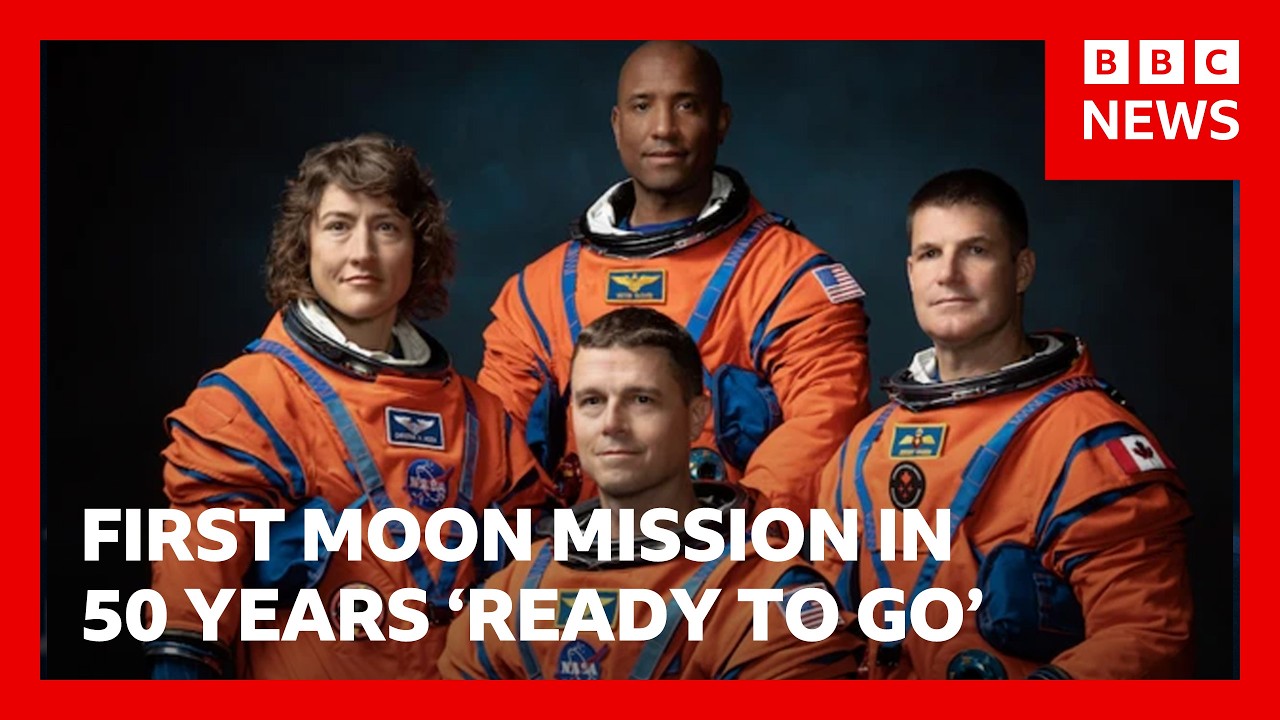
In an age marked by rapid technological advancements, NASA is poised to launch Artemis II on March 6, 2024, sending astronauts on a pivotal voyage around the Moon. This mission will be particularly significant as it marks the first manned spaceflight to the Moon in more than fifty years. Unlike its Apollo predecessors, Artemis II plans to focus on establishing a sustainable presence beyond Earth—an ambitious goal that could pave the way for future explorations, including missions to Mars.
The spacecraft launching from Kennedy Space Center is no ordinary vehicle. At 98 meters tall, it represents the culmination of extensive engineering and testing. Among the key players in this mission is Sean Cleven, a spacecraft engineer from Airbus, who has been instrumental in developing the European Service Module (ESM) that underpins the Orion spacecraft’s capabilities.
Cleven’s role is critical. The ESM serves as the lifeline for the crew module, supplying essential power via large solar arrays and providing life-sustaining consumables. It also houses the propulsion system, including a robust engine that will propel the Orion spacecraft on its journey beyond Earth’s orbit. Without this sophisticated engineering, the astronauts could not embark on their lunar mission.
Artemis II is part of a broader initiative, one that seeks to transition from short-term lunar missions to longer-term explorations. The Apollo program focused on brief trips where astronauts landed, conducted experiments, and returned to Earth. In contrast, Artemis II aims to lay the groundwork for future missions by testing vital technologies and building the infrastructure necessary for sustained exploration on and around the Moon.
One might wonder why humanity has not returned to the Moon in the last half-century. Cleven elucidates that the challenges of human space travel are immense. The complexities inherent in sending people into space require a vast pool of engineers working thousands of hours. Financial constraints further complicate these efforts, necessitating international collaboration. NASA’s partnership with the European Space Agency exemplifies how shared expertise and resources can make such ambitious undertakings possible.
Technology has indeed advanced significantly since the original moon landings. The devices in our pockets—smartphones—often possess more computational power than the systems used during Apollo missions. Yet, such advancements do not substitute for the collaboration and motivation needed to undertake deep space exploration. Cleven emphasizes that achieving significant milestones in space exploration is as much about shared vision as it is about technology.
The Artemis II mission aims to achieve several key goals. While the astronauts aboard will not land on the Moon, the mission is a stepping stone toward a future where lunar landings become routine. Artemis III, expected to follow, will include a crewed descent to the lunar surface, allowing astronauts to conduct experiments and further our understanding of the Moon’s resources. A lunar orbiting space station, proposed as part of the Artemis program, would serve as a pivotal platform for deeper space exploration.
Looking ahead, the establishment of a permanent lunar base is a tantalizing prospect. Such a base would not only serve as a hub for research but also as a training ground for missions to more distant targets, such as Mars. Cleven points out that to send humans to Mars for extended periods—where missions could last months—the technologies developed for lunar missions will be indispensable. The Moon serves as an invaluable testing ground for the systems necessary to support human life during long-duration spaceflight.
As for the timeline underlying these aspirations, the landscape of space exploration is ever-changing. While predicting exact dates is fraught with uncertainty, the surge of interest from both governmental and private sectors suggests a promising future. Many players are now invested in lunar exploration, and there is a palpable sense of excitement within the aerospace industry. Cleven optimistically estimates that with sustained ambition and technological refinement, humanity could see a lunar base and potential Martian missions within the next decade or so.
As we stand on the brink of a new era in space exploration, the Artemis II mission represents not just a return to the Moon, but a visionary step toward our future among the stars. The collaborative efforts of engineers, scientists, and international agencies herald a transformative chapter in humanity’s quest to conquer the cosmos.