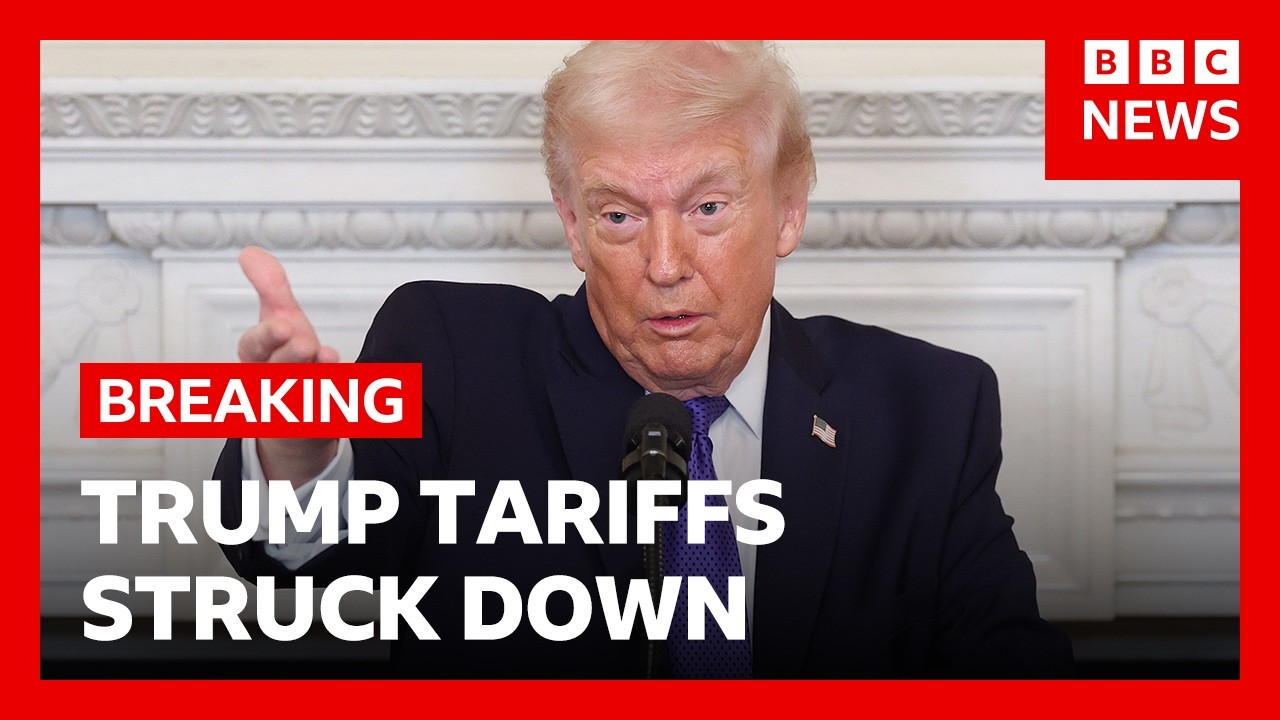
The recent ruling by the U.S. Supreme Court striking down Donald Trump’s global tariffs is a monumental development in U.S. trade policy. The tariffs, implemented under the guise of a national emergency, have been a cornerstone of Trump’s economic agenda since their announcement in April, dubbed “Liberation Day.” This latest decision not only marks a significant legal defeat for Trump but raises questions about the future of U.S. tariffs and their implications for international trade relations.
In April, President Trump unveiled a sweeping range of tariffs—initially set at a baseline of 10%—on countries including the European Union, Japan, and China, each facing varying rates that escalated over time. Tariffs on China, often the focal point of Trump’s trade disputes, reportedly reached over 100% amid retaliatory measures. This aggressive strategy was seen as both an economic weapon and a negotiating tool, aimed at reshaping the U.S. trade landscape.
However, the Supreme Court has clarified that while the President can impose tariffs, such actions must be sanctioned by Congress. In essence, the ruling underscores a crucial separation of powers, reinforcing the notion that unilateral tariff imposition undermines congressional authority. Trump’s failure to seek congressional approval has led to legal ramifications that could affect millions of dollars raised through these tariffs.
Trump’s response to potential adverse outcomes has been combative. He previously warned that a negative ruling could spell doom for the U.S. economy, asserting it might result in trillions of dollars lost. However, experts like economist Justin Wolfers argue that such claims are exaggerated. They emphasize that potential refunds from previously levied tariffs are less about national distress and more about the legality of the imposed duties. Given that American businesses, not foreign countries, bear the brunt of tariff costs, any movement toward refunds would involve complex legal discussions and further litigation.
Indeed, with Trump’s tariffs generating $280 billion in revenue in the past calendar year alone, stakeholders are keen to understand the ruling’s broad implications. While immediate responses from financial markets have remained stable, there is a palpable sense of uncertainty regarding future trajectories. Analysts suggest that while firms have faced higher import costs due to tariffs, clarity from the courts may allow businesses to recalibrate their operations and trade strategies more effectively.
In the aftermath of the ruling, global markets may experience a positive shift as uncertainty diminishes. As professor Wolfers pointed out, the legal challenges to Trump’s approach could paradoxically benefit American businesses by providing them with an opportunity to engage with Congress in pursuing fairer trade policies. This mirrors the broader expectation that the White House may now pivot to other legislative avenues for imposing tariffs, exploring options such as those outlined in existing national security statutes.
Moreover, the ruling also signifies a potential shift in how the U.S. engages diplomatically with its trading partners. Countries that were previously subjected to Trump’s punitive tariffs will have to reassess their trade agreements with the U.S., especially since many were designed with those tariffs in mind. The reclassification of tariffs under different statutes, particularly those linked to national security, could offer Trump an alternative route, allowing him to maintain a tariff-heavy regime without congressional endorsement.
The long-term implications of this ruling are yet to unfold, but it undoubtedly shifts the dynamics of U.S. trade negotiations. As the new landscape takes shape, stakeholders will be closely monitoring how both the executive branch and Congress respond to this judicial directive. The complexities involved in navigating the aftermath of this ruling indicate that while one chapter of Trump’s tariff saga has closed, the narrative of U.S. trade policy remains as contentious as ever.
In conclusion, the Supreme Court’s decision against Trump highlights critical issues surrounding executive power and its limits. As the nation braces for the economic and political repercussions, the necessity for a more balanced and constitutional approach to trade policy becomes increasingly clear. It remains to be seen how Trump and his administration will adapt and respond to this pivotal moment in U.S. trade history.