The Art of Visual Effects in Formula 1 Cinema
In the realm of film, visual effects often play a silent but pivotal role. Ryan Tat, the visual effects supervisor for the film F1, highlights this unassuming artistry. The primary mission of his team was clear: create a cinematic experience so immersive that the audience would leave the theater unaware of the behind-the-scenes manipulations. “When you actually try to film something for real… there’s a foundation to the shot that just feels visceral,” Tat explains.
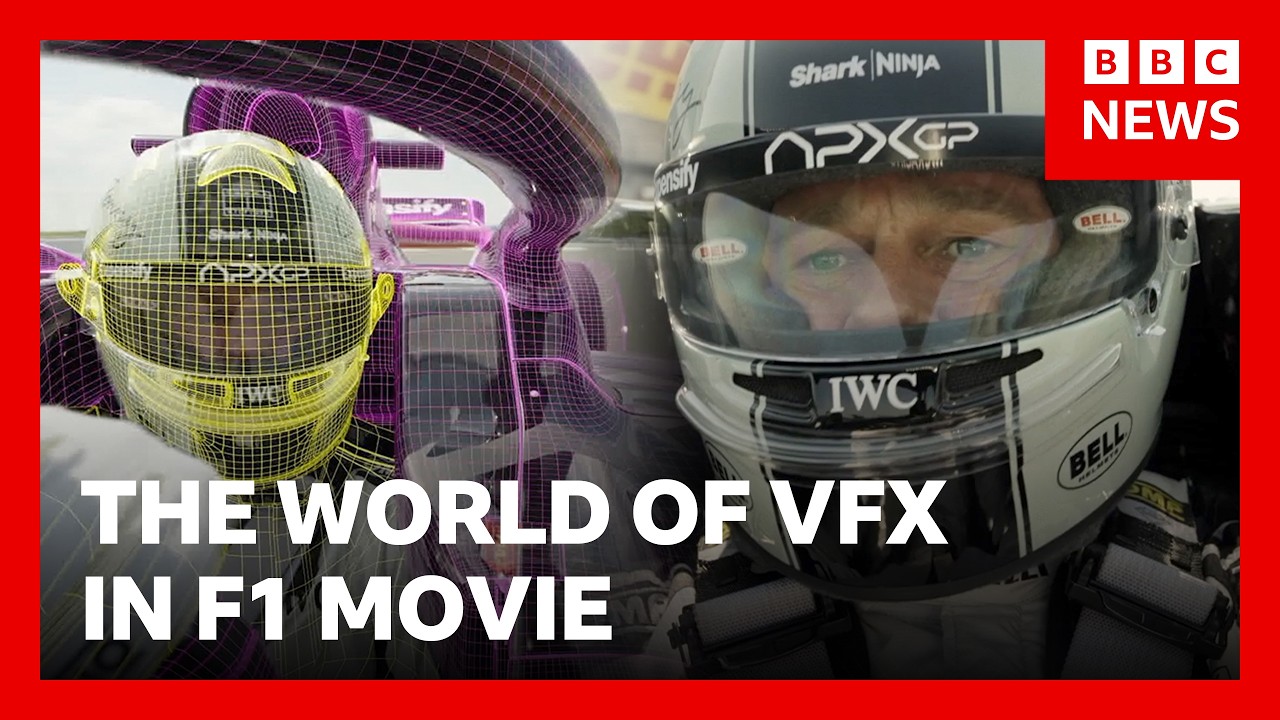
Formula 1, known for its high-speed thrills, is inherently a team sport. This facet posed unique challenges for the film’s production, especially regarding the authenticity of the cars. F1 teams closely guard their assets, making real-life cars inaccessible. To address this limitation, Tat’s team took a proactive approach. They embarked on grid walks before races, photographing every detail of the competition’s vehicles. These images served as the blueprint for digitally reconstructing the cars, allowing the film’s production to craft realistic racing sequences without direct access to the original machines.
“Whether we’re putting our car into broadcast footage or swapping a car in our footage, we mix and match those techniques,” Tat notes, emphasizing the ingenuity required in crafting the film’s visuals. The final product boasted around 2,500 visual effects shots, a testament to the scale of craftsmanship involved. By approaching each shot from a unique perspective, the team aimed to keep viewers engaged and enthralled—never knowing where the real ended, and the artificial began.
Capturing the essence of racing extended beyond cars; it demanded an authentic portrayal of the sport’s environmental nuances. To achieve this, Tat’s team employed a custom-designed array vehicle. This vehicle, operated by the stunt team, navigated actual tracks to replicate proper racing lines. Filming during Grand Prix weekends allowed for the inclusion of crowds, sponsors, and signage—elements critical to encapsulating the atmosphere of an F1 race.
However, challenges were inevitable. Occasionally, certain sequences could not be filmed at the appropriate track, necessitating creative solutions. “If one of our cast or stunt drivers did a sequence at Silverstone, we might be able to change that entire background to Monza,” Tat explains. This capacity for interchangeability proved invaluable, particularly for scenes depicting extreme weather conditions, such as rain-soaked races.
For instance, the film features a substantial sequence in Italy involving rain—conditions too risky for live filming. To resolve this, the team employed a technique known as "dry for wet." They filmed the sequence in dry conditions, subsequently layering digital rain and water effects to create the illusion of a torrential downpour. The execution required meticulous attention to detail; reflective surfaces, spray effects, and the overall ambiance had to align seamlessly to maintain immersion.
Creating an authentic cinematic experience goes beyond just visuals. As noted by Tat, "You don’t want the production design to jump out at you." The goal is to immerse the audience in a world so believable that they become engrossed in the story unfolding before them. If viewers are focused on the effects rather than the narrative, the artistry has failed. The ultimate compliment, according to Tat, is for people to walk away feeling as though they experienced a tangible journey rather than merely watching a film.
In a world where technology shapes storytelling, the art of visual effects remains a cornerstone that, when executed with expertise, fosters connection between the audience and the narrative. The meticulous work behind F1 exemplifies this principle. By blending visual innovation with traditional filmmaking techniques, Ryan Tat and his team have set a benchmark in creating an experience where the thrills of Formula 1 racing are not just seen but felt. As they say in racing—three laps is indeed a lifetime—and in cinema, making those laps count is what transforms a good film into an unforgettable journey.