U.S. Military’s Daring Rescue Operation in Iran: A Closer Look
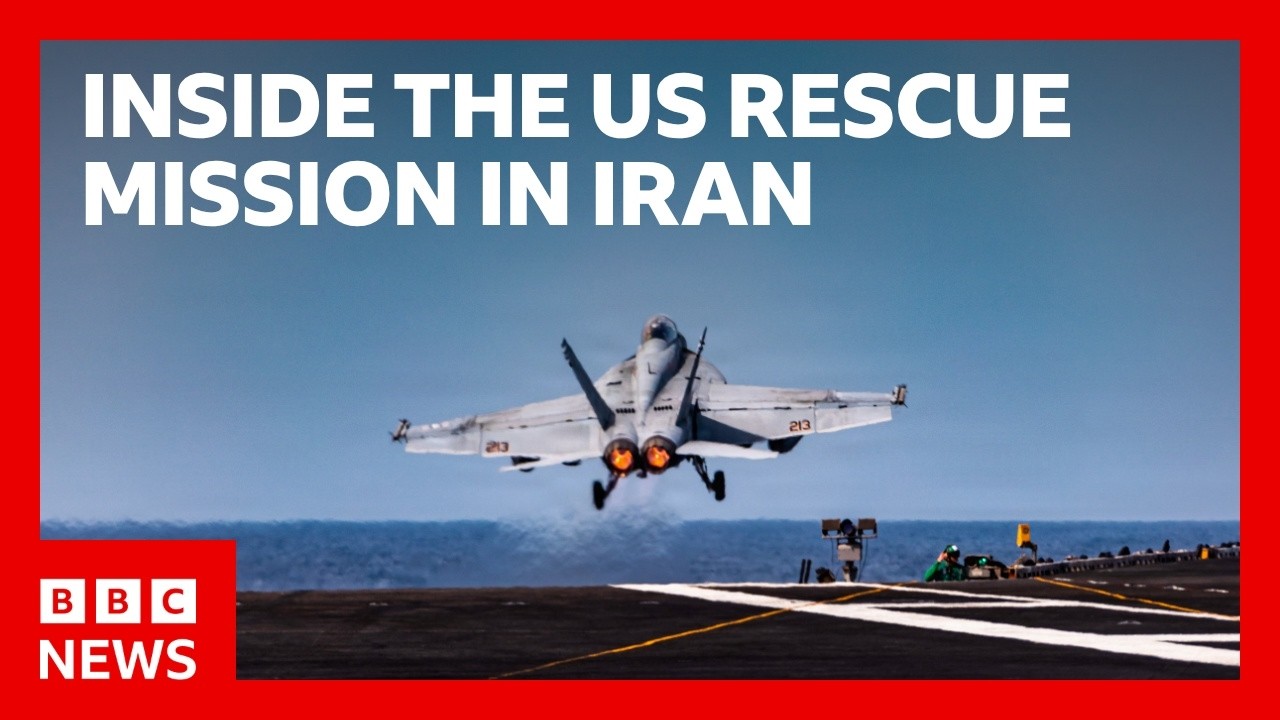
On a tense Friday, a U.S. F-15 fighter jet was shot down over southern Iran, sparking a groundbreaking rescue operation that has captured global attention. President Donald Trump heralded this mission as "one of the most daring search and rescue operations in American history," emphasizing that the U.S. military would "never leave an American warfighter behind." This sentiment frames a compelling narrative of bravery, tactical precision, and geopolitical tension.
The aircraft was flying a routine mission when it encountered hostile fire. While the pilot was successfully rescued early on, the operation aimed to locate and extricate the weapon systems officer who remained unaccounted for. What unfolded was a complex ballet of military logistics, air support, and ground intelligence that spanned the rugged terrain of southwestern Iran.
The rescue mission involved dozens of aircraft flying deep into enemy territory, highlighting the multi-layered challenges that the U.S. military faced. Upon confirmation that the weapon systems officer had been located, President Trump shared the news on Truth Social: "We got him," adding that the crew member had never truly been alone due to constant tracking efforts.
This operation unfolded against a backdrop of escalating tensions, including recent strikes against Iranian oil facilities. Trump’s administration has been vociferous in its threats towards Iran, stating that further military action could "send Iran back to the Stone Ages." Such comments have only intensified the strife, provoking both strategic military responses and public backlash within Iran.
The U.S. operation marked a significant success during an era when search-and-rescue missions have historically faced low success rates, particularly in environments as hostile as those seen in Vietnam. Mikey Kay, a military analyst, described the F-15 as a "multi-role aircraft" that requires a fully trained crew for optimal operation. This underscores the complexity of the mission: not only was the aircraft down, but the survival of both crew members relied on their training and the ability of command structures to mobilize quickly.
In the critical moments following the shootdown, the aircrew’s training came into play. The ejection process, fraught with physical challenges, saw both crew members discharged from the aircraft at high speeds—a physically taxing maneuver with enormous stakes. The weapon systems officer, ejected first, faced immediate challenges on the ground, including injuries and the necessity to evade capture from Iranian forces.
Upon landing, the officer activated a beacon—a move intended to assist search-and-rescue teams. However, this tool is a double-edged sword; while it communicates the airman’s location, it also exposes him to enemy detection. Reports suggest that Iranian forces, aware of the downed aircraft, launched a comprehensive search operation of their own. This dynamic added an urgent layer of complexity, pushing U.S. forces to act swiftly and strategically.
The rescue effort mobilized hundreds of troops and relied on sophisticated aerial resources, including refueling aircraft to sustain prolonged search and operational capabilities. The successful extraction was a testament to U.S. military effectiveness, yet it remains uncertain how this will change the calculus of U.S.-Iran relations. With Iran’s Revolutionary Guard Corps documenting the wreckage and inflating propaganda narratives around the event, the geopolitical stakes rise ever higher.
As President Trump acknowledged, the operation is a morale boost for American forces. Still, the future of U.S.-Iran tensions is unclear. Trump’s strong rhetoric juxtaposed against this successful military action raises questions about the potential for further escalation and conflict.
In conclusion, this rescue mission not only showcases American military capabilities but also reflects the broader geopolitical challenges that define the U.S.-Iran relationship. The successful retrieval of American personnel in hostile territory serves as both a celebration of tactical excellence and a somber reminder of the risks inherent in modern warfare. As events continue to unfold, the world watches closely.