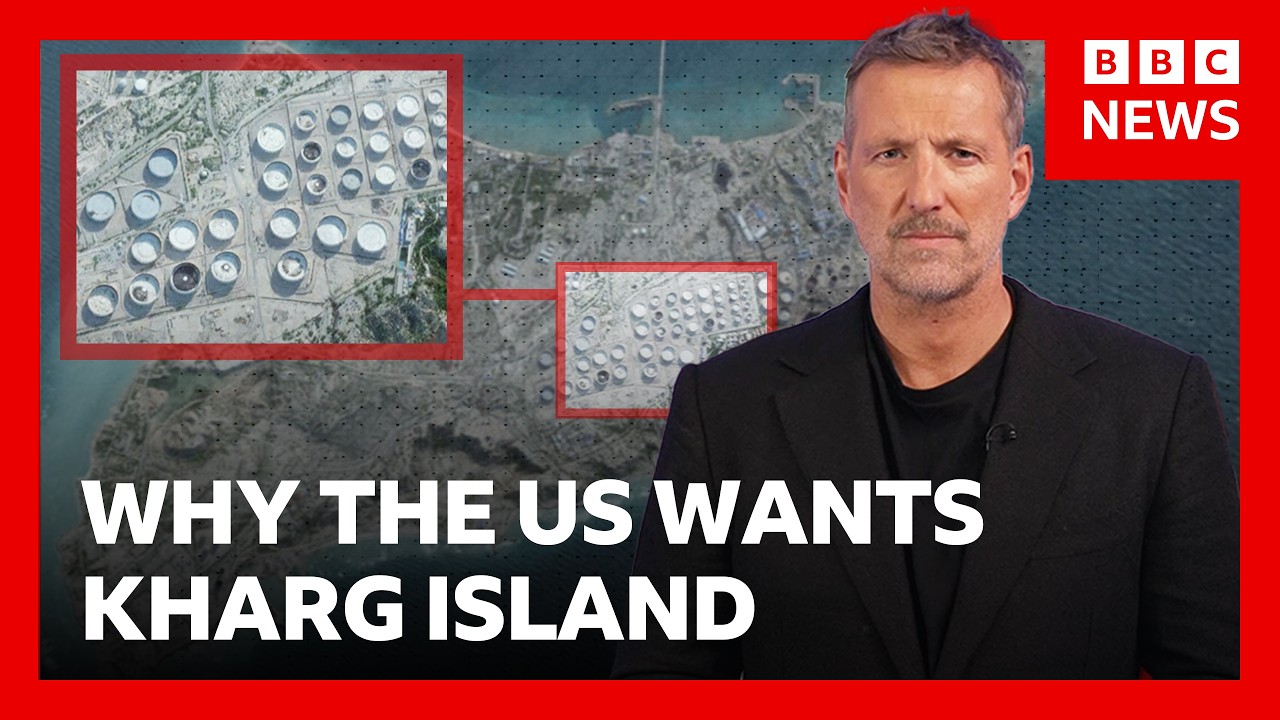
The Strategic Significance of KG Island: A Detailed Analysis
KG Island, a seemingly insignificant rocky outcrop located 15 nautical miles off the coast of Iran, has emerged as a focal point in geopolitical discussions. This island plays a pivotal role in Iran’s oil exportation, specifically serving as a terminal that facilitates the transport of crude oil to global markets. To put its importance into perspective, it is responsible for 90% of Iran’s export crude oil, making it a crucial economic lifeline for the Islamic Revolutionary Guard Corps (IRGC). The potential U.S. plans to seize KG Island have raised eyebrows, inviting scrutiny of the strategic calculations behind such a move.
The Oil Export Terminal
At the heart of KG Island’s significance is its function as an oil terminal. It allows large tankers, capable of carrying up to 85 million gallons of oil, to easily navigate through the Persian Gulf and out of the Strait of Hormuz, the chokepoint for a substantial portion of the world’s oil trade. China emerges as the primary consumer of Iranian oil, implying that disrupting this flow could have far-reaching implications for global energy markets and geopolitical stability.
The IRGC’s Economic Lifeline
Seizing KG Island would essentially jeopardize the IRGC’s operational capabilities. By controlling this critical terminal, the U.S. could significantly diminish Iran’s ability to fund its military endeavors. Economic deprivation often translates into weakened military capabilities, setting the stage for a broader strategy of deterrence.
Operational Strategies: Concept of Operations (CONOP)
Both open-source intelligence and military chatter indicate that U.S. military planners are considering various operational scenarios, known as CONOPs, to take KG Island. Historical precedents, such as the U.S. operations in Venezuela, illustrate how complex military undertakings are not limited to direct assaults. They involve a myriad of supporting operations designed to ensure mission success.
For instance, in a potential operation against KG Island, suppression of enemy air defenses would likely be part of the initial strategy. This could involve using specialized aircraft to neutralize Iranian radar systems. Drones like the MQ-9 Reaper could provide intelligence and surveillance, ensuring that ground forces have a complete situational awareness before the operation commences.
Helicopter Deployments and Logistics
In terms of air assets, helicopters such as the MH-47 Chinook and MH-60 Blackhawk would be vital. The Chinook has the capacity to transport troops effectively, while Blackhawks would likely serve as protection against hostile fire during troop insertions. The logistics involved are complex: a round trip from Kuwait to KG Island would take approximately three hours, including transit and loitering times to provide air cover.
Additionally, refueling options become critical. While there might be fuel available on KG Island, it wouldn’t be prudent to rely on it, especially if the IRGC contaminates it in anticipation of U.S. operations. Both helicopter types possess air-to-air refueling capabilities, which would help facilitate operations over extended periods.
Asymmetric Threats from Iran
The Iranian military, adept in asymmetric warfare, possesses various means to defend KG Island. Their arsenal includes ballistic missiles, anti-shipping missiles, and fast-attack boats. Such low-cost, mass-produced equipment serves to complicate the operational environment for U.S. forces.
Furthermore, drones like the Shahed 136 could swarm U.S. air defenses, while mines pose another challenge. The risk of being labeled as ‘the aggressor’ in an environment laden with mines complicates U.S. strategic calculus, forcing them to divert resources toward proving Iranian culpability for any alleged mining, which can be time-consuming and resource-intensive.
Global Implications
The potential for U.S. military action on KG Island is not insular; it implicates various global actors. Notably, China has increased its support for Iran, providing potentially advanced military capabilities that could alter the strategic landscape. Such involvement would raise stakes even higher and could lead to an escalation of conflict.
Furthermore, if the U.S. successfully seizes and holds KG Island, what would this mean for global oil prices? The disruption of one of the world’s major oil supply routes could have reverberating effects on energy markets, triggering economic instability far beyond the immediate vicinity.
Conclusion
KG Island is no ordinary patch of land; its strategic significance cannot be overstated. The interplay between military capability, economic leverage, and geopolitical rivalries comes into sharper focus when analyzing this small yet pivotal position in the Persian Gulf. As discussions of potential U.S. operations grow louder, the implications for not just Iran, but global stability and energy markets, warrant robust consideration.