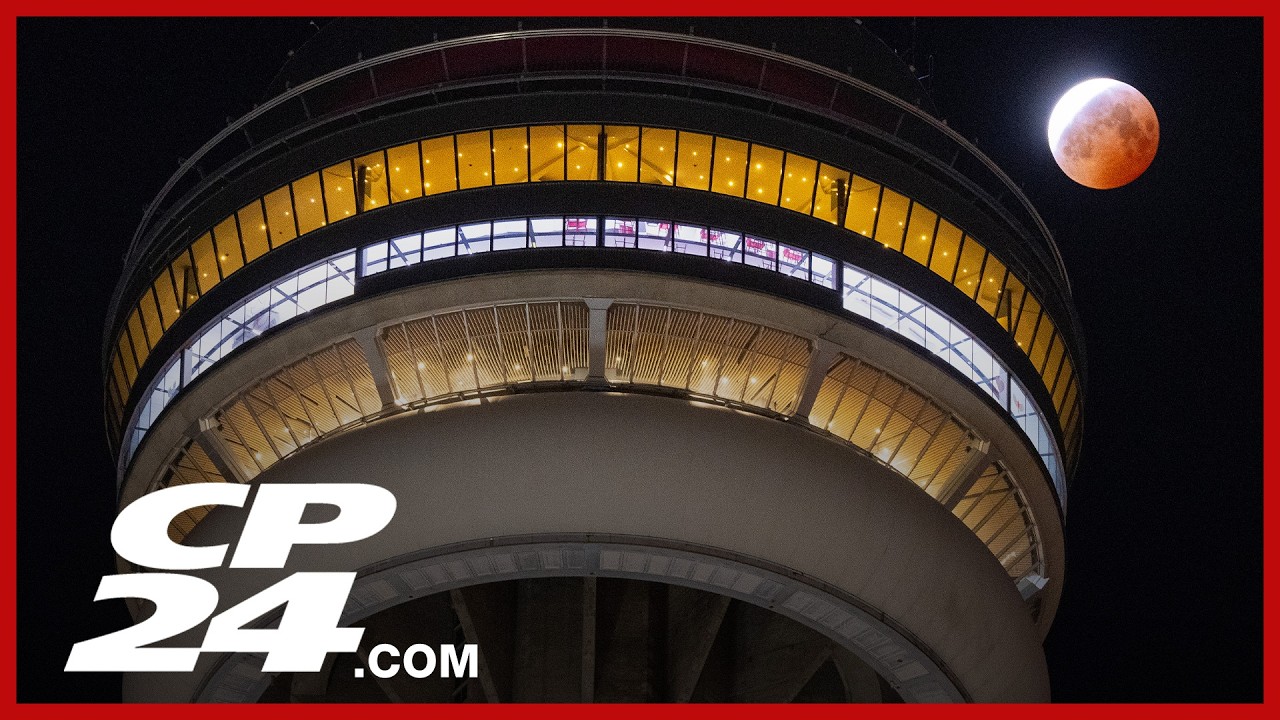
A Celestial Event Not to Be Missed: The Upcoming Total Lunar Eclipse
For stargazers in Toronto, the early hours of Tuesday promise to deliver a majestic sight—a total lunar eclipse that will not reoccur for another two years. According to timeanddate.com, the event will kick off just after 3:40 a.m., with the most dramatic phase, or “totality,” taking place around 6:30 a.m. This celestial phenomenon occurs when the Earth aligns perfectly between the Sun and the Moon, casting a shadow that cloaks the lunar surface.
To gain more insights into this enchanting moment, we spoke with Dave Hersch, an instructor in the Department of Physics at Toronto Metropolitan University. Hersch detailed the occurrence and what spectators can expect.
What is a Blood Moon?
Commonly known as a “blood moon,” this total lunar eclipse will exhibit a deep red hue, a result of the light filtering through Earth’s atmosphere. Hersch explained the phenomenon: "When the moon is completely within the Earth’s shadow, it may seem dark, but some light gets refracted through the atmosphere. This bending allows only red light—similar to the colors seen in sunsets—to reach the Moon." It’s this unique lighting that gives the Moon its striking appearance.
Although the eclipse starts revealing its elegance shortly after 3:00 a.m., viewers might find it less dramatic during the initial phases. The real spectacle begins when the Moon enters totality, occurring at around 6:00 a.m. and concluding around 7:00 a.m. Hersch urged listeners to take note: "It’s worth waiting for. The moon won’t be just dark; it will appear dramatically reddened."
Viewing Conditions
Unlike many astronomical shows, the lunar eclipse doesn’t demand overly meticulous observational conditions. According to Hersch, "As long as you have a clear view of the western horizon, you’re in business." Unfortunately, viewers may find themselves contending with a setting moon that disappears roughly ten minutes before totality concludes. This underscores the importance of timing and location; city dwellers in Toronto may need to be positioned in a place free of obstructions for the best experience.
While forecasts hint at overcast skies, there’s still hope. Hersch noted, "It might be slightly cloudy, but even with some cloud cover, a break can make all the difference. You could still catch a glimpse of this stunning natural phenomenon."
Unequal Views Across the Country
Time zone differences will yield varied experiences across Canada. In Toronto, observers will witness the moon nestled low on the horizon, while those in cities like Vancouver may view it more favorably, elevated high in a clearer sky. However, Hersch reassured that even in the Greater Toronto Area (GTA), if conditions are right, the spectacle should be captivating. "If you can see the moon under regular conditions, you should be able to see it through the mist of the eclipse."
Watching Safely
One of the standout advantages of a lunar eclipse is the simplicity with which one can observe it. Hersch explained the crucial difference between lunar and solar eclipses: "With a solar eclipse, direct gazing requires protective eyewear to prevent damage to your eyes. But the moon poses no such threats; looking at it is completely safe." This means that viewers will not need telescopes or specialized equipment—just their eyes and perhaps a pair of binoculars to appreciate the finer details.
In conclusion, whether you are a seasoned astronomer or a casual observer, the upcoming total lunar eclipse offers a unique opportunity to engage with the wonders of the universe. As the clock ticks toward Tuesday morning, mark your calendars and set your alarms. With a little luck, you’ll witness a striking transformation in the night sky. All that’s needed are clear skies, a keen eye, and the anticipation of a moment that many will remember for years to come.