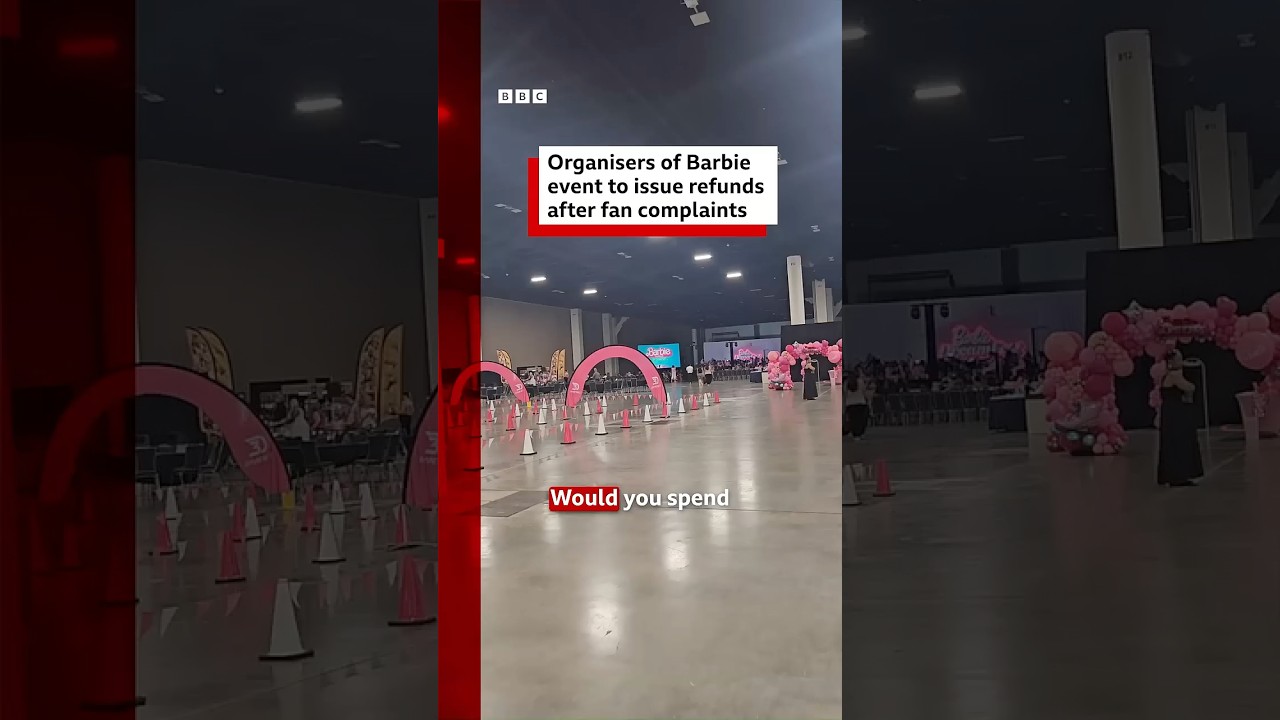
The Barbie Dreamfest in Florida, marketed as a three-day celebration of nostalgia and glamor for fans of all ages, has come under fire from attendees who felt let down by the experience. With ticket prices reaching as high as $450, expectations were understandably elevated. Instead, many ticket holders described their experience as a lackluster affair, prompting the event organizers to issue refunds.
Promised as a weekend of “dream big energy,” the reality was far less enchanting. Among the disappointed attendees was the burlesque group Hell Hotel, which had hoped for a vibrant, interactive atmosphere. Instead, they encountered empty halls, a sparse lineup of vendors—only around 14 by their estimation—and scant activities suitable for a broad audience. Such a discrepancy between expectation and reality has led many to question the event’s credibility.
Ticket prices ranged significantly, starting at $72 for adults and $33 for children for daily passes, and climbing to a steep $250 for a three-day pass that included a rather underwhelming swag bag. From their descriptions, the swag bag consisted mainly of a plastic pouch and Barbie-themed hand sanitizer, items many felt did not justify the significant financial outlay.
Comparisons have arisen between the Dreamfest and other themed experiences, notably the Willy Wonka-themed event that garnered viral attention in Glasgow. Attendees voiced their disappointment not just regarding the reported activities but also about the ambiance, hoping for a more immersive environment akin to what they had seen in promotional materials.
This disconnect between marketing promises and actual offerings raises broader questions about event planning and execution. Organizers often invest extensively in branding, but as seen in this instance, a glamorous façade cannot mask a lack of substance. The hope is that future events learn from this experience, ensuring that the content aligns more closely with the captivating imagery used in its promotions.
While nostalgia plays a significant role in events like the Barbie Dreamfest, the expectation is that it is paired with engaging activities that resonate with both long-time fans and newer generations. The disillusionment reported by attendees suggests a vital lesson: sentimental value can’t be leveraged alone. Successful fan engagement requires meticulous planning, attention to detail, and a commitment to delivering what was promised.
Refunds were issued as a direct response to the backlash, yet financial compensation alone does not rectify the disappointment felt by attendees. For many, it was more than just about losing money; it was about the fleeting opportunity to engage with a beloved cultural icon in a meaningful way. Events like this hinge on providing attendees with memorable, once-in-a-lifetime experiences that connect them to the things they love.
Looking ahead, organizers must consider how to bridge the gap between anticipation and reality. Engaging with fan communities, understanding their expectations, and developing a program that caters comprehensively to diverse demographics can help in crafting an event that resonates positively. From interactive workshops to themed performances, there is potential for a much more enriching experience that celebrates the legacy of Barbie in a creative and inclusive manner.
In summary, while the Barbie Dreamfest marketed itself as a grand celebration, the disinterest expressed by attendees suggests the need for significant reform in event execution. A focus on immersive experiences that honor the joy and nostalgia associated with Barbie could transform future events from mere spectacles into cherished gatherings. Moving forward, the challenge lies in aligning fan expectations with reality, ensuring that events deliver the dream they promise.