Economic Trouble: Trump’s Declining Approval Ratings and Growing Discontent
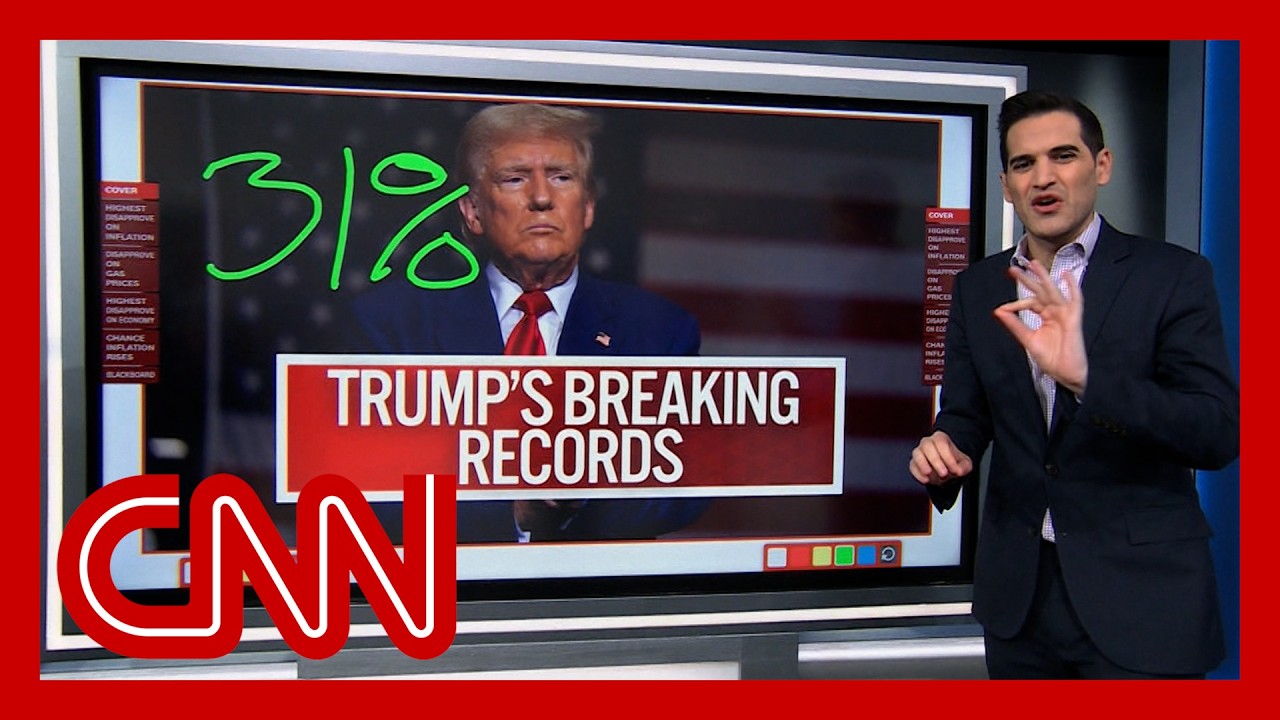
In a significant turn of events, a recent CNN poll has unveiled an alarming trend for President Trump: his approval rating on economic management has plummeted to a historic low of 31%. This stark figure does not merely reflect the president’s current standing; it unveils deeper issues that threaten to undermine his base of support as he heads into an election year.
The president’s troubles are exacerbated by a backdrop of persistent inflation, a factor that resonates deeply with voters. With about 72% of respondents expressing disapproval over Trump’s handling of inflation—a number that surpasses even the disapproval ratings of past presidents like Joe Biden and Jimmy Carter—this is a political landscape riddled with peril. At this stage in their respective presidencies, Biden was at 68% disapproval on inflation, while Carter’s disapproval was at 66%. Trump’s numbers not only match these historical benchmarks but exceed them, signaling a precarious position.
Gas prices are another significant element in this multifaceted economic narrative. While gas prices were higher during Biden’s tenure, Trump’s recent handling has intensified voter dissatisfaction. CNN’s current polling highlights that 76% of Americans disapprove of Trump’s management of gas prices. This disapproval rating marks a stark contrast to Biden’s worst number, which stood at 72%. The recent surge in gas prices, climbing nearly $1 within the last month—the most significant increase since 1991—plays a critical role in shaping public sentiment.
The confluence of inflation and rising gas prices paints a troubling picture for Trump, especially as these economic issues are central to the electorate’s concerns. With 69% disapproving of Trump’s overall economic management—significantly worse than George W. Bush’s 57% and Barack Obama’s 56% at similar points in their presidencies—Trump’s economic stewardship is proving to be more of a liability than an asset.
This stark deterioration in approval ratings among his own party further complicates the president’s political landscape. Approval among Republicans has dipped to 71%, down from 85% just months earlier. Such erosion highlights a palpable sense of discontent within the party, signaling that even his staunchest supporters are beginning to question his economic policies. Voter sentiment often hinges on tangible issues and the perception of impending challenges.
Economic sentiment extends beyond immediate issues; it encompasses broader anxieties about the future. Current prediction markets indicate that inflation rates above 4% are anticipated to persist through 2026. This grim forecast suggests that the economic challenges facing the Trump administration may not only be immediate but systemic, further hampering his ability to regain the confidence of the electorate.
For Trump, the stakes are extraordinarily high. Unlike his first term, when his handling of the economy bolstered his approval ratings, this time, economic struggles are threatening to jeopardize his entire agenda and party cohesion. As congressional midterms loom, economic sentiment is expected to drive voter turnout, making it essential for Republican candidates to consider their alignment with Trump.
Moreover, the war in Ukraine has seemingly diverted the Trump administration’s focus away from domestic issues, frustrating many supporters who expected a more robust economic agenda. The perception of mismanagement in prioritizing foreign policy over local economic stability may be a deciding factor in whether Trump retains loyal supporters or faces a significant electoral backlash.
Looking ahead, it will be critical for Trump and his administration to pivot strategies, focusing not only on geopolitical triumphs but also on addressing the pressing economic challenges that have captured the electorate’s attention. While Trump’s commitment to revamping policies surrounding voting and federal control demonstrates a willingness to tackle contentious issues, this may not suffice to alleviate deep-seated economic grievances.
In conclusion, the current economic landscape presents a unique challenge for Trump as he faces intensifying scrutiny from both the public and political allies. Whether the president can rectify his standing on economic issues remains uncertain, but the data indicates a pressing need for strategic reevaluation. Failure to do so may not only affect his approval ratings but could also have significant ramifications for Republican candidates in the upcoming midterm elections.