US-Iran Ceasefire: A Look into Recent Developments and Implications
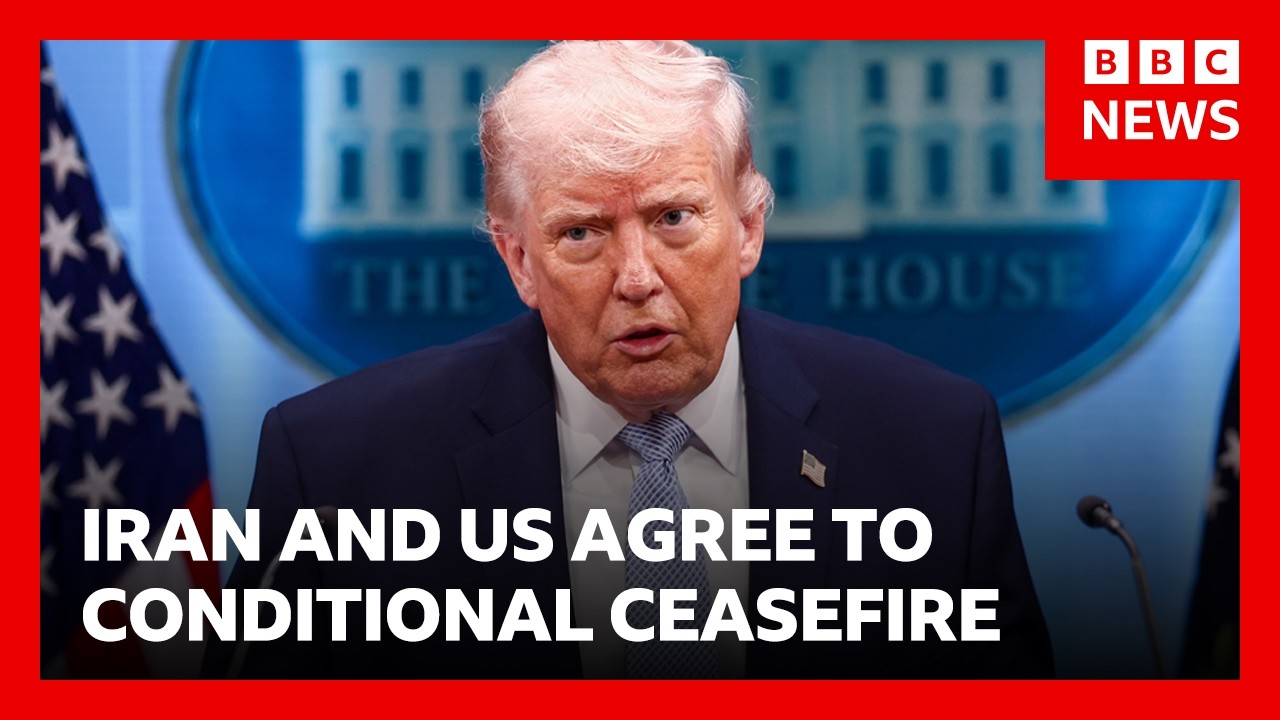
In a landmark development, the United States and Iran have reportedly agreed to a two-week ceasefire amid a backdrop of escalating tensions. This follows remarks from U.S. President Donald Trump, who announced a suspension of the military deadline imposed on Iran as part of ongoing negotiations. The ceasefire was proposed after discussions with Pakistan’s Prime Minister, Shabbaz Sharif, who served as a mediator in the dialogue.
Key Elements of the Ceasefire Agreement
The ceasefire, characterized by mutual concessions, aims to halt hostilities across various regions, most notably in the strategic Strait of Hormuz. The Iranian state media has underscored that the United States has acquiesced to a ten-point peace plan, comprising several critical stipulations, including lifting sanctions and a promise of reconstruction payments to Iran. According to the Supreme National Security Council of Iran, the plan outlines Iran’s commitment to avoiding nuclear armament, an essential aspect of U.S. demands.
Moreover, the Iranian government perceives this arrangement as a significant victory, framing it as a validation of its objectives amidst a turbulent international landscape. The leadership in Tehran believes they have achieved substantial gains against what they describe as historical failures inflicted on them by external adversaries.
Reaction from Key Stakeholders
Prime Minister Sharif expressed optimism about the forthcoming negotiations in Islamabad planned for April 10, 2026, citing the wisdom exhibited by both nations’ leaders. This diplomatic engagement reflects Pakistan’s aspirations to position itself as a pivotal mediator in regional conflicts.
Interestingly, the atmosphere in Iran post-announcement has been mixed. Some citizens, who were bracing for potential military strikes, experienced a wave of relief. Having stocked up on essential supplies due to fears of imminent bombardment, the population now finds themselves in a state of cautious optimism. However, there remains skepticism among opposition groups who view the ceasefire as a mere postponement of inevitable conflict and a maneuver by a weakened regime.
The Challenges of Negotiation
Despite the apparent positive momentum, significant challenges loom over both parties as they face a profound trust deficit. Historical precedents of failed negotiations and resumed conflict contribute to a palpable sense of skepticism regarding the feasibility of a comprehensive agreement.
Already, there are dissenting views on key issues, such as Iran’s nuclear program and territorial control over the Strait of Hormuz—a strategic maritime route. While the U.S. has insisted on freedom of navigation, Iran aims to exercise greater oversight over maritime activities in the area. The intricacies of these demands highlight the complex landscape that negotiators must navigate.
Furthermore, the internal dynamics within Iran complicate matters further. The Iranian regime, grappling with economic strife and civil dissent, faces growing pressure to exhibit strength both externally and internally. The backdrop of military wear and ongoing internal crackdowns makes the potential for a cohesive policy response even more challenging.
Military Context and Future Implications
From a military perspective, the situation remains precarious. Colonel Mark Canian, a senior advisor at the Center for Strategic and International Studies, emphasized that Iran has sustained significant losses but still maintains a strategic foothold in the Strait of Hormuz. The fear of military escalation persists, particularly given documented incidents of missile strikes emanating from Iranian territory.
As negotiations commence in Islamabad, the prospect of reaching a sustainable peace remains uncertain. The historical context and entrenched positions of both nations suggest that while diplomatic efforts may lead to temporary truces, the broader issues fundamentally sustain an environment ripe for continued conflict.
Conclusion
The recent ceasefire agreement between the U.S. and Iran opens a doorway to potential diplomatic resolutions but is underscored by complexity and doubt. The efficacy of mediation efforts will depend on both sides’ willingness to grapple with a host of unresolved issues, alongside internal pressures that each nation faces. As the world looks toward Islamabad, the next few weeks may prove pivotal, not only for U.S.-Iran relations but also for the overall stability of a critical geopolitical region.