Navigating Tensions: The Fragile Ceasefire in the Strait of Hormuz
The Strait of Hormuz, a vital conduit for global oil trade, finds itself in a precarious position as the United States and Iran engage in a complex standoff. Despite assertions from U.S. Defense Secretary Pete Hexith that the ceasefire with Iran is still intact, recent developments suggest otherwise. Exchange of fire, military posturing, and maritime disruptions underscore the fragility of peace in this strategically pivotal area.
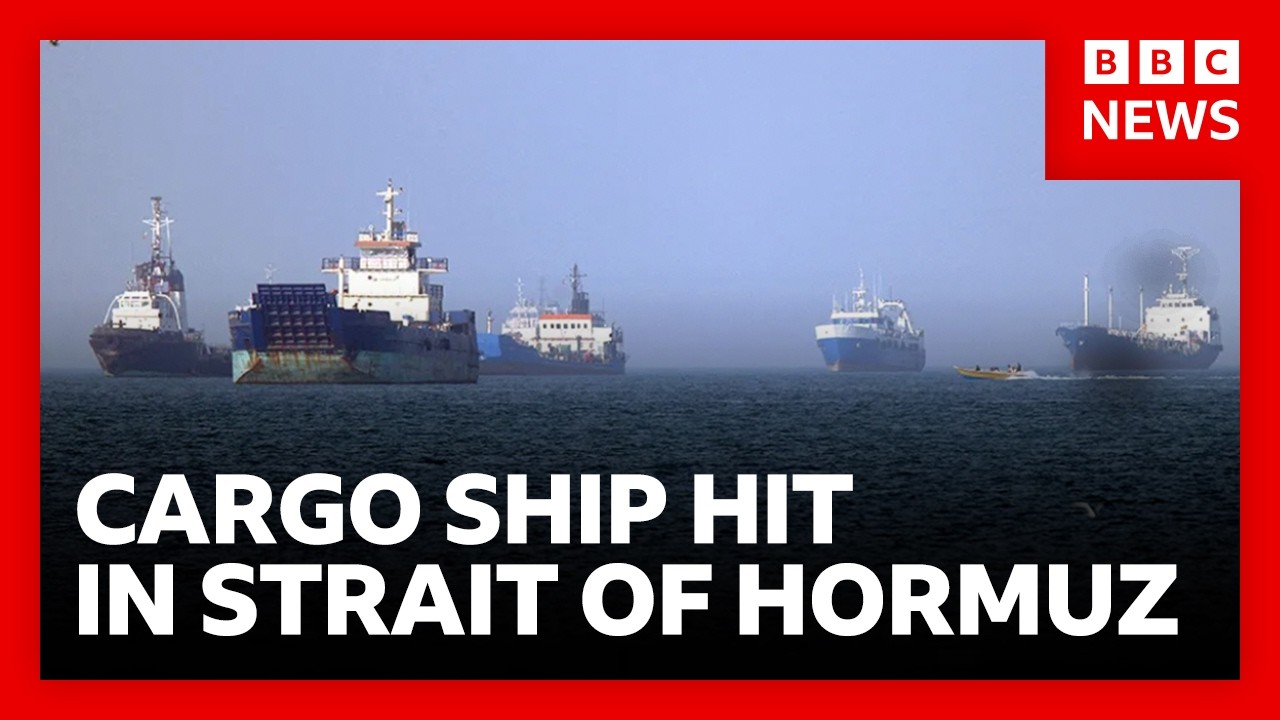
At the heart of the current situation is "Project Freedom," an initiative launched by the U.S. military aimed at facilitating the movement of cargo ships through the strait. With over 1,600 vessels stranded due to escalating tensions, the economic ramifications are felt globally. Hexith’s declaration that the U.S. has established a "red, white, and blue dome over the strait" serves to illustrate America’s commitment to maintaining a free passage. However, only two tankers successfully navigated the route on the first day of the initiative, a stark contrast to the 130 vessels that regularly traversed the waterway before hostilities began.
The U.S. seeks to control the narrative around its military operations, emphasizing a defensive posture. Secretary of State Mike Pompeo reinforced this stance by clarifying that the U.S. is not rekindling hostilities unless provoked. "If no shots are fired at these ships and no shots are fired at us, we’re not firing shots," he stated, adding that any aggression would be met with "lethal efficiency." This rhetoric aims to reassure both the American public and international stakeholders while attempting to de-escalate fears of a full-scale conflict.
Yet, the situation remains delicate. Reports of missile strikes and drone attacks attributed to Iran against various targets, including the UAE, raise questions about the efficacy and sincerity of the ceasefire. The U.S. appears hesitant to label these actions as violations, opting instead to maintain the façade of an ongoing peace process. However, as one UAE official noted, the threat posed by Iranian military capabilities cannot be ignored. Captain Raman Kapoor, stranded with his crew aboard an oil tanker, poignantly articulated the anxiety faced by civilians caught in this geopolitical turmoil. "We are safe, but the truth is we are civilians caught between knives," he lamented.
Moreover, the Iranian parliament speaker’s remarks indicate a readiness to continue their military engagement while pursuing negotiations from a position of strength. "We negotiate with bombs," he stated, underscoring Iran’s commitment to standing firm in the face of U.S. pressure. All the while, American military might looms over the region, suggesting that an unintended escalation is a constant risk.
As both nations grapple with their respective demands, a clear path forward remains elusive. The U.S. desires a comprehensive agreement that addresses its concerns over Iran’s regional activities and nuclear capabilities. Conversely, Iran seeks acknowledgment of its influence and a rollback of sanctions that have crippled its economy. The lack of diplomatic progress only exacerbates the tension, leaving open the possibility of miscalculation and conflict.
In this intricate geopolitical chess match, the U.S. must balance its military aspirations with the reality of an increasingly uncooperative Iran. The recent attacks on civilian and military assets in the region illustrate that while a ceasefire may exist, the underlying stresses are far from resolved. International observers can only hope that responsible diplomacy prevails, preventing a serious incident that could spiral into all-out war.
In conclusion, the situation in the Strait of Hormuz exemplifies the challenges of international relations in a volatile environment. While the U.S. projects strength and seeks to safeguard global trade, the chaotic interplay of military might and diplomatic maneuvering suggests that peace remains a distant goal. The world watches as both sides navigate the treacherous waters of negotiation and conflict, uncertain of what the future may hold.