A Republican Revolt: The Shift on War Powers Regarding Iran
In a notable departure from party lines, a small faction of Republicans in the House of Representatives recently voted alongside Democrats to restrict President Trump’s war powers with regard to Iran. This rare act of defiance has raised questions about public sentiment and the political calculations behind it. As public discontent with the ongoing military engagement has grown, these Republicans may be reacting to broader shifts in voter opinion, particularly among independents.
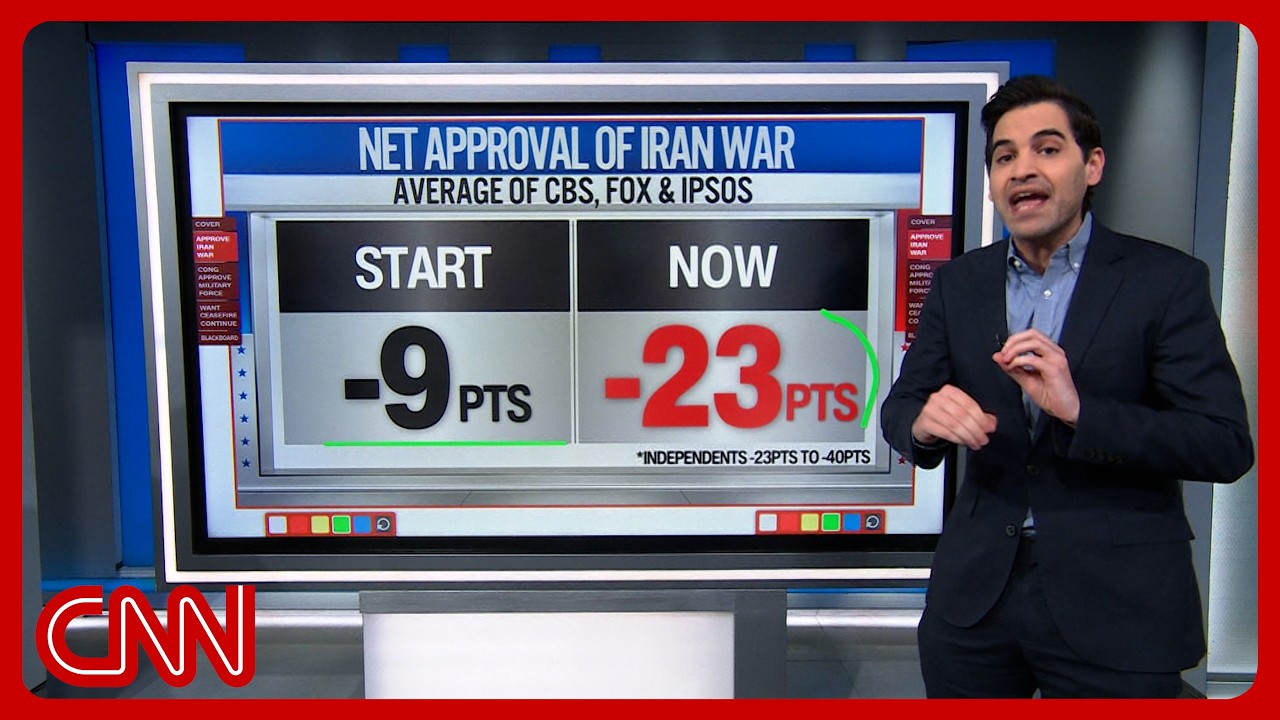
The data paints a stark picture. According to Harry Eden, CNN’s chief data analyst, the approval ratings for the Iran war have plunged significantly since its inception. What began as an unpopular conflict has worsened, with a net rating now at a staggering minus 23 points. This erosion of support has become particularly pronounced among independent voters, whose approval ratings have shifted dramatically from minus 23 to minus 40. Such trends are alarming for Republicans, especially those already vulnerable in the House.
For these dissenting Republicans, the move to limit Trump’s military powers reflects a deep recognition of the shift in public opinion. A significant 63% of Americans oppose any presidential action involving military force without congressional approval. Among independents, this number climbs to 72%. Clearly, the legislative decisions made in the House resonate with the electorate, suggesting that frustrations over the war are translating into calls for accountability and legislative oversight.
Perhaps more telling is the sentiment surrounding the conflict itself. A rare bipartisan consensus appears to be emerging, as 77% of Americans support the continuation of a ceasefire between the U.S. and Iran. This figure includes high levels of support from Democrats (96%) and independents (81%), as well as a substantial portion of Republicans. The desire for diplomacy over escalated military action is overriding traditional party loyalties, reflecting a broader national fatigue regarding foreign military commitments.
The dissenting Republicans, including representatives from key electoral battlegrounds, face mounting pressure from constituents who prioritize domestic issues like rising gas prices and the economic implications of the war. Concerns over escalating energy costs are deeply felt across diverse districts, with GOP members increasingly aware that constituents are placing greater importance on affordability and economic security over unwavering loyalty to party lines.
This shift is not without ramifications for the Republican Party. By opposing Trump’s war strategy, these representatives risk alienating party loyalists but may shore up crucial support among moderates and independents. Their votes reflect a calculated risk in an environment where the electoral landscape is increasingly unpredictable.
The House Speaker, Mike Johnson, cautioned against these defections, arguing that they undermine the executive branch’s ability to negotiate effectively. However, the dissenting voices argue that adherence to the War Powers Act is more important, emphasizing that Congress holds exclusive authority in matters of war and military engagement. They assert that prolonged military actions without legislative oversight are not just unconstitutional but electorally perilous.
Critics of the administration perceive a disconnect between policymakers and the everyday concerns of ordinary Americans. The rising cost of living, particularly the burden of high gas and food prices, has created a palpable sense of frustration. The impression that lawmakers are out of touch—whether through their policies or their messaging—could prove detrimental to both sides of the aisle if not addressed.
As the political landscape continues to evolve, this rare act of defiance by House Republicans may signal a broader trend within the party. Future electoral battles may hinge not only on traditional partisan divides but increasingly on the ability of representatives to demonstrate empathy and responsiveness to their constituents’ frustrations.
Ultimately, the political calculus surrounding military engagement is shifting. With a significant number of Americans expressing the desire for a different approach, the House’s recent actions imply that Republicans might be recalibrating their strategies to resonate more effectively with a dissatisfied electorate. Whether this shift can sustain momentum will depend on the collective response from the party and the administration in the months leading up to the next elections. The course of American foreign policy may very well be influenced by the voices of those who are weary of conflict and yearning for a more nuanced engagement with the world.