Ties That Bind: King Charles III Addresses the US Congress
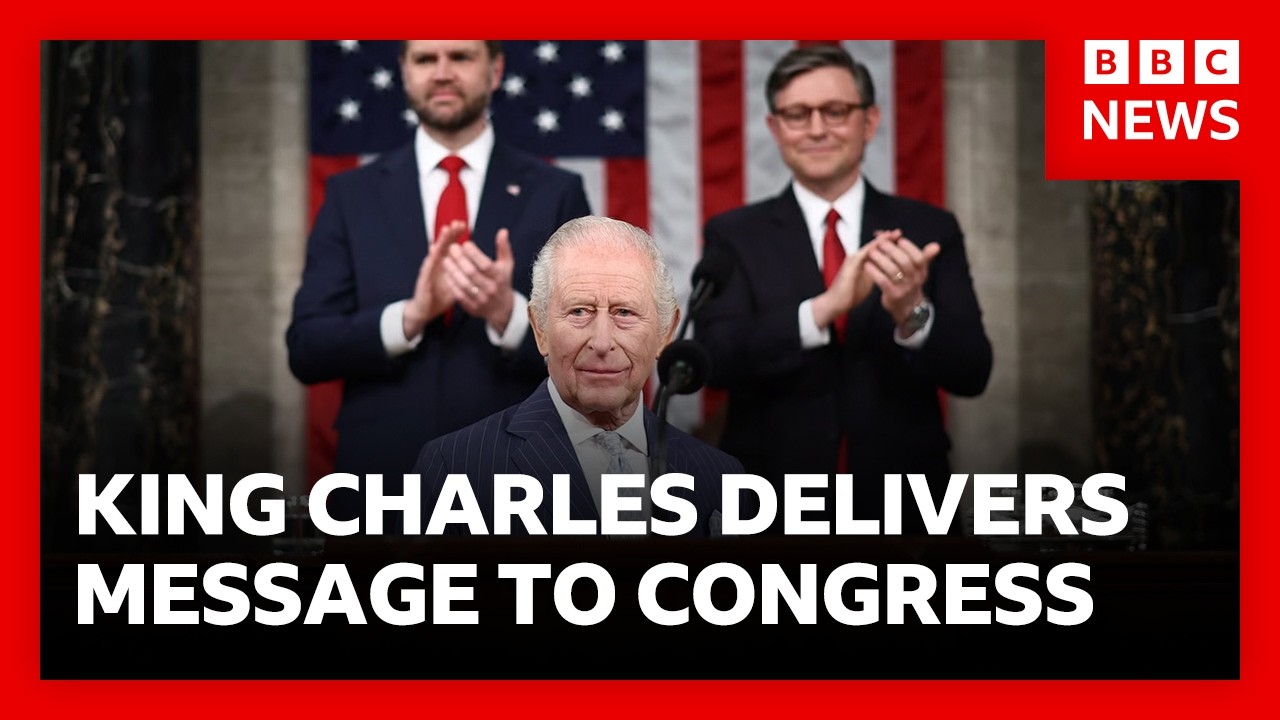
In a historic address to a joint session of the US Congress, King Charles III underscored the significance of the UK-US partnership, asserting that it is more crucial today than ever before. This marked only the second occasion in history that a British monarch has addressed the collective chambers of the US Congress, signifying the ongoing importance of transatlantic relations.
The King’s arrival in Washington occurred amidst a backdrop of geopolitical tensions, particularly concerning the ongoing conflict in Iran. However, the ceremonial military welcome at the White House was a testament to the enduring bond between the two nations. President Donald Trump, in his speech, proclaimed that "Americans have no closer friends than the British," emphasizing a shared history and values that continue to unify the two countries.
King Charles’s speech resonated deeply with lawmakers, earning multiple standing ovations. He began by echoing sentiments of comfort and solidarity in response to recent acts of violence. He stated with "unshakable resolve" that such acts would never prevail, reinforcing the collective commitment to democracy shared by both nations. His words struck a chord, reminding his audience that despite differences and disagreements, there exists an unbreakable bond that unites the UK and US.
Historical context played a prominent role in the King’s address. He referenced the turbulent past of Anglo-American relations but emphasized how both nations have repeatedly found common ground. He articulated, "By Jove, Mr. Speaker, when we have found that way to agree, what great change is brought about." This historical perspective served not only as a reminder of the past but as a beacon for future cooperation.
The King also deftly navigated political sensitivities while reinforcing the significance of the North Atlantic Treaty Organization (NATO). He cited the aftermath of the September 11 attacks as a moment of unity, when NATO invoked Article 5 for the first time, showcasing the strength of the alliance. Today, such a unified approach is deemed necessary for addressing contemporary global challenges, notably the defense of Ukraine, whose courageous struggle resonated with the assembled lawmakers.
In a poignant conclusion to his speech, the King called for a renewed commitment between the nations, particularly in light of America’s upcoming 250th birthday. Echoing President Lincoln’s reflection in the Gettysburg Address, he noted that while words may fade, actions resonate eternally. "Let our two countries rededicate ourselves to each other in the selfless service of our peoples," he stated, ultimately blessing both the United States and the United Kingdom.
Earlier that day, ceremonial pomp enveloped the White House as King Charles and Queen Camilla were given the highest diplomatic honor afforded to a visiting head of state. President Trump’s remarks were characterized by a blend of humor and nostalgia, as he reflected on his mother’s admiration for the British royal family. Such personal anecdotes highlighted the unique chemistry between the two leaders, highlighting how a king and a president can find common ground despite their differences.
However, the visit was not without controversy. The British Ambassador to Washington, Sir Kim Christian Turner, found himself under scrutiny for comments suggesting that Israel might share a closer relationship with the US than the UK. This potentially embarrassing revelation came at a time when the King was striving to bolster UK-US relations.
Moreover, the specter of Jeffrey Epstein loomed over the royal couple’s visit. Despite pressure to engage with victims of Epstein’s crimes, the King opted for a more diplomatic reference during his speech, acknowledging the “ills” that exist in both nations without delving into specifics.
As the day drew to a close, the stage was set for further speeches at a lavish state dinner, where the mood was likely to be lighter. Nonetheless, the lasting impact of King Charles’s historic address will reverberate far beyond the walls of Congress. The emphasis on unity and shared values reflects a timeless narrative in the tapestry of UK-US relations, one that will require vigilant nurturing in the years to come.