Understanding the Impact of Victory Day Parade’s Cancellation in Russia
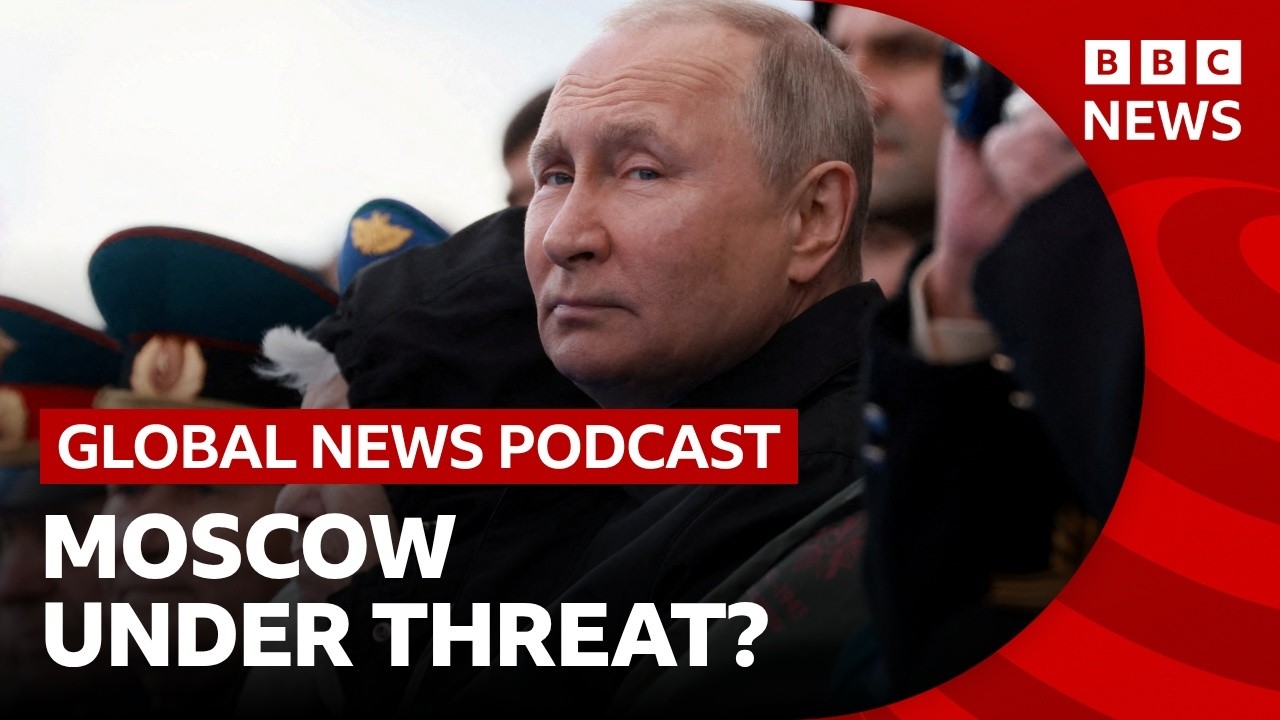
The absence of the Victory Day parade in Moscow this year marks a significant departure from tradition in Russian state celebrations. For decades, May 9 has been a pillar of national pride, symbolizing the triumph of the Soviet Union over Nazi Germany in 1945. This year’s cancellation can largely be attributed to security concerns following threats from Ukraine to target the event, reflecting the changing dynamics of the ongoing conflict.
Victory Day has long served as a platform for the Kremlin to reinforce its ideological narrative. The Russian government draws heavily on historical memory, painting a picture of continuity from the Soviet era to the present conflict with Ukraine. State media has repeatedly framed Ukraine’s leadership as neo-Nazi, a narrative that has been ingrained in public consciousness over time. This portrayal not only stirs emotions but also aims to galvanize support for the ongoing military campaign.
With the absence of military hardware on display, the Kremlin faces a unique predicament. The decision to omit a show of strength, typically marked by tanks and troops parading through Red Square, speaks volumes about the current operational realities. The Russian leadership has hinted that this is due to the "operational situation," hinting at both potential Ukrainian threats and perhaps a reduced capacity to showcase its military might. Such a vacuum could leave President Putin in a precarious position, especially if he opts to skip the event entirely—a move that would be perceived as a significant embarrassment for the state.
The conflict now spirals into its fifth year, and it appears that Ukraine has gained new leverage. In stark contrast to earlier predictions which downplayed Ukraine’s capabilities, recent drone strikes within Russian territory underscore a shift in power dynamics. Ukrainian forces have dramatically increased their long-range drone attacks, successfully targeting strategic infrastructures such as oil refineries—sources of revenue essential for funding Russia’s military operations. According to various intelligence reports, Ukrainian attacks have incapacitated a substantial portion of Russia’s oil-export capacity, which is critical for the country’s economy.
Public sentiment in Ukraine reveals a complex reality. Everyday life for Ukrainians is inextricably linked to the conflict. Their struggle has become a backdrop against which normal routines are measured. While some may hold mixed feelings about the protracted nature of the war, many see it as an unfortunate aspect of everyday existence, akin to the rising of the sun. The sheer duration of the conflict has ingrained a sense of resilience and determination.
Conversely, gauging sentiment within Russia presents a different set of challenges. The government’s tight grip on public discourse creates a chilling effect, making it difficult for citizens to express dissent openly. Although state-sponsored opinion polls claim a high level of support—often as much as 70% for the so-called "special military operation"—analytics suggest a growing undercurrent of discontent. Conversations on social media reflect a populace growing weary of the conflict and the associated hardships, though criticism is often articulated in vague terms to avoid backlash.
The government’s recent measures to restrict mobile internet access—an effort presumably aimed at countering the potential for drone strikes—further complicates the daily lives of ordinary Russians. The reliance on technology for navigation and communication has been disrupted, adding another layer of frustration among citizens already facing the impacts of a protracted military confrontation. Some may find themselves yearning for the conveniences of modern life while grappling with an increasingly oppressive atmosphere.
As the landscape continues to evolve, it remains clear that Victory Day’s cancellation is not merely a logistical hiccup; it’s indicative of broader geopolitical shifts. The Ukrainian forces’ capability to challenge Russia on its own territory alters the nature of the narrative the Kremlin seeks to propagate. For both nations, the implications of these developments will shape the course of a conflict that appears far from resolution.