Rural Voter Sentiment Toward the President: A Shift in Dynamics
Recent analyses indicate a significant shift in rural voter sentiment regarding President Donald Trump. Once considered a solid support base for the president, rural constituencies across the United States, particularly in states like Iowa, now appear to be undergoing a transformation that could have profound implications for the upcoming elections.
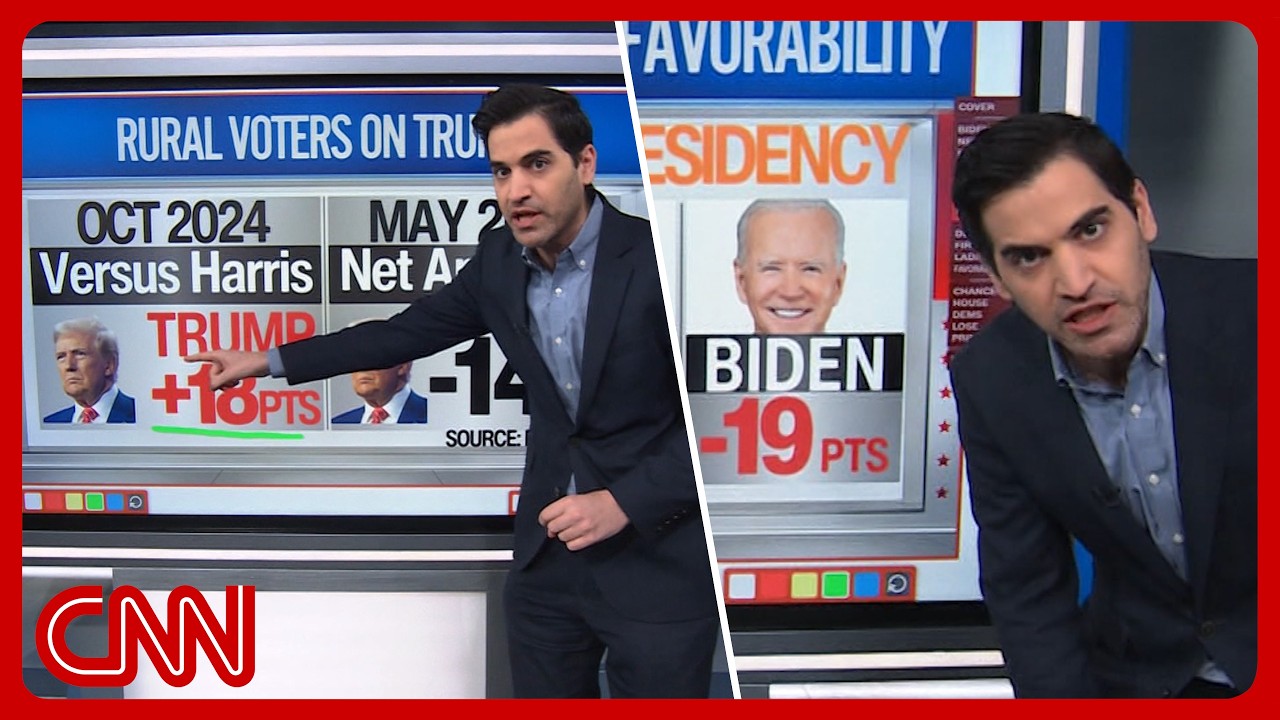
In October 2024, Trump enjoyed a comfortable 18-point lead among rural voters against then-Vice President Kamala Harris. Fast forward to the present, however, and the situation has flipped dramatically. Recent data from exit polls reveals that Trump is now 14 points underwater with these same voters—an alarming 32-point swing. This shift underscores an urgent concern: rural voters, who once rallied behind the president, are increasingly disillusioned.
One of the most cited reasons for this rural revolt is the state of the economy, particularly rising inflation rates that have burdened many households. In a striking reversal, Trump’s once-strong trust rating among rural voters on economic issues has plummeted by over 50 points, shifting from a 37-point trust margin to a 19-point deficit against his Democratic challenger. Inflation, a key issue that propelled him to electoral victory in 2024, has now become a liability.
This erosion of support seems to have been reflected in the recent primaries within Iowa, where Trump’s endorsement typically sways voter opinion. However, in the most recent gubernatorial primary, the candidate he endorsed, Randy Feenstra, won the absentee vote but lost to his challenger on Election Day among those aware of Trump’s endorsement. This suggests that Iowa Republicans are increasingly receptive to alternatives, signaling a subtle but unmistakable departure from Trump’s narrative.
So, what does all of this mean for Democrats? Historically, Iowa has been a tough sell for Democratic candidates; the last to secure a Senate seat was Tom Harkin in 2008. However, predictions show a potential uptick in Democratic fortunes. Rob Sand, running for governor, is now rated to have over a 50% chance of victory, while the prospects for Democratic candidates in the Senate race are similarly promising. If Democrats manage to capture Iowa, it could become a crucial component in regaining control of the Senate.
Beyond rural sentiments, another critical dimension is public opinion regarding military actions and foreign policy, particularly the ongoing issues related to the Iran war. Initial opposition to military engagement has intensified, with a net approval rating plunging from -9 points to a staggering -23 points. Among independents, disapproval has spiraled from -23 to -40 points. This growing discontent signals potential challenges for Republicans in Congress, as their coalition faces increasing friction on foreign policy matters.
Furthermore, a striking 63% of Americans, including 72% of independents, believe that the president should seek congressional approval before using military force. This waning trust in executive military actions adds yet another layer of difficulty for Trump and his administration to navigate as public sentiment continues to shift.
Amid these dynamics, President Biden remains in a precarious position. His approval ratings, consistently low since taking office, suggest he could serve as an anchor for the Democratic Party in 2026. Biden’s net favorability currently sits at -19, the worst among recent Democratic presidents, with independents showing a stark 28-point disapproval. This raises many questions about how Biden’s unpopularity may reflect on the party’s broader electoral prospects.
Additionally, the historical context paints a grim picture for Biden when compared to former Democratic presidents. While Bill Clinton and Barack Obama, for example, had significantly higher favorability ratings post-presidency, Biden is set to exit with a noticeably tarnished reputation.
The challenges facing both Trump and Biden reveal a deeper narrative about American politics in this ever-shifting electoral landscape. As traditional party lines begin to blur, the rural revolt against Trump, coupled with disillusionment among Democrats, reflects an underlying current of change. These dynamics may ultimately define not only the 2024 elections but the future trajectory of American political discourse. As the electoral cycle unfolds, all eyes will be on rural voters, whose sentiments could hold the key to both party fortunes in the years to come.