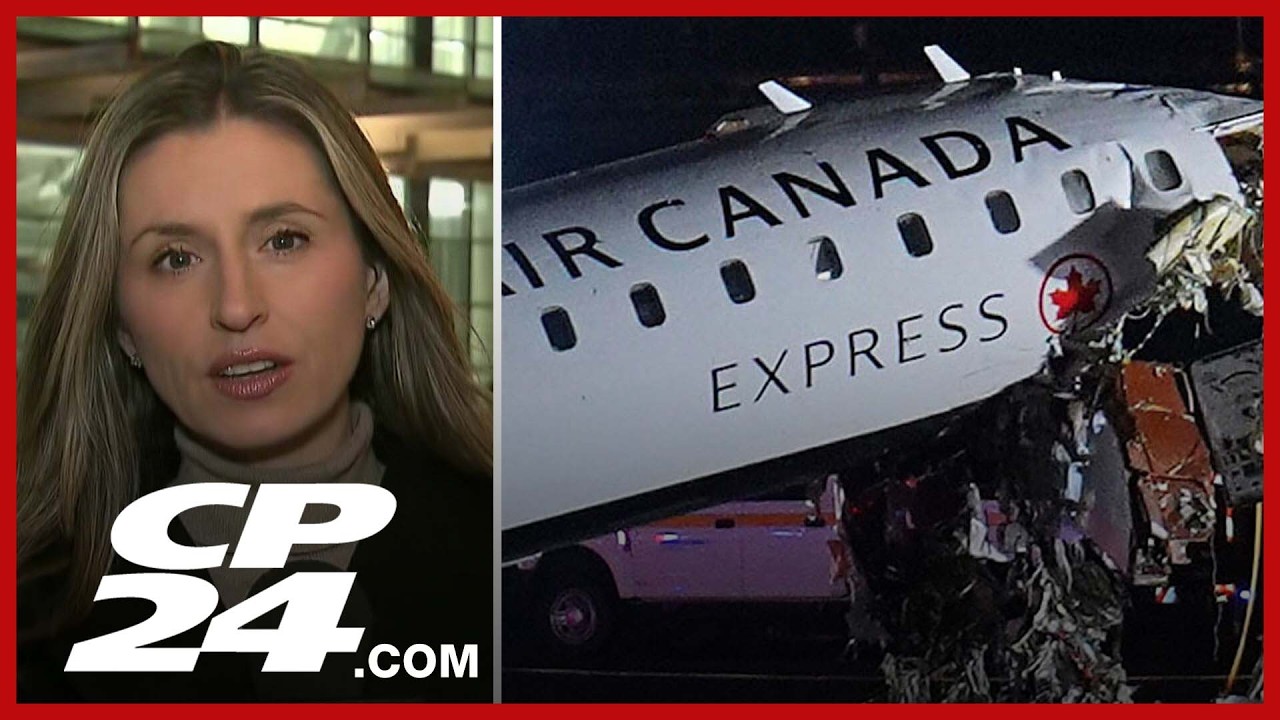
Tragedy Strikes at LaGuardia Airport: A Detailed Examination of the Fatal Incident
In a tragic turn of events, two Air Canada pilots lost their lives when their regional jet collided with a fire truck on the runway at LaGuardia Airport in New York. The accident unfolded late last night, around 11:40 p.m., as the flight, operated by Jazz Aviation, was in its final stages of landing. This devastating incident has left 41 passengers hospitalized, several in serious condition, marking a somber day in aviation history.
The flight had originated from Montreal’s Pierre Elliott Trudeau International Airport and was carrying 72 passengers, along with four crew members. As the news reverberates through the aviation community and beyond, the ramifications are significant. On the morning following the accident, LaGuardia Airport remained closed as investigators sought to piece together what had gone wrong. It is anticipated that it will take several hours, at least until 2:00 p.m., before operations resume.
Initial audio recordings from the air traffic control tower shed light on the chilling moments leading up to the crash. Controllers can be heard urgently instructing vehicles to stop, a warning that tragically did not reach those in the path of the landing jet. The stark contrast between the gravity of the situation and the procedure followed highlights the complexities of air traffic management.
Among the immediacy of concerns are the flight cancellations affecting numerous passengers. According to reports, out of Pearson Airport alone, at least 14 flights scheduled to depart for New York have been canceled as the fallout from the incident continues. Passengers are advised to monitor the status of their flights closely and remain in contact with their airlines as the investigation unfolds.
Phil Dirty, a CTV aviation expert, provided an analysis of the communication breakdown that may have contributed to the crash. In his assessment, the flight was on tower frequency while the fire truck was operating on ground frequency, likely leading to miscommunications between controllers. This kind of operational misalignment, while not unprecedented, raises critical questions regarding safety protocols and the systems designed to prevent such tragedies.
Aeronautical operations typically involve precise coordination between air traffic controllers, especially during critical phases of flight like landing. Phil speculated that the pilots faced an impossible scenario. With the aircraft already on the final approach, they did not have the speed to execute a go-around maneuver, nor could they stop in time once the fire truck entered the runway.
The emotional weight of the incident is further compounded by the loss of two experienced pilots. Phil expressed his shock, sharing a personal connection with Air Canada Jazz, underscoring the human element often overshadowed by statistics. This tragedy serves as a stark reminder that, despite advancements in technology, the aviation sector is not immune to catastrophic failures.
Looking ahead, the investigation will involve a meticulous review of the incident. The aircraft will remain at the scene for forensic examination, allowing investigators to gather crucial data. This will include transcripts from air traffic control conversations and interviews with the surviving crew members, all part of a comprehensive effort to identify the factors that led to this heartbreaking accident.
As the aviation industry grapples with this loss, there are broader implications for airport safety regulations and air traffic management systems. The focus will undoubtedly shift toward understanding how to prevent such incidents in the future, ensuring that protocols are sufficiently robust to protect both crew members and passengers alike.
In the days to come, as more information emerges, the families affected by this tragedy will grapple with their grief. Community support will be integral as they navigate through this painful chapter. For now, the aviation world holds its breath, awaiting answers to the many questions that remain.