President Trump’s Unexpected Turnabout: Air Force One Returns to Base Due to Mechanical Issue
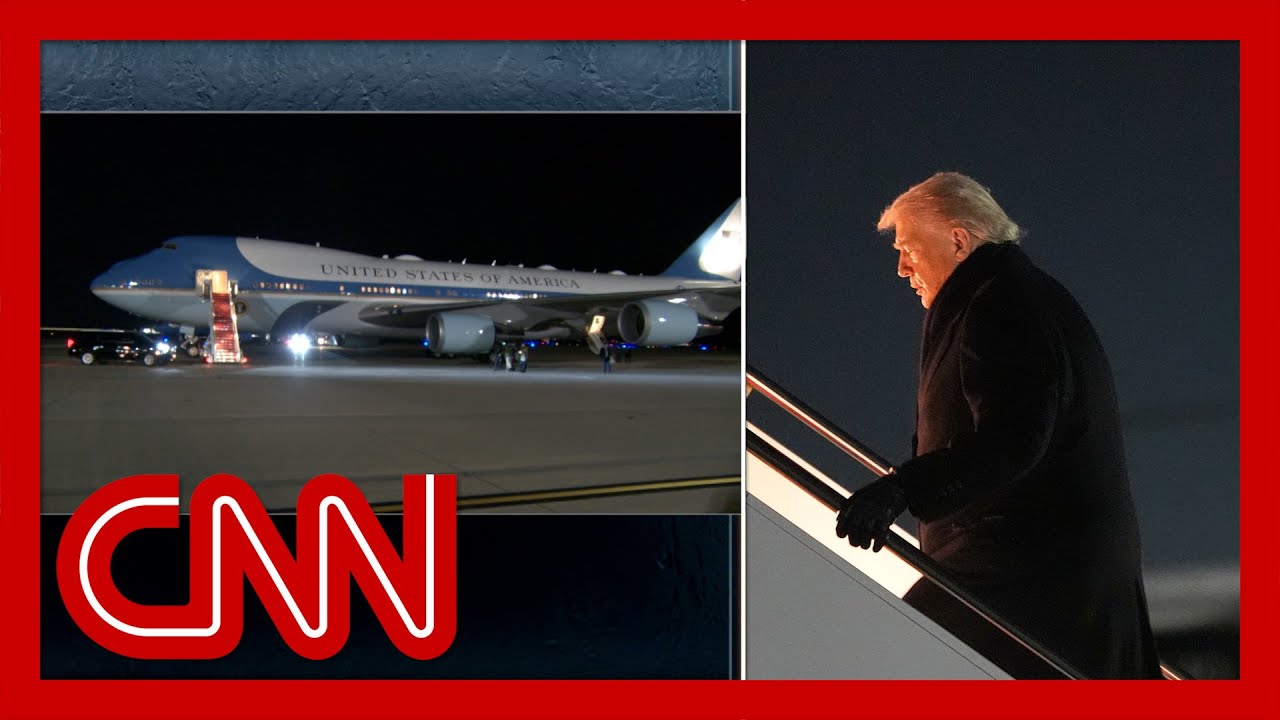
In a surprising turn of events, Air Force One, carrying President Trump, returned to Joint Base Andrews shortly after takeoff en route to Davos, Switzerland, for the World Economic Forum. A source familiar with the situation indicated that a minor mechanical issue necessitated this U-turn, although officials stressed that it was nothing serious. The delay, nonetheless, means that the President will have to switch to a backup aircraft.
Kristen Holmes, CNN’s senior White House correspondent, provided insight into the unfolding situation. Reportedly, after just a couple of minutes in the air, the crew of Air Force One identified an unspecified minor electrical issue, leading to the flight’s abrupt return. The President is still expected to attend the conference, albeit with a delay as arrangements are made for him to board another plane stationed at Andrews.
Air Force One is designed with redundancies to handle minor mechanical problems, but it is essential for crew members to prioritize safety. Even small issues can cause concern, especially given the high stakes of presidential travel. While the specific nature of the electrical issue remains undisclosed, it serves as a poignant reminder of the complexities involved in operating such a well-maintained but equally scrutinized aircraft.
As Air Force One headed back, the delays posed questions about the President’s scheduled meetings and speech upon arrival in Davos. Trump himself appeared to express uncertainty before departure, noting he was unsure what to expect amid ongoing tensions with European allies. In recent months, relations have become increasingly fraught over various issues, including Greenland, which Trump mentioned in his press briefing.
As the aircraft returned to Andrews, the process became slightly complicated. The press pool traveling with the President is restricted from using the internet during the flight, which can impede timely updates on unfolding events. Nonetheless, it is expected that a readout from these reporters will soon clarify what transpired onboard Air Force One.
Air traffic experts, including CNN aviation analyst Mary Skeavo, elaborated on the types of mechanical issues that may require a return to base. Even with numerous redundancy systems in place, control surface problems or significant electrical faults are situations that demand immediate attention. While the specifics are yet to be confirmed, the potential for any sort of electrical failure is noteworthy, given its absolute importance for aircraft safety.
Sources indicated that there was a backup plane prepared at Andrews, ready to receive the President and his entourage upon their return. The specifics of this backup aircraft, however, remain unclear. It is likely that this alternative plane will have the necessary capacity for Trump’s substantial entourage, which includes key advisors and Secret Service personnel.
Holmes noted that despite the immediate need for a new aircraft, the delays may not substantially alter the plans once Trump arrives in Davos. Given the high level of anticipation surrounding his speech to world leaders, it remains a crucial part of his agenda. Although his speech’s timing may shift, the overarching objectives of engaging with international counterparts on pressing issues should proceed as scheduled.
After Air Force One’s unexpected U-turn, the President’s team is in a race against the clock to ensure that he reaches Davos as planned. The expected landing time back at Andrews has been reported as around 11 p.m., after which they will need to quickly deplane and transition to the alternative aircraft.
The overall implications of this mechanical issue remain significant. As a leader navigating international relations during a tense period, Trump’s ability to attend critical meetings hinges on timely travel. As circumstances unfold, the focus will remain on the President’s interactions in Davos and the potential impacts of this unexpected return on their outcomes.