NASA’s Artemis 2: A New Era of Moon Exploration
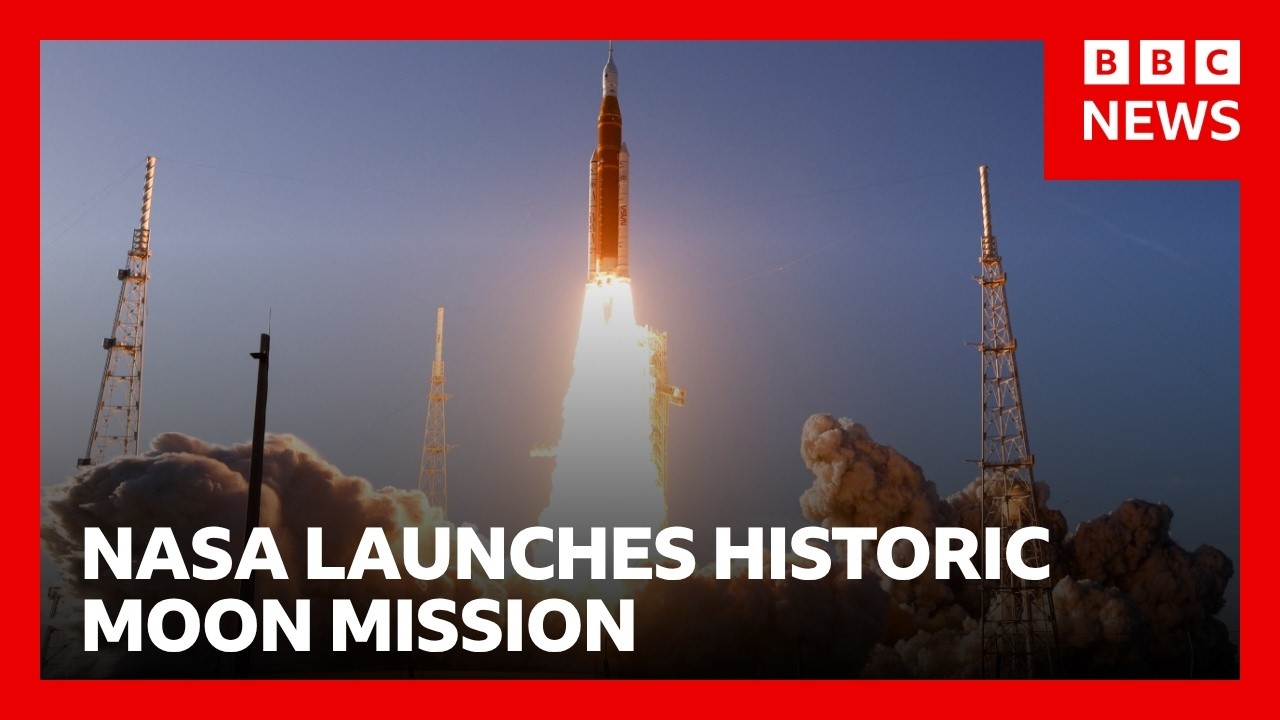
On a remarkable afternoon, NASA’s Artemis 2 mission launched from the Kennedy Space Center in Florida, marking a pivotal moment in human space exploration. This mission carries four skilled astronauts, including three Americans—Reed Wiseman, Victor Glover, and Christina Koch—and one Canadian, Jeremy Hansen. Their objective is clear: a ten-day journey that will take them around the far side of the moon, a feat that has not been accomplished in over five decades.
The spectacular liftoff began with a powerful ignition sequence. “Booster ignition and liftoff,” echoed in the launch control center, a moment that signaled the start of humanity’s next great voyage. The rocket, the most potent NASA has ever constructed, is designed to withstand the intense forces generated during the quarter-million-mile journey to our celestial neighbor. As it soared into the sky, emotions surged for both the astronauts and their loved ones, who bid heartfelt farewells.
Almost immediately after launch, NASA reported a temporary communication loss, but updates soon confirmed that the crew was safe and in great spirits. As they ascended into orbit, Commander Reed Wiseman maintained contact with mission control, offering glimpses of a stunning moonrise ahead. NASA officials emphasized that the crew was performing various checks to ensure the reliability and safety of the Orion spacecraft—a vehicle that has yet to carry humans until this moment.
While the mission signifies a historic return to lunar exploration, it also represents a new frontier in understanding the moon’s potential as a resource for future missions. This Artemis mission aims not only to explore but also to create a sustainable model for space travel that could eventually pave the way for human missions to Mars.
The far side of the moon remains largely uncharted territory. Unlike the side visible from Earth, this hidden expanse has not been thoroughly examined by humans. Previous missions have hinted at intriguing geological features and the possibility of ancient water reserves, especially around the lunar south pole. The Artemis 2 mission is poised to capitalize on modern technology to gather detailed images and data, which could help determine the feasibility of establishing a human presence there.
This expedition serves dual purposes. While it tests the spacecraft’s capabilities, it also assesses how human beings adapt to the unique challenges of deep space travel. The astronauts are familiarizing themselves with life aboard the Orion spacecraft—a confined space that requires them to adjust to zero gravity while performing critical checks and procedures.
From monitoring health and well-being to operating intricate life support systems, every aspect of the astronauts’ experience is under scrutiny. NASA officials noted that acclimating to zero gravity might affect their appetite and overall comfort during the initial days of the mission. As they navigate these challenges, their mission becomes a significant data-gathering endeavor on how humans respond to extensive periods in deep space.
Dr. Hina Khan, a former NASA space scientist, discussed the importance of the Artemis program within the broader context of lunar exploration. She highlighted that previous missions, while focused on the race to the moon, lacked a sustainable vision for future exploration. The Artemis mission seeks to change that paradigm, transforming the moon into a stepping stone for deeper space exploration.
As this mission unfolds, the astronauts are not just embarking on a journey to the moon; they are setting the foundations for humanity’s continued exploration of the cosmos. With the moon serving as a potential launchpad, Mars and beyond seem more attainable than ever.
Ultimately, Artemis 2 is more than a flight—it is a testament to human ingenuity, collaboration, and an unyielding desire to explore the unknown. As the astronauts continue their journey, the entire world watches with bated breath, eager for updates that will define the next chapter in the saga of space exploration.