Democratic Discontent: A Call for New Leadership
The Democratic Party finds itself at a crossroads, facing growing discontent from within its ranks. Senator Alyssa Slotkin recently lamented, "We need new leadership in the White House, the House, and the Senate—and on both sides of the aisle." Her call for change reflects a broader sentiment among party members who believe that current leadership no longer resonates with their constituents.
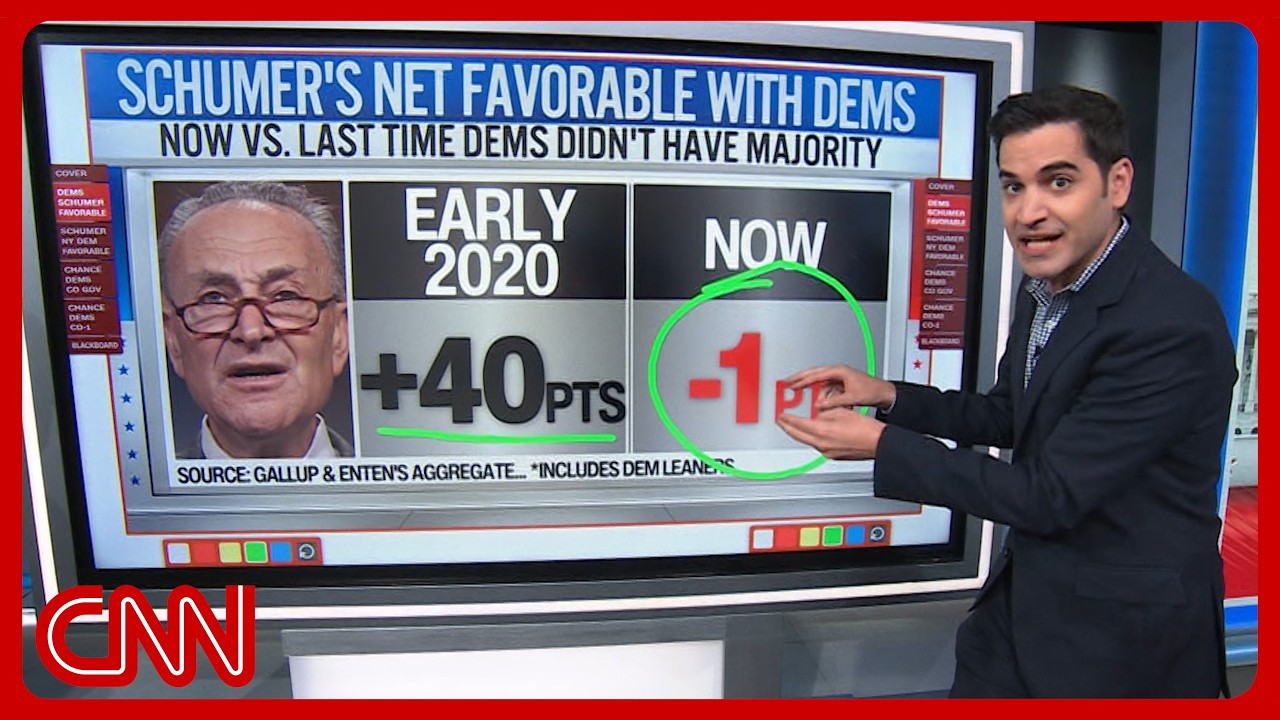
Slotkin’s remarks underscore a troubling trend: the erosion of support for prominent Democratic figures. A striking example is Chuck Schumer, the Senate Democratic leader. Once enjoying a substantial net favorable rating among party members—a remarkable 40 points above water in early 2020—recent data shows him now dimly viewed by Democrats. This is not merely a blip; Schumer’s standing has fallen below water, indicating a shift in the electorate’s mood that even the most seasoned politicians find disconcerting.
The discontent is particularly palpable in New York, Schumer’s home state. Where once he boasted a favorable rating of 75% among New York Democrats, the number has plummeted to less than half. Such a rapid decline signals a potential primary challenge two years down the line. More than a mere internal squabble, this change reflects a widespread sentiment among Democrats: frustration with established leadership.
One cause of this unrest is the rise of a more progressive wing within the party. In upcoming primaries, particularly in Colorado, established incumbents face formidable challenges from progressive candidates, suggesting that the Democratic base is dissatisfied with centrist policies. The changing political landscape is exemplified by the case of Colorado’s incumbent senator, Michael Bennett, who was initially deemed a shoo-in for the governor’s mansion but now finds himself an underdog against Progressive Attorney General Phil Weiser. As recent polling suggests a seismic shift in public perception, it becomes evident that the progressive movement is gaining traction.
Across the nation, Democrats grapple with a toxic brand, particularly in Washington, D.C. This malodorous image has alienated many from traditional Democratic leadership. Socialism, once a term whispered in hushed tones, seems increasingly mainstream among younger voters seeking representation that aligns with their struggles and aspirations. This growing faction disenfranchises them from a party perceived as catering to the elite rather than the common citizen.
Socialism, in its contemporary form, is often sold as merely a platform for universal healthcare or affordable education. However, its more radical elements—calls to dismantle prisons, seize property from landowners, or impose broader systemic reforms—have caused alarm among moderates. While many support reforms viewed as essential human rights, a faction within the movement pushes boundaries that the mainstream electorate may not embrace.
This dichotomy strengthens the resolve of progressive candidates who portray themselves as genuine advocates for the people. They argue for a more authentic representation against a backdrop of corporate influence and establishment machinations. This is a critical moment, as voters increasingly demand authenticity and a clear break from the old guard.
Interestingly, not all Democrats are unified in confronting this leftward shift. Some established party members, including Senators Cory Booker and Chris Murphy, appear to be accommodating the emerging socialist ideologies rather than challenging them. This reluctance to confront the progressive movement head-on reveals a deeper fear among establishment figures: that ignoring the party’s discontent will only escalate tensions.
Democrats must acknowledge the urgency of this internal conflict. As infighting intensifies, the fundamental question remains: who truly represents the base? With the rise of populism shifting political paradigms across the party, figures who resist change may find themselves increasingly marginalized. The electorate’s appetite for fighters—leaders who genuinely advocate for the needs of their constituents—could reshape the Democratic landscape dramatically in the coming years.
As the party moves forward, it faces a turning point that has implications not just for the next election cycle but for its future as a bastion of liberal ideals. The contours of leadership might no longer be defined by the traditional metrics of politics but rather by the willingness to embrace change and galvanize a restless base. In this evolving political narrative, the urgency for a new paradigm has never been clearer, and it is up to the Democratic Party to rise to the occasion.