Analyzing the Political Landscape: Warning Signs and Emerging Trends
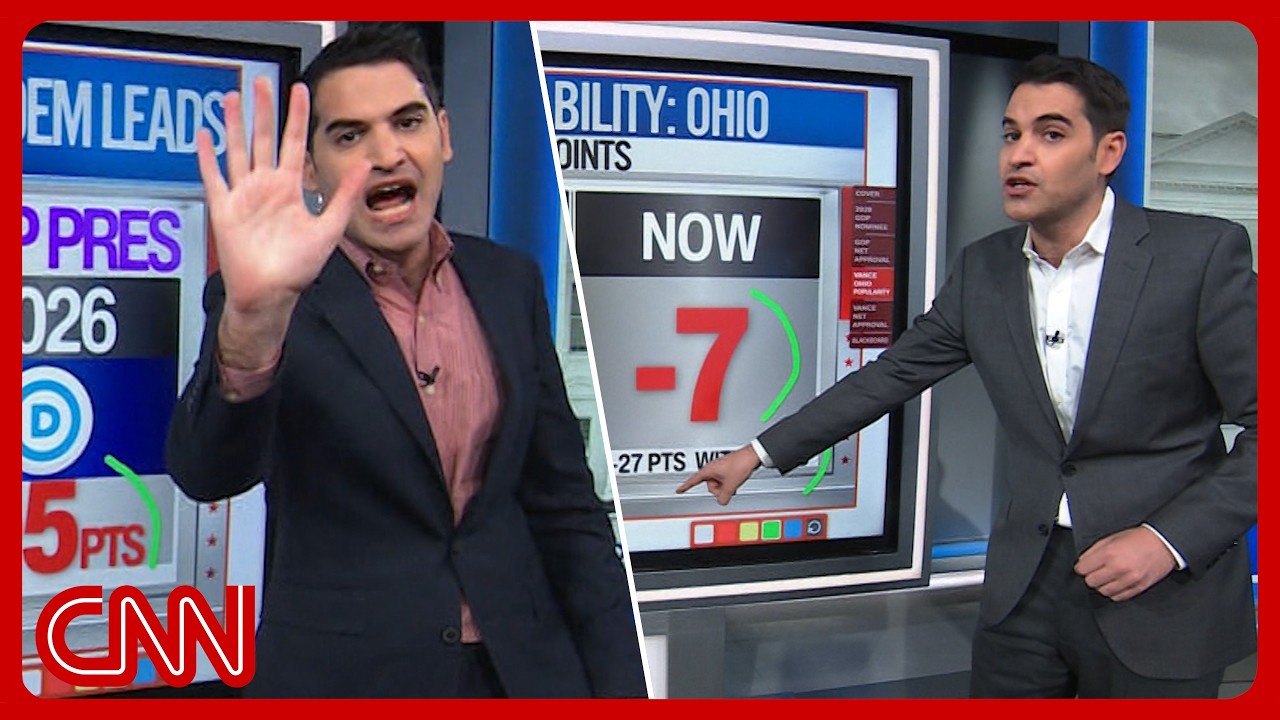
In the realm of American politics, midterm elections often serve as crucial indicators of voters’ sentiment. Current polling suggests that while Democrats maintain a slight lead, the historical context reveals that this advantage may not be as significant as it once was. For instance, recent NBC News midterm polls show Democrats a mere five points ahead—a stark contrast to their ten-point lead in 2018 and eleven-point lead in 2006, when they reclaimed the House.
This tight margin raises a critical question: Are Democrats truly poised for a wave victory, or are there underlying trends that indicate otherwise? Experts note that the polling landscape is displaying warning signs. The Democratic lead appears stable but lacks the momentum typically seen in previous wave elections. Analysts have observed similar patterns across various reputable outlets, including Marquette University Law School and Ipsos, where recent polls have not demonstrated the expected surge in Democratic support.
Moreover, Republicans have strategically positioned themselves to capitalize on these dynamics, particularly through effective redistricting efforts. With data suggesting that Democrats require a three to four-point advantage in national votes to capture congressional control, current averages show them precariously close to that threshold. This tightrope nature of the polling landscapes calls for caution; the Democratic lead, while present, is far from guaranteed.
Compounding these concerns are the sentiments within prediction markets. A recent evaluation notes that while Democrats enjoy a 78% chance of winning, this translates to a substantial risk for them, as nearly one in five scenarios suggest a Republican hold. With the GOP still favored in Senate races, Democrats’ prospects of retaking both chambers remain uncertain.
Turning to individual candidates, the dynamics within the Republican Party present another layer of complexity. The race for the 2028 nomination has seen Marco Rubio’s trajectory rise significantly, while J.D. Vance’s popularity has waned, particularly among Republicans. Approval ratings indicate a shift, with Rubio now surpassing Vance among GOP voters, a crucial metric in determining the party’s primary outcome.
The local sentiments in Vance’s home state of Ohio echo this national trend, revealing troubling approval rates even among his closest constituents. Unfavorable ratings are evident across age and gender demographics, suggesting a disconnect between his messaging and the electorate’s preferences. In particular, a gender gap emerges, with Vance trailing significantly among female voters—a troublesome sign for any candidate gearing up for a national race.
As we broaden our lens to consider younger voters, the findings are even more troubling. In a stark reflection of disillusionment, only 31% of Americans aged 18 to 29 express pride in being American—less than half of the sentiments recorded a decade ago. This demographic’s skepticism extends to their views on the government, with only 25% believing in the efficacy of the constitutional system that has governed for nearly 250 years. Such data indicates a broader malaise among Millennials and Gen Z, not just towards the political establishment but also toward the nation itself.
Amidst these trends, Georgia emerges as a focal point for potential Democratic gains in the upcoming midterm elections. Notably, both the gubernatorial and Senate races present unique opportunities for Democrats, with current polling reflecting unprecedented fortunes for the party in a state often considered a Republican stronghold. Historical context suggests that a dual victory for Democrats in Georgia would mark a pivotal moment for the party, heralding a shift in the political landscape.
In this constantly shifting environment, multiple factors will undoubtedly influence the upcoming elections and the overall trajectory of American politics. As candidates navigate these waters, the importance of aligning with voter sentiment while addressing historical grievances will be paramount. Ultimately, the current landscape serves as a reminder that while signs of progress may exist, they must be approached with caution and a critical eye, as the electorate remains as unpredictable as ever.