The Geography of Misunderstanding: The Iceland-Greenland Mix-Up
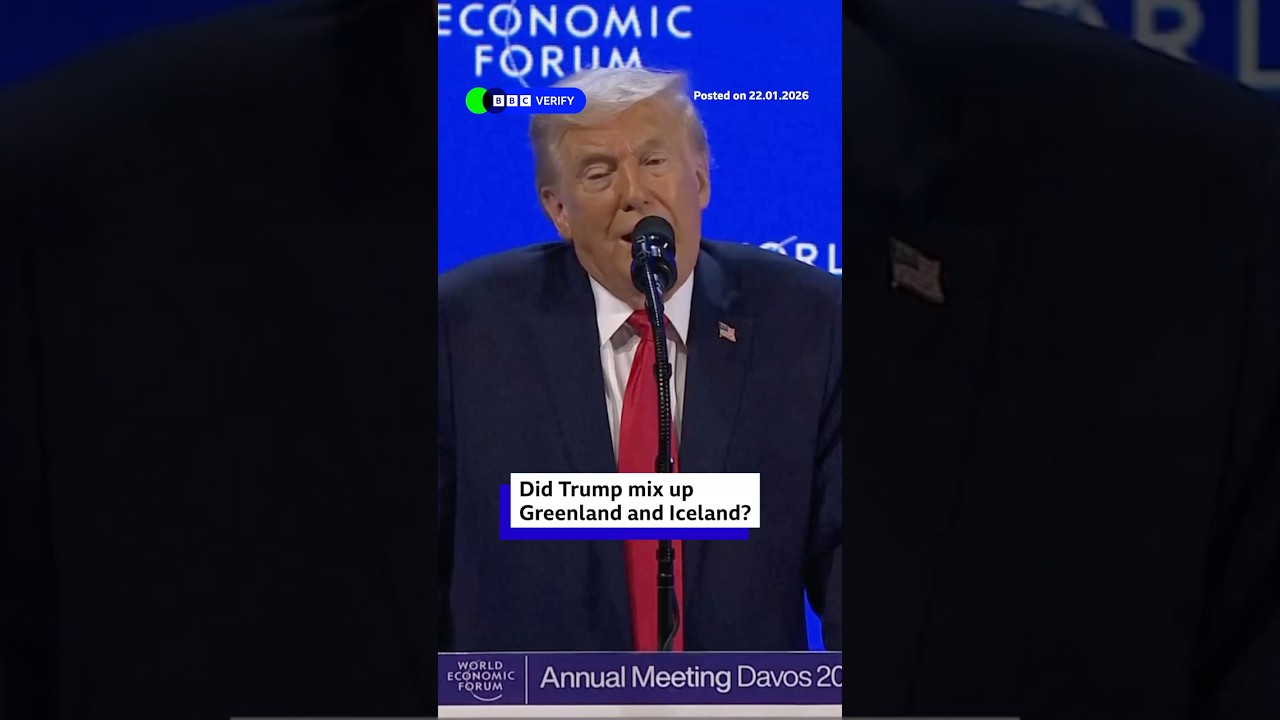
In the realm of international politics, the subtleties of language can sometimes lead to significant misunderstandings. This became evident when President Trump, during a notable address at the World Economic Forum, mistakenly conflated Iceland and Greenland. His comments ignited both confusion and criticism, prompting the White House to issue clarifications that only deepened the intrigue surrounding the incident.
During his speech, President Trump highlighted economic concerns, remarking, “They’re not there for us on Iceland. That I can tell you.” He further elaborated that the stock market had experienced its first dip due to this “cost” attributed to Iceland. This statement struck many as odd, given that Iceland is a small island nation with a population of just over 300,000, while Greenland, which is significantly larger but sparsely populated, has been on the geopolitical radar due to its natural resources and strategic location.
The comments were met with immediate reactions. Critics pointed out the glaring geographical oversight, noting that Trump had indeed mentioned Iceland multiple times. When pressed for clarification, White House Press Secretary Caroline Levit defended the President’s remarks, asserting that his written speech also referred to Greenland as “a piece of ice.” This defense raised more questions than it answered, particularly regarding the accuracy of the statements made during the speech.
The distinction between Iceland and Greenland is more than mere semantics. While both regions lie in the North Atlantic and share a number of climatic and geographical similarities, they are distinct in their governance, culture, and economics. Iceland, a member of the European Economic Area, boasts a robust tourism industry, driven by its stunning landscapes and vibrant culture. In contrast, Greenland, an autonomous territory of Denmark, is known for its vast natural resources, including oil and minerals, which have generated increasing global interest.
In the face of rising geopolitical tensions and a renewed focus on Arctic territories, the mistakes made during the World Economic Forum reflect a broader trend in global politics—one where familiarity with geography can have serious implications. The strategic importance of both regions is undeniable, especially with climate change opening new routes and opportunities in the Arctic. Consequently, any remarks made by a global leader carry weight beyond just words; they can influence economic policies, international relations, and even public perceptions.
Moreover, the incident is emblematic of a growing concern regarding the accuracy of information disseminated by leaders. In an era characterized by rapid communication and the power of social media, misstatements can spread quickly, leading to further misinformation and confusion. The rapid rebuttal from the White House showcases not only the administration’s commitment to clarifying points made by the President but also the complexities involved in addressing public mistakes.
What perhaps is most troubling is not just the mix-up itself, but the context in which it occurred—at a gathering meant to focus on global economics and collaboration. The World Economic Forum is a platform for leaders to come together to discuss pressing challenges, from climate change to international trade. When a leader misidentifies a country, it can undermine the seriousness of the dialogue.
In conclusion, the Iceland-Greenland mix-up serves as a reminder of the critical role that geography plays in international relations. It underscores the need for leaders to be not only articulate but also informed about the subjects they address. As globalization continues to weave countries closer together, the intricacies of place will become even more relevant. Future discourse would benefit from greater attention to detail, fostering clarity and promoting understanding in an increasingly complex world. Only time will tell if this incident will spark a greater awareness of geographical nuances among world leaders, or if it will remain a footnote in the tumultuous landscape of international politics.