Tax Day Analysis: Public Sentiment on the "Big Beautiful Bill"
Today marks the first major Tax Day since the introduction of President Trump’s significant tax and spending bill, often referred to as the "Big Beautiful Bill." Many Americans are poised to experience the benefits of these changes, but how are they really feeling about the new tax landscape?
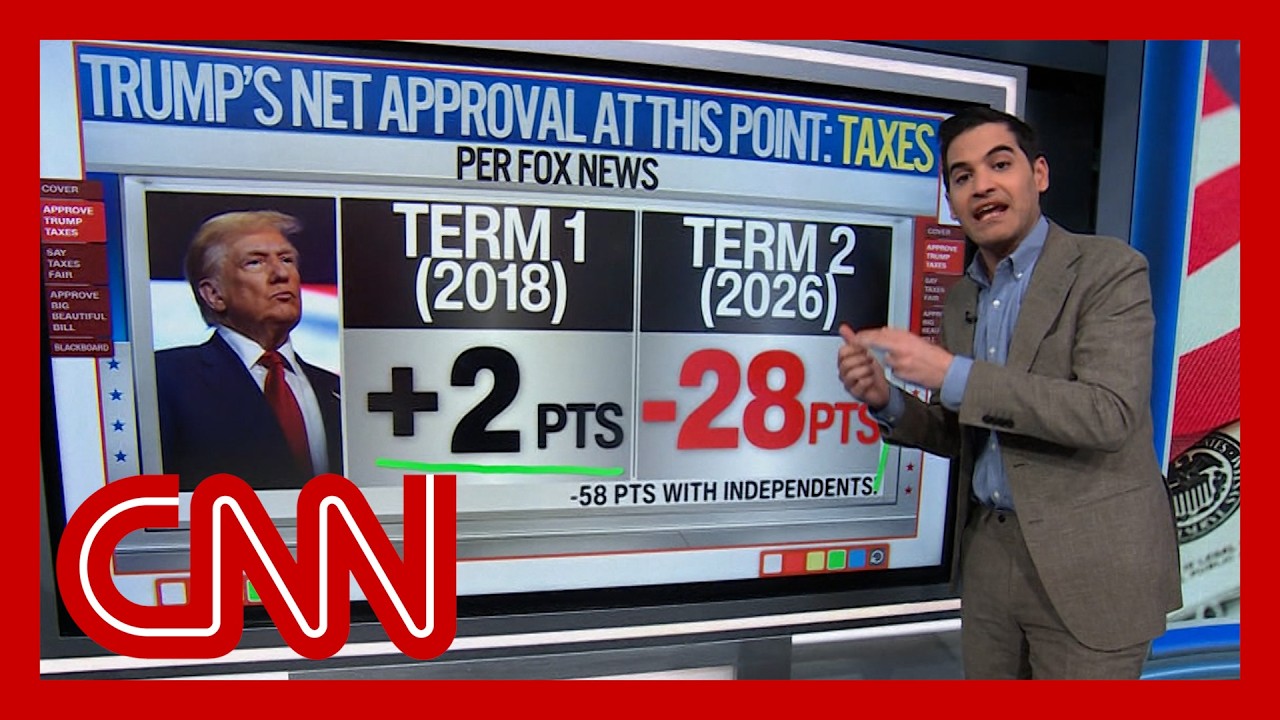
Despite assertions from the White House and Republican officials that the bill represents a tremendous victory, data suggests that public approval is lagging significantly. CNN’s chief data analyst, Harry, recently discussed the trends regarding Trump’s tax approval ratings, and the numbers are telling. In his initial term in 2018, Trump’s net approval rating on taxes was notably higher, at a positive 2 points. Fast-forward to now, and he finds himself at a staggering -28 points. This represents a remarkable 30-point decline and indicates that even perceived benefits from the new tax legislation have not translated into approval for his administration.
The sentiment among independents, a group critical to electoral success, reveals an even starker picture. Here, Trump’s net approval rating plummets to an astonishing -58 points. While the administration asserts that the tax cuts will help the working families, the majority seem skeptical. This skepticism is underscored by broader perceptions of fairness in the tax system. In 2018, 61% of Americans believed their taxes were fair. Now, that percentage has nearly flipped, with 49% declaring their taxes unfair—a 13-point increase. The percentage of those perceiving their taxes as fair has dropped to a concerning 47%, the lowest it’s been since 1999.
A deeper exploration of these trends shows an alarming trend as the nation heads into the midterm elections. Approval for the "One Big Beautiful Bill" has reached a striking -20 points overall and -41 among independents. This lack of support is particularly troubling for the GOP, as their messaging around tax relief appears disconnected from the day-to-day experiences of many Americans.
As tax cuts are rolled out, Republicans insist that families will see significant gains—highlighting an additional $300 per month as a boon for spending. However, amidst rising inflation and high prices at the pump, many families find that these benefits do not offset the rising costs of living. Reports state that average tax refunds have increased by over 11% from last year, yet these figures remain below original projections made by the Treasury Department.
This disconnect raises questions about the effectiveness of the messaging surrounding the tax bill. While celebratory riffs from political insiders emphasize the simplicity and fairness of the new tax code, the reality for many Americans remains intricate and seemingly burdensome. Harsh public sentiment regarding tax fairness, compounded by the persistent pressure of inflation, casts a shadow over the celebration of tax day.
Looking ahead, analysts underscore the necessity for Republicans to recalibrate their messaging in light of these dynamics. The overarching narrative—that tax cuts equate to financial relief—may not resonate if Americans feel the pinch of escalating prices at the gas station and grocery store. As Democrats capitalize on perceptions of rich individuals not contributing their fair share, the tax landscape may become a pivotal focus for the upcoming midterm elections.
In summary, the first Tax Day since the implementation of Trump’s tax bill has unveiled stark disparities between governmental optimism and public sentiment. Data indicate a significant decline in approval ratings, revealing that the supposed benefits are not echoed by the experiences of many Americans. As the GOP strategizes heading into the midterms, it will be crucial to reconcile these data points with the real-world economic concerns facing constituents. Without addressing these fundamental issues, any political capital gained from tax cuts may quickly evaporate in the eyes of voters who feel the weight of their financial burdens every day.