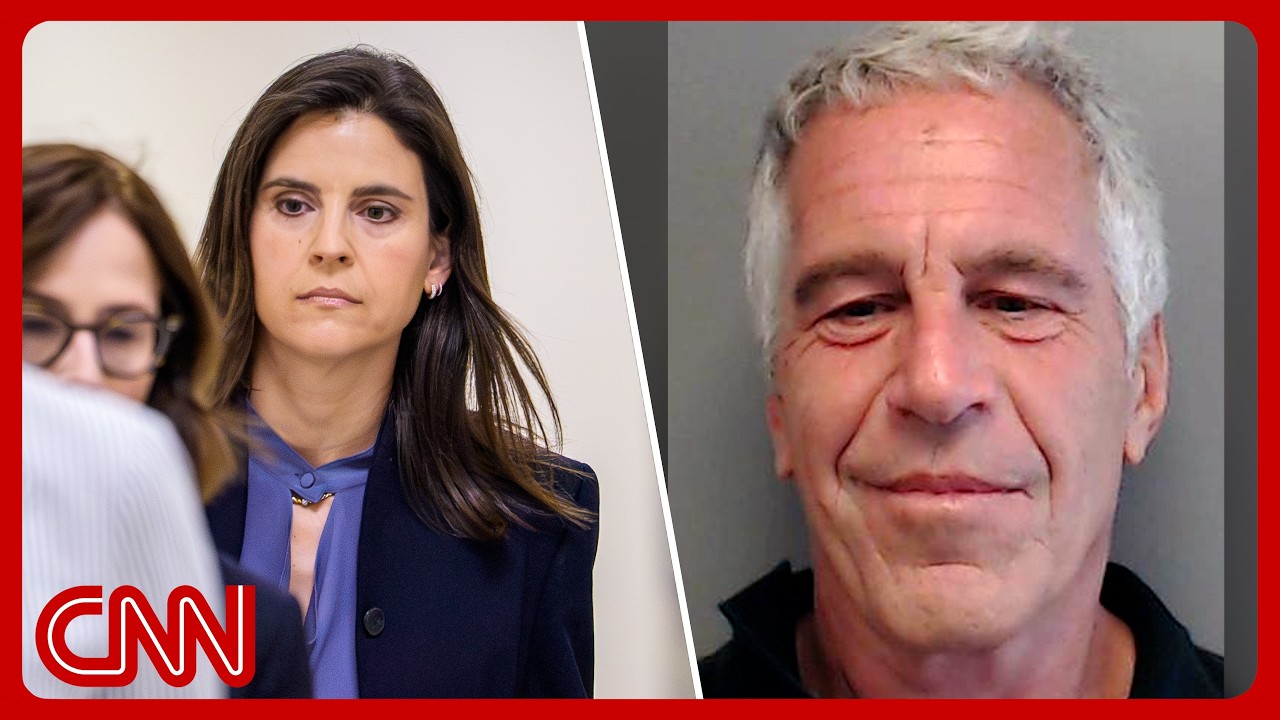
New Developments in the Epstein Investigation: A Closer Look at Sarah Kellen’s Testimony
The House Oversight Committee has recently conducted a closed-door interview with Sarah Kellen, a longtime assistant to Jeffrey Epstein, who has become a controversial figure in the ongoing investigation into his abuse ring. This session has emerged as a significant point of interest for committee members, as Chairman James Comr revealed that Kellen provided three previously unknown names of alleged abusers within Epstein’s network.
Once labeled a potential co-conspirator by federal prosecutors in 2007, Kellen’s testimony complicates her narrative. She characterized herself as a survivor of Epstein’s abuse, asserting that during her 15 years in his orbit, she endured severe trauma, which she described in haunting detail. Her experiences raise urgent questions about the dynamics of power, complicity, and survivorhood within the context of such abuses.
Chairman Comr characterized the interview as the "most substantive and productive" yet, expressing optimism that the information gleaned from Kellen could open up new investigative avenues. While specific names have not yet been disclosed, the committee is working to release the transcript promptly. Comr emphasized that among all individuals interviewed thus far, Kellen’s testimony had significant implications for the broader investigation.
Kellen’s account painted a grim picture of her time with Epstein. According to her opening statement, the abuse was a recurring event, often violent. She recounted instances designed to instill terror—a notably chilling description involved being trapped and assaulted in a gym setting—a testimony that compels the committee to navigate the fine line between viewing her as a victim and as someone who may have assisted in recruiting others for Epstein.
Interestingly, Kellen was also queried about Ghislaine Maxwell, Epstein’s former associate currently serving time in prison. Kellen expressed her opposition to the idea of Maxwell receiving a lower prison classification or a presidential pardon, revealing her depths of anger and betrayal toward those who enabled the abuse.
Yet, the nuances of Kellen’s situation highlighted the complexity of victimhood—a sentiment echoed by Democrat Raja Krishnamoorthi, who noted that while Kellen was forthcoming, her voluntary presence meant she could choose which questions to answer, raising concerns about the thoroughness of her testimony. This has prompted discussions within the committee about possibly calling her back under subpoena to ensure a comprehensive evaluation of her knowledge.
Concurrently, the investigation into Prince Andrew is reportedly expanding, with British authorities renewing their appeal for witnesses in the ongoing misconduct investigation. The former prince has consistently denied allegations of wrongdoing, yet documents recently released show that he was not formally vetted for his role as a trade envoy. Analysts are questioning the implications of this lack of scrutiny, particularly in light of his documented associations with Epstein.
As the investigation unfolds, the gravity of Epstein’s network continues to be revealed. Kellen’s testimony, combined with the scrutiny surrounding prominent figures such as Prince Andrew, underscores the pervasive culture of abuse that has remained shrouded in secrecy.
The House Oversight Committee is poised for further critical interviews, including that of former Attorney General Pam Bondi, next week. Observers are hopeful that these sessions will yield substantial information, although skepticism remains due to past experiences with Bondi’s evasive testimony in front of Congress.
In conclusion, Kellen’s testimony serves as a pivotal moment for the investigation, illuminating the spectrum of complicity and victimization that defined Epstein’s operations. As the federal scrutiny deepens, the pursuit of justice for survivors remains paramount. The involvement of powerful individuals necessitates a rigorous examination to not only provide accountability but also ensure that the systemic patterns of abuse are dismantled. The path forward will require unwavering commitment, transparency, and a willingness to confront uncomfortable truths.