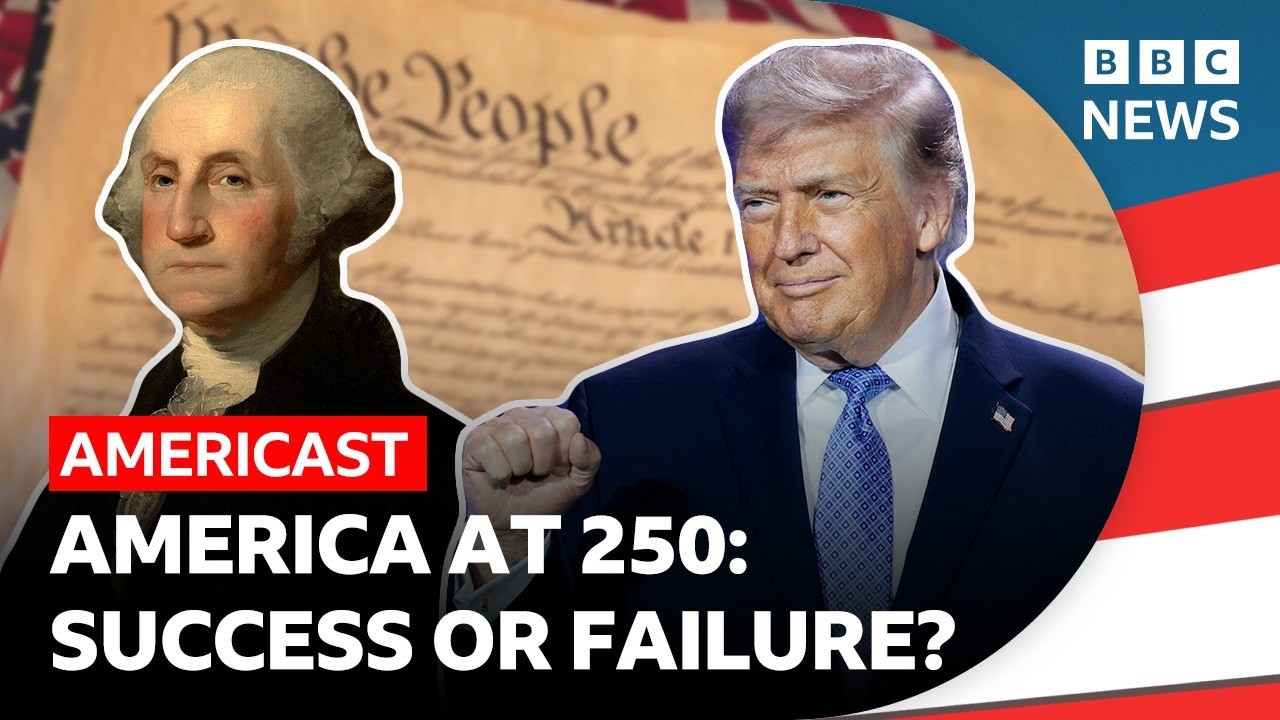
America at 250: Reflecting on Independence and the Pursuit of Justice
As the United States approaches its 250th anniversary of independence, the question looms large: has this separation from the British Crown been a triumph or a failure? Historian Heather Cox Richardson, a respected authority on constitutional matters, provides insights into the evolving narrative of American democracy.
At the heart of this discussion lies the enduring spirit of self-determination. Richardson points out that, despite today’s challenges, there is a vibrant desire among Americans to redefine their future and confront the current state of affairs. This pursuit echoes the original ideals embedded in the Declaration of Independence, which celebrated the ability of individuals to shape their governance.
One significant observation by Richardson concerns the perception of progress over time. Former President Barack Obama famously suggested that the "arc of history bends toward justice," a sentiment that resonated especially during his presidency. Today, however, with the political landscape shaped by figures like Donald Trump, many wonder if this belief remains intact. There are voices of disillusionment—those who feel defeated and question their agency. Yet, as Richardson emphasizes, a resurgence of political engagement is evident. People are revisiting historic figures like Barbara Jordan, who championed accountability in government, inspiring a reevaluation of civic duty.
The current political climate also sparks discourse about the so-called "left." Richardson cautions against oversimplifying political labels, arguing that those traditionally identified as liberal have been pushed to the center or right over time. Policies that might have once categorized individuals as moderate are now deemed radical. Issues like universal healthcare, first proposed in the early 20th century, are often misconstrued as recent progressive whims, highlighting the shifting dynamics of political discourse.
Richardson connects contemporary frustrations to historical contexts, particularly evoking the Gilded Age of the late 19th century, a time characterized by stark economic disparities and civil unrest. Both eras reveal a disenchanted electorate—citizens oscillating between political parties in search of solutions to their grievances. Yet, today’s dysfunction in Congress is unprecedented, exacerbated by partisanship and a departure from foundational democratic principles.
As Richardson describes, the ineffectiveness of modern governance is compounded by a Republican Party that increasingly rejects checks and balances, trading traditional bipartisan cooperation for unwavering loyalty to party ideology. The result is a Congress mired in gridlock, unable to effectively address pressing needs—a sentiment echoed by voters eager for meaningful change.
Despite these challenges, Richardson retains a sense of optimism regarding the American spirit. Referencing a common bond among citizens—a "can-do spirit"—she acknowledges both its merits and pitfalls. While this inherent optimism has historically spurred innovation and resilience, it can also foster divisiveness, creating "political enemies" out of disparate groups.
America’s success as a global power is complex. Resources are undeniably a foundational aspect; however, Richardson highlights an intrinsic tension within American society: the struggle between those who believe in elite privileges and those who advocate for universal equality. This ever-present dichotomy shapes the narrative of American democracy, suggesting that it will perpetually be a work in progress.
To understand the true essence of independence, one must also recognize the imperfections that accompanied its inception. The founding fathers envisioned a bold experiment, but such ambitions arrived with significant socio-political challenges. The Declaration of Independence, while revolutionary, also reflects a profound uncertainty—signatories were pledging their lives, fortunes, and reputations on an unsteady foundation.
As celebrations around the 4th of July unfold, Richardson offers a glimpse of the evolving nature of these traditions. She notes a growing movement towards local celebrations—a shift in response to a national stage that sometimes feels disconnected from the very citizens it aims to unite. This desire for localized connection may signify not only an annual reflection on independence, but a rejuvenation of civic engagement as Americans confront their shared identity and future.
In an era defined by upheaval and division, the exploration of what it means to be American continues to echo the historical struggles for liberty and justice. As we approach this significant anniversary, both the triumphs and failures of the past serve not only as reminders of where we have come from but as guideposts for where we might aspire to go.