The Challenge of Verifying Social Media Footage in Breaking News
In today’s fast-paced news environment, social media platforms are inundated with videos purportedly depicting breaking news events. While some of these videos hold genuine value, a significant number are misleading or outright false. This reality presents a daunting challenge for news organizations striving to provide accurate information. At the BBC, our foremost commitment is to determine the authenticity of such videos. Although we strive to go directly to the scene of an event for verification, various factors—ranging from security concerns to geographical inaccessibility—often impede our efforts. Consequently, much of the footage circulating online becomes our primary, if not sole, evidence of what has transpired.
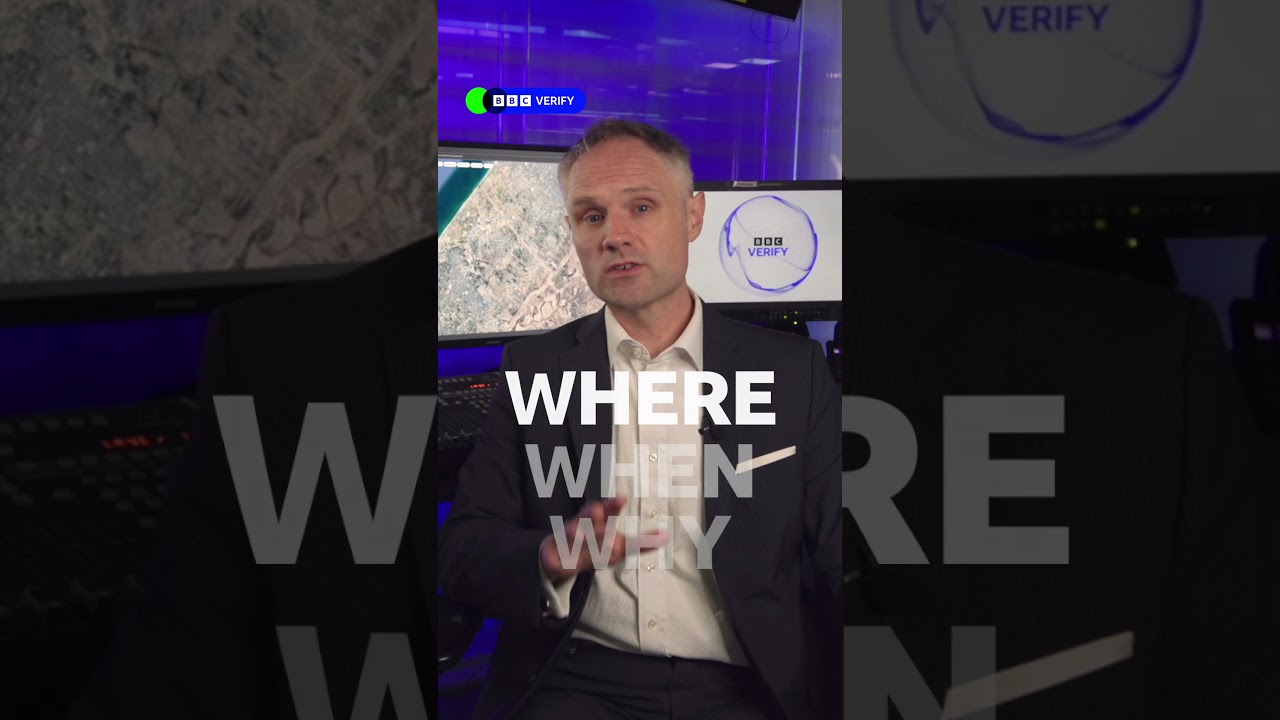
To accurately assess the validity of a video, we focus on three critical questions: where was it filmed, when was it filmed, and why was it posted. Each of these dimensions provides essential context that guides our verification efforts.
Determining the "Where"
The first step involves analyzing the video’s geographical context. We scour the footage for visual clues that can indicate its location. Road signs, storefronts, and distinctive landmarks can be telling. Additionally, auditory cues, such as the language spoken or local dialects, contribute to our analysis. The presence of specific accents or phrases can narrow our geographical scope substantially.
To bolster our findings, we employ satellite imagery as a vital cross-referencing tool. Satellite images can verify the shapes and structures of buildings, scrutinize the contours of roads, and identify vegetation such as trees. If we observe a discrepancy between the video and available satellite imagery, it raises questions about the video’s authenticity. The analysis extends to assessing physical changes, such as structural damage resulting from attacks or the impacts of ongoing conflict, adding another layer of verification.
Establishing the "When"
Next, we focus on pinpointing the timing of the recorded event. Outdoor videos allow for several analytical methods. We assess the weather conditions—analyzing cloud cover, wind direction, and light intensity—to glean information about the date and time. Tools such as Suncal facilitate this process by providing data on the sun’s position in the sky at specific times, helping researchers align the video with meteorological conditions.
Equally important is the technique of reverse image searching. By capturing multiple screenshots from the video and cross-referencing them with existing online databases, we investigate whether similar images have appeared earlier in unrelated contexts. If we discover a screenshot posted months prior in a completely different setting, it is a clear indication that the video may not be what it claims to be. Often, this method leads us to the original source, providing critical insight and context.
Understanding the "Why"
Finally, we delve into the motivations behind a video’s publication. This involves identifying who uploaded the footage and their intentions in doing so. Was the poster a neutral observer, or do they have vested interests in portraying a specific narrative? Investigating the motivations behind the footage is paramount, as it can reveal biases and potential distortions in the reported events.
If we can successfully ascertain the “where,” “when,” and “why” of a video, we achieve a significant milestone in our verification process. Confidence in our findings allows us to provide our audience with accurate and reliable information, even when immediate physical verification is not feasible.
In conclusion, navigating the treacherous waters of social media footage requires a meticulous approach to verification. By employing analytical techniques to assess location, timing, and intention, we can enhance the integrity of the news we deliver. In a world where misinformation can spread like wildfire, our commitment to rigorous verification stands as a pillar of responsible journalism.