Are Traders Benefiting from Trump’s Announcements? A Look at Potential Insider Trading
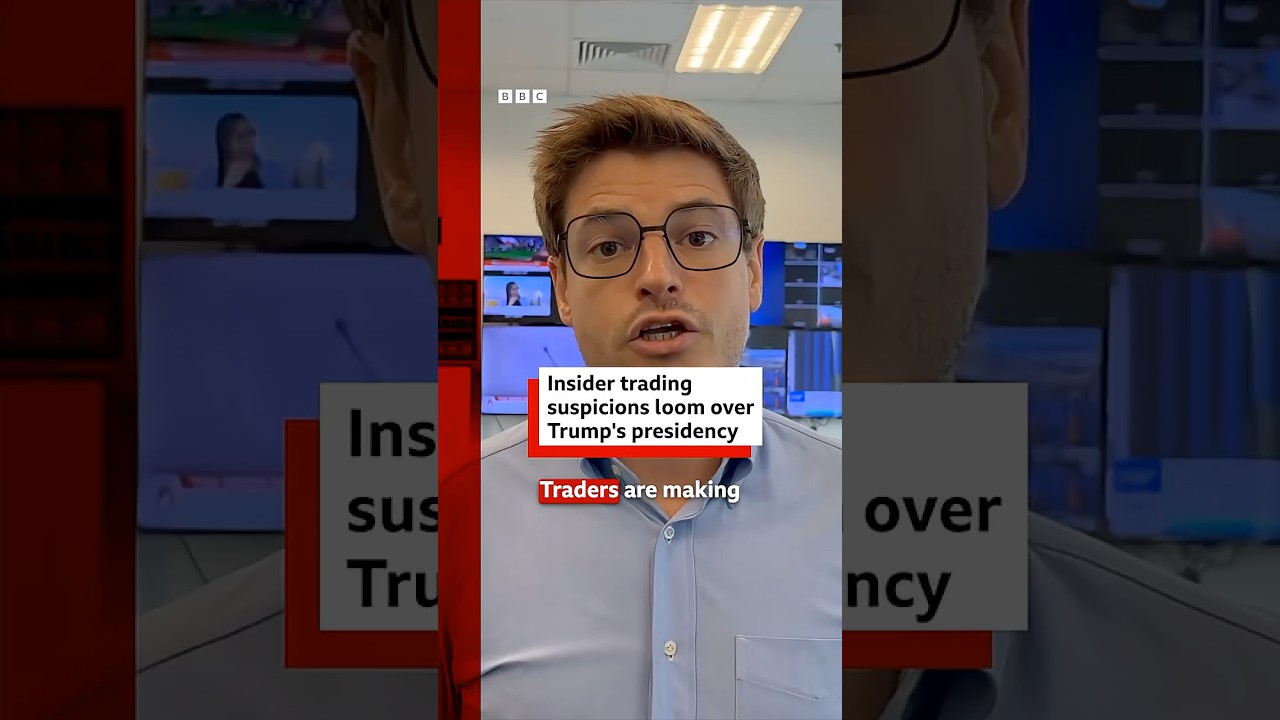
In the often unpredictable world of finance, the intersection of politics and market movements can lead to substantial profits for astute traders. Recently, however, a troubling narrative has surfaced around former President Donald Trump’s statements and their immediate impact on the markets. Disconcertingly, the BBC has uncovered patterns that suggest some traders may be capitalizing on insider information, raising questions about the legality of these trades.
Consider the instance that occurred shortly after the war with Iran commenced. Nine days into the conflict, Trump declared in an interview that the situation was essentially resolved. This pronouncement coincided with a significant market movement; oil prices plummeted in response. Intriguingly, market data revealed a marked spike in trading activity happening 47 minutes prior to Trump’s public announcement. This timing is not merely a coincidence, leading many to speculate about the sources of information influencing these trades.
Another striking example involves Poly Market, an online predictions platform in which Donald Trump Jr. has invested. This platform allows users to engage in financial speculation based on upcoming political events. Recently, one account on Poly Market reportedly netted nearly half a million dollars by accurately forecasting the ousting of Venezuela’s president, Nicolas Maduro, the day before it occurred. After this substantial win, the account changed its username and has not engaged in any further betting since. Such sudden disengagement raises eyebrows, prompting inquiries into whether this trader had access to privileged information.
These instances have ignited a larger conversation about potential illegal insider trading connected to Trump’s public statements. The distinction between ethical trading and manipulative trading practices hinges on the availability of information. If traders are indeed operating on non-public insider information, they risk violating securities laws, an accusation that could carry significant legal ramifications.
Poly Market has sought to assuage concerns by asserting its commitment to market integrity. The platform indicated that it actively collaborates with regulators and law enforcement to ensure that all trades are within the bounds of legality. Nonetheless, skepticism remains, particularly given the uncanny success of certain traders making predictions closely aligned with Trump’s statements.
Skeptics argue that some traders are merely becoming skilled at predicting when significant announcements will be made. The former president’s communication style tends to generate speculation, and savvy investors often analyze this behavior to position themselves strategically before events unfold. However, this perspective is not universally accepted. Some insist that the sheer timing of trades suggests access to information not available to the public, which blurs ethical boundaries.
The absence of comments from Donald Trump Jr. and the White House regarding these allegations adds another layer of intrigue. While the White House has vehemently denied any wrongdoing in terms of insider trading, the lack of transparency surrounding these trades raises questions. In finance, the appearance of impropriety can sometimes carry as much weight as actual wrongdoing.
In a market driven by information, the equitable distribution of that information is crucial for maintaining investor confidence. The implications of potential insider trading reach far beyond individual cases; they can influence the overall integrity of financial markets. As technologies evolve, traders are developing increasingly sophisticated methods to glean insights from various data sources. This shift necessitates a careful examination of regulatory frameworks to ensure that all market participants operate on a level playing field.
Thus, while it’s easy to attribute these trading patterns to sheer luck or intuitive trading skills, the underlying questions remain. Are we witnessing a case of market manipulation cloaked in predictive savvy, or is it simply a reflection of a trader’s ability to read the political landscape? The lines are growing ever more blurred, and definitive answers may prove elusive.
As the investigation into these trades continues, stakeholders, from regulators to investors, will be watching closely to determine whether market integrity can be preserved. The intersection of politics and finance is a complex maze. In times like these, thorough scrutiny is essential.