Analyzing Iran’s Rejection of Trump’s Peace Plan: Implications and Future Prospects
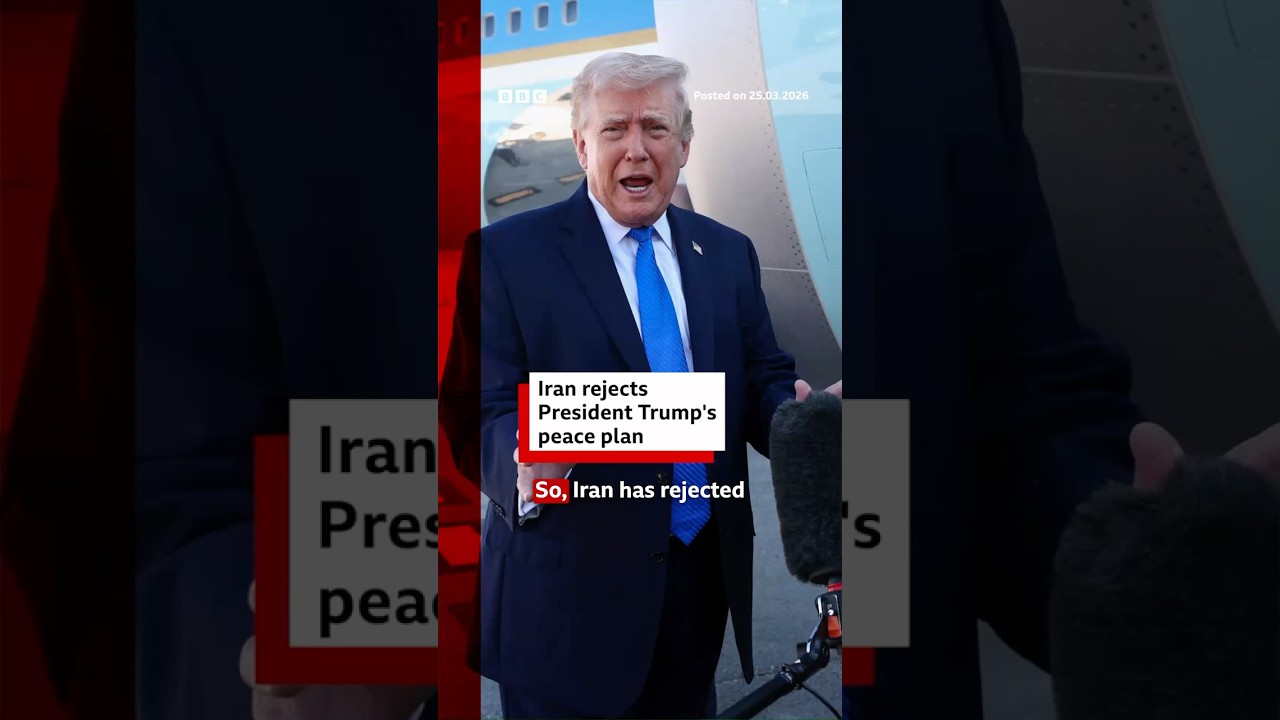
The geopolitical landscape in the Middle East has recently shifted with Iran’s outright rejection of Donald Trump’s proposed 15-point peace plan. This development, while expected, raises significant questions about the future of negotiations and regional stability. From Iran’s perspective, the plan appears not as a blueprint for dialogue, but rather as a capitulation disguised as an agreement. The Iranian leadership has responded with ridicule, portraying the United States as a defeated entity, thereby solidifying their position against perceived external pressures.
Iran’s dismissal of the peace plan is fortified by a list of demands that they presented, which are unlikely to gain acceptance from either American or Israeli officials. These counter-proposals reflect not only a desire to assert Iran’s sovereignty but also a broader strategy to project strength in the face of international scrutiny. While Iran has crafted a narrative of resistance, the U.S. and Israel will have to grapple with their own positions, which may be equally uncompromising.
As matters stand, two potential scenarios loom ahead: the possibility of negotiation or an escalation of hostilities. The deployment of American ground troops to the Gulf is indeed a concerning move. This military presence could be perceived as an attempt to seize Iranian territory, thereby exerting additional pressure on Tehran. However, such actions come with inherent risks. Engaging in territorial conflicts could trigger a response from Iran that may lead to prolonged military entanglements, reminiscent of the protracted conflict in Iraq following the 2003 invasion.
It’s essential to acknowledge that Iran is likely prepared for such provocations. Their military doctrine appears to be centered around attrition, aiming to drag the U.S. into a more extended, resource-draining conflict. This strategy capitalizes on America’s historical engagements, invoking memories of its painful experiences in Iraq, wherein aspirations for a swift victory devolved into a grueling occupation. The historical context weighs heavily on American policymakers today. Decisions made in the current climate will inevitably be influenced by the lessons of their past.
In contrasting this dynamic, Israel’s perspective diverges sharply. Israel does not merely seek an amicable resolution; rather, it is intent on achieving a generational level of damage against Iran, their enduring adversary. To that end, Israeli officials seem poised to support any measures aimed at undermining Iranian influence in the region. This approach emphasizes not only military action but also intelligence operations and cyber warfare. For Israel, the stakes are existential, making a conciliatory approach seem unfeasible as long as Iran continues to develop its nuclear capabilities.
The rejection of the peace plan and the militarization of the Gulf is a volatile combination. As rhetoric intensifies and military postures become more aggressive, the potential for miscalculations increases dramatically. Each side must navigate a complex web of alliances and enmities, and any misstep could lead to unintended consequences. The stakes are remarkably high, not only for Iran and Israel but also for regional allies, including Saudi Arabia and other Gulf states, who remain watchful of the unfolding developments.
Ultimately, the effectiveness of any proposed diplomatic outreach will hinge on a willingness to compromise from both sides. However, the current trajectory suggests that both Tehran and Washington are entrenched in their positions, fueled by national pride and historical grievances. As tensions simmer, the hope for diplomatic resolution may appear increasingly distant, leaving the region at the brink of either negotiation or further conflict.
In conclusion, Iran’s rejection of Trump’s peace plan signals not just a refusal to engage, but a deeper strategy rooted in resistance and sovereignty. As the U.S. military potentially prepares for more aggressive maneuvers, the question remains: Can diplomacy still prevail, or are we witnessing the early stages of a prolonged and uncertain conflict? The geopolitical stakes are extraordinarily high, and the world watches with bated breath.