Escalating Tensions: A Fragile Ceasefire between the U.S. and Iran
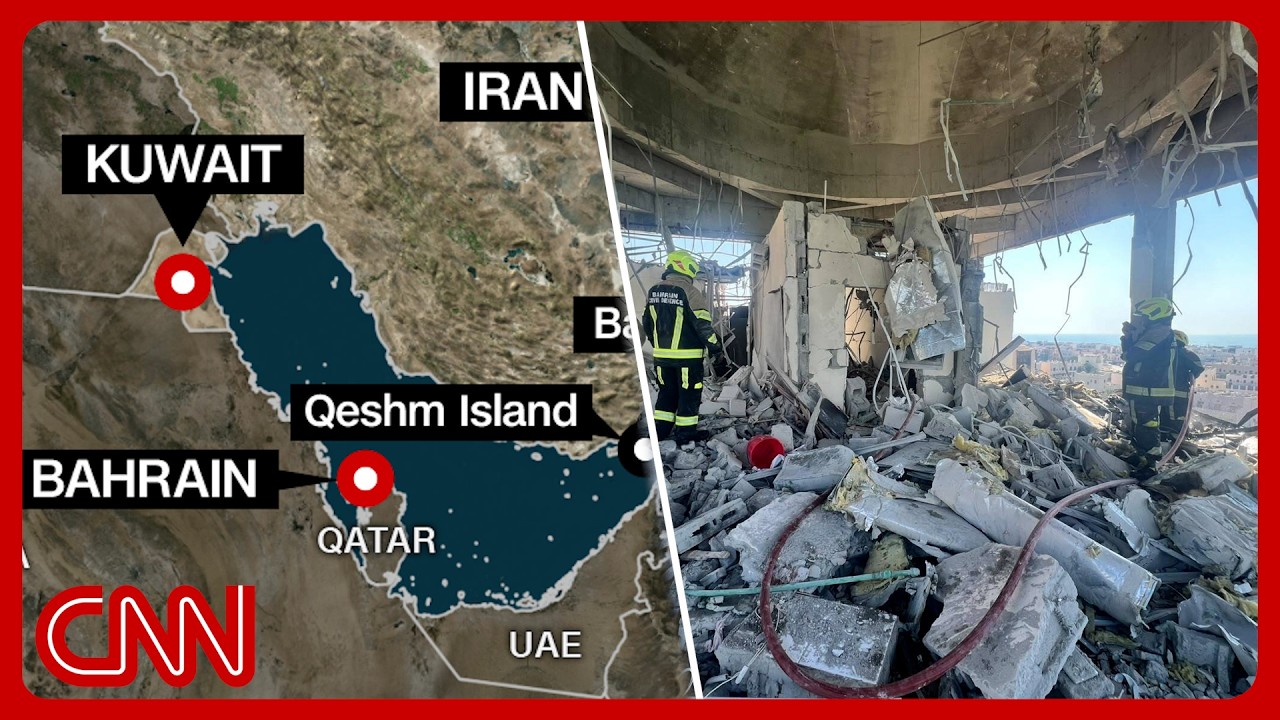
The recent clash between the United States and Iran has intensified the already volatile situation in the Middle East, jeopardizing a fragile ceasefire established only weeks ago. On Saturday, the U.S. executed ten airstrikes targeting Iranian military installations around the strategic Strait of Hormuz. According to U.S. Central Command, these strikes specifically aimed at Iran’s military infrastructure, air defense systems, and facilities used for storing drones. As expected, Iran retaliated, launching missiles and drones at U.S. military assets located in Bahrain and Kuwait, further escalating the cycle of violence.
Images released by Bahrain’s government revealed damage to residential buildings, a stark reminder of the broader consequences of this military exchange. "This was one of the most serious escalations in violence we’ve seen since the memorandum of understanding was signed," reported Paul Hancocks from Abu Dhabi, emphasizing the urgency of the situation. Despite the looming threat of increased conflict, U.S. officials maintain that dialogue remains an option.
A senior U.S. official stated, "Nothing has been canceled," indicating that discussions about implementing the memorandum would proceed as planned. The reparatory framework addresses measures to de-escalate tensions in the region. However, concrete steps forward remain uncertain, as Iranian officials have not indicated a willingness to continue talks scheduled for Tuesday in Doha.
The recent exchanges of fire didn’t occur in a vacuum. They were prompted by the U.S. claim that Iranian forces had targeted a vessel in the Strait, which, not surprisingly, led to a sharp decline in maritime traffic through this crucial waterway. Data suggests that the number of vessels transiting the Strait dropped dramatically over the weekend, with only about a dozen ships sailing on Sunday compared to more than 70 on the previous Wednesday. Such disruptions not only threaten global shipping routes but also signal a severe reduction in economic activity in the region.
Public sentiment in Iran reflects a mix of anger and defiance. Many observers predict that the current ceasefire is merely a façade. "Even if there is a pause now, it is undoubtedly a political posture. We will soon see renewed attacks," one source remarked. The rabid cyclical nature of conflict between the two nations illustrates a longstanding pattern where diplomacy is interwoven with military posturing.
Iran’s demands extend beyond military confrontations. Reports indicate that Iranian officials are now calling for a complete withdrawal of Israeli forces from Lebanon, a subject on which Israel has made its intentions clear: it will not comply. This insistence on territorial sovereignty complicates the diplomatic landscape further and raises questions about the future of nuclear negotiations, which are already rife with uncertainty.
While some analysts assert that the current dealings are unlikely to lead to significant breakthroughs in nuclear discussions, they also acknowledge that both the U.S. and Iran appear to be exercising restraint. Limited military engagements indicate that neither side fully seeks escalation into a broader conflict, even as Iran attempts to exert its influence over the Strait of Hormuz. This strait serves as one of the world’s most critical maritime arteries, underscoring its importance not just to the involved nations but to global commerce.
The potential future dynamics of this conflict raise profound implications. Notably, if Iran gains the ability to impose tolls on maritime traffic, as some estimates suggest could generate $40 billion annually for the Islamic Republic, the geopolitical map could change dramatically. The U.S. has traditionally relied on principles of free navigation through international waters, but these altercations cast doubt on that longstanding policy.
Republican Senator Bill Cassidy’s recent comments underscore a growing perception: "America has lost the credible use of force," suggesting that Iran has emerged from this conflict emboldened and perhaps more robust than it was prior to hostilities. In the eyes of some, Iran’s recent military successes, albeit targeted, signify a troubling shift in the balance of power within the region.
Moving forward, the international community watches closely as the situation unfolds. The conflict is not merely an isolated matter for the U.S. and Iran; it implicates global markets, trade routes, and broader geopolitical stability. As both nations navigate this tumultuous landscape, the hope remains that diplomacy will prevail over aggression. However, with each day of uncertainty, the potential for escalation looms large, leaving many to wonder what the future holds for a region already steeped in complexity.