Iran Suspends Talks with the U.S. Amid Escalating Regional Tensions
In a significant geopolitical development, Iran has announced the suspension of talks with the United States, citing escalating violence in Lebanon as the driving factor. This decision was reported by Iranian media, which also highlighted the foreign minister’s assertion that both the U.S. and Israel are accountable for any repercussions stemming from this abrupt halt in negotiations. He emphasized that a ceasefire agreement involving Iran and the U.S. applies uniformly across all fronts. Violation on one front, he asserted, equates to a broader violation of the ceasefire, marking an urgent call for accountability and adherence to diplomatic agreements.
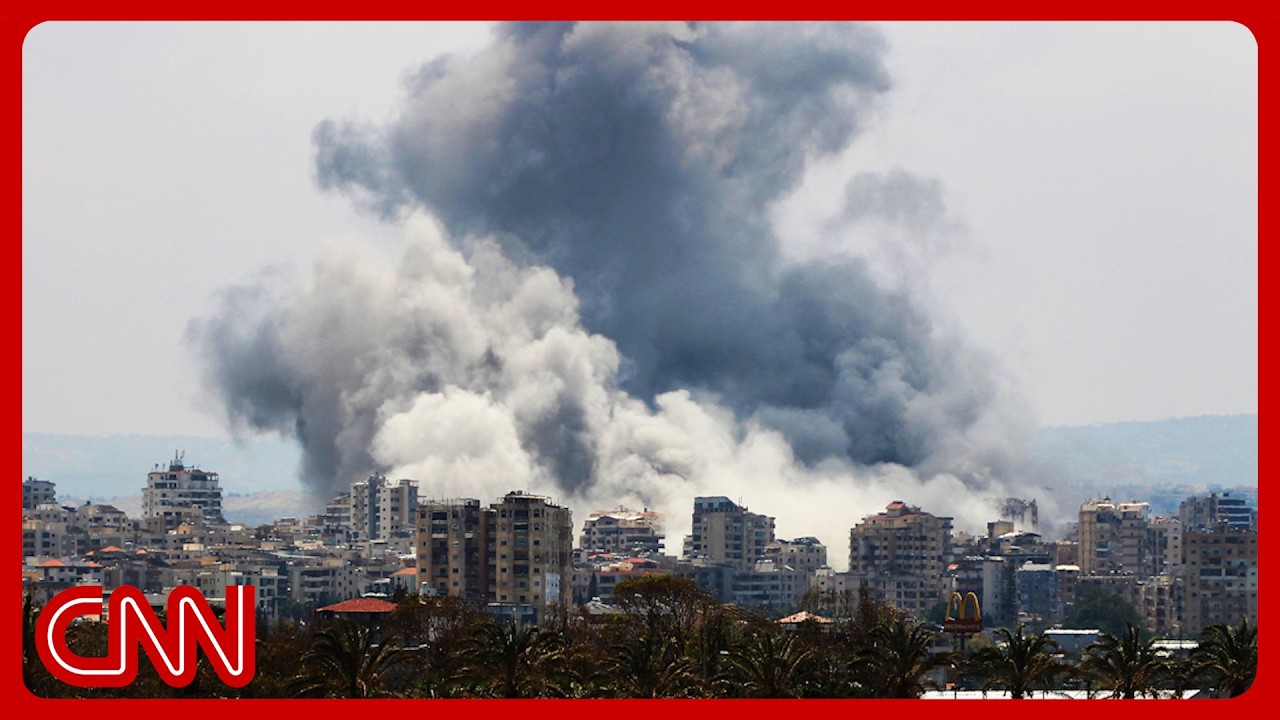
This latest announcement comes amidst heightened military activity in the region. Just moments prior, the Israeli military issued an evacuation warning for parts of Beirut, specifically targeting the southern suburb of Dah, identified as a Hezbollah stronghold. Israeli leadership has made it clear that they intend to target these areas in retaliation for what they claim is an uptick in rocket and drone attacks originating from Hezbollah forces based in Lebanon. Until now, Israel had largely refrained from striking the Lebanese capital, focusing their previous attacks on southern Lebanon. However, this new directive marks a troubling escalation in hostilities, raising concerns of a broader conflict between Israel and Iran’s proxies.
The gravity of the situation became even clearer with video footage depicting residents fleeing Dah as impending strikes were announced. Lebanon has already experienced significant population displacement, with over 1.2 million people reportedly affected by Israeli military actions, further exacerbating the humanitarian crisis within its borders. Israel’s Prime Minister Benjamin Netanyahu reaffirmed the intent to strike Beirut on grounds of national security, insisting that there will be no tolerance for threats to Israeli cities emanating from Hezbollah’s operations.
Despite the violence on the ground, the U.S. continues to pursue a diplomatic approach aimed at fostering a ceasefire agreement. Reports indicated that Washington has been working to facilitate discussions between Hezbollah and Israel. However, given the current climate, it is increasingly challenging to visualize any meaningful progress. Lebanon’s president recently took to social media, underscoring the necessity of negotiations for a peaceful resolution. He characterized diplomacy not as a form of surrender but rather as a long-term pathway toward stability, despite ongoing rocket fire contributing to a volatile backdrop.
In the midst of this turmoil, reports emerged that Iran had launched two ballistic missiles targeting U.S. forces in Kuwait, though both were intercepted. This military action coincides with Iran’s decision to suspend its negotiations with the U.S., further amplifying the stakes involved in the regional conflict. Comments from security analysts suggest that the escalation in Lebanon could function as a pivotal barrier in progressing toward any form of diplomatic resolution between Iran and the U.S.
Experts have pointed out that the situation creates a complex labyrinth of negotiations, with the stakes raised for all involved parties. Iran, leveraging its position, has indicated a readiness to shift military dynamics, even suggesting the possibility of closing crucial maritime routes if tensions continue to rise. This strategic calculational demonstrates Iran’s determination not to capitulate under pressure but to assert its interests in the region vigorously.
Moreover, the economic implications of this geopolitical tension have not gone unnoticed, as oil prices began to climb sharply in response. Brent crude futures surged to nearly $97, reflecting a near 6% increase, while West Texas Intermediate prices rose similarly. Market analysts note that the fluctuations in oil prices signify the underlying instability that the current events evoke, feeding into broader economic concerns.
As the situation continues to unfold, it remains to be seen how these actions will shape diplomatic relations in the Middle East. The increasing militarization and the abrupt suspension of talks underscore a precarious moment in a long-standing conflict. The international community watches closely, aware that the implications of these developments extend far beyond regional borders. The urgency for diplomacy, alongside the reality of military confrontation, portrays a landscape fraught with uncertainty and challenges.