Erdogan’s Role: The Keystone of NATO Amidst American Uncertainty
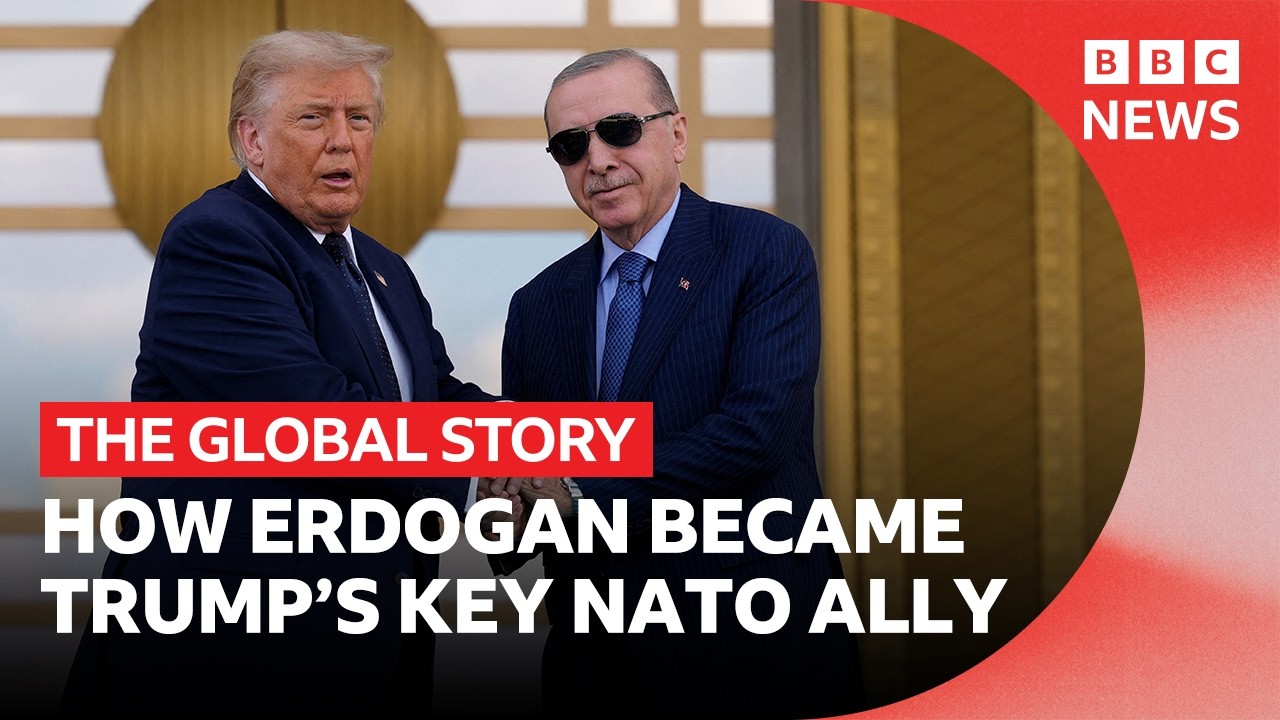
As the NATO summit unfolds in Turkey, a critical question emerges: can President Recep Tayyip Erdogan be the linchpin that holds the alliance together? Donald Trump, who has long expressed skepticism about NATO, finds himself in a Turkish landscape marked by both camaraderie and complex geopolitics. This gathering is historic, as it marks the first NATO summit held in Turkey since the early 2000s, raising stakes not only for Erdogan but also for the future of international alliance.
Trump’s attendance was anything but guaranteed. He disclosed that his decision to be there stemmed from a personal request from Erdogan, who he regards with significant respect. Trump’s rapport with Erdogan is a blend of shared characteristics—both leaders embody a brand of strongman politics, which stands in contrast to the ideological leanings of many Western leaders. This mutual admiration reveals a deeper connection that transcends the surface-level politics of NATO.
To understand Erdogan’s importance within NATO, we must first delve into Turkey’s historical role in the alliance. Turkey joined NATO in 1952, merely three years after the alliance’s inception. This admission was not merely ceremonial; it signified Turkey’s strategic pivot towards the West, allowing it to assert its place in a predominantly Western-dominated political ecosystem. Today, Turkey boasts the second-largest military in NATO, a position that makes it indispensable, especially given its geographic proximity to volatile regions like Syria and Iran.
However, Erdogan’s relationship with Western powers, particularly the United States, has been complicated. While his administration has faced accusations of democratic backsliding and human rights abuses, Erdogan remains an influential figure on the global stage. He has adeptly leveraged Turkey’s strategic location and military capabilities to maintain a foothold in negotiations with both the West and adversarial nations such as Russia.
Mark Lohen, a veteran BBC correspondent who has covered Turkey extensively, notes that Erdogan’s political journey has seen him oscillate between being a pragmatic leader and an authoritarian figure. He emphasizes that Erdogan has historically been portrayed as a democratic reformer, only to later suppress dissent and tighten control over media and civil society. This constant evolution complicates how he is viewed by allies, particularly as concerns regarding freedom of the press in Turkey grow.
Lohen’s own experience in Turkey highlights the challenges independent journalists face under Erdogan’s rule. With a significant portion of the media controlled or influenced by the government, dissenting voices are marginalized, a troubling trend that affects both domestic and international perceptions of Turkish democracy. Despite these issues, Western leaders find themselves increasingly reliant on Erdogan, especially as the dynamics of NATO evolve.
The recent history of NATO has been turbulent, especially with the ongoing war in Ukraine, where Turkey plays a delicate balancing act. Erdogan has publicly condemned Russia’s actions yet maintains dialogue with Moscow, underscoring Turkey’s unique position as a negotiator. This capability allows Turkey to serve as a critical ally for NATO, giving rise to speculation about Erdogan’s influence as a stabilizing force within the alliance.
Moreover, the recent thaw in U.S.-Turkey relations, evidenced by a potential defense deal involving F-35 fighter jets, signifies a shift in how both nations view their partnership. As Turkey navigates the complexities of its relationships with both NATO and Russia, it finds itself in a position where Erdogan’s leadership becomes increasingly pivotal. The U.S. may be less willing to question Erdogan’s autocratic tendencies if it means preserving a key military ally.
With speculations surrounding Trump’s potential discontent with NATO’s direction, Erdogan could indeed find himself as a vital ally in retaining American commitment to the alliance. For NATO, Erdogan’s presence is not only emblematic but crucial, especially as European powers look towards Turkey for support amidst waning American commitment.
Thus, as the NATO summit progresses in Turkey, the eyes of the world will remain fixed on Erdogan. Is he the figure holding the alliance together in a time of uncertainty? The answers will largely depend on how Western leaders navigate their relationships with this complex and increasingly significant player in global politics.