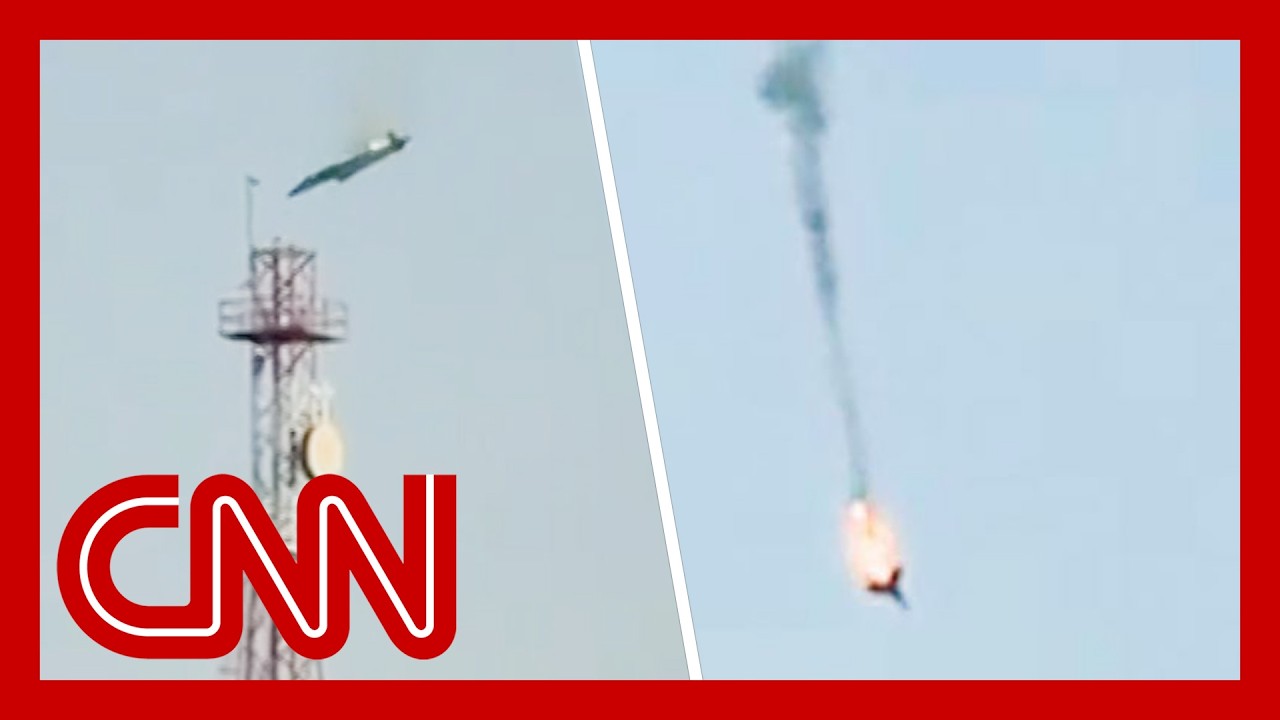
Friendly Fire Incident Involving U.S. Fighter Jets: A Detailed Analysis
In a troubling development, three U.S. F-15 Strike Eagle fighter jets were shot down by friendly fire from Kuwaiti forces, as reported by U.S. Central Command (Centcom). The incident occurred in an active combat zone, leading to significant concern regarding the complexities of warfare and operational challenges faced by military forces. Fortunately, all six crew members aboard the jets were able to eject safely and have been recovered, with their health now reported as stable.
Video footage geolocated by CNN captured the sight of one F-15 descending rapidly from the sky, with its pilot parachuting out moments before impact. Other videos show the pilots on the ground shortly after their safe ejections, underscoring a fortunate outcome amidst a chaotic situation. Centcom clarified that Kuwaiti air defenses mistakenly identified the jets as hostile threats while they were engaged in combat operations, responding to Iranian incursions from the air.
The incident highlights the intricate dynamics of U.S. military engagement in the region, particularly as Iranian forces launch attacks involving drones, ballistic missiles, and other aerial threats. Although the cause of the friendly fire is still under investigation, it serves as a stark reminder of the perils that U.S. personnel face as conflicts broaden in intensity.
Nick Paton Walsh, reporting from Tel Aviv, emphasized the troubling nature of friendly fire while pointing out the broader challenges U.S. troops encounter in such volatile environments. The complexity of operational coordination in an active combat zone can lead to tragic miscalculations. While it is not uncommon for military assets to collide or experience incidents due to high-stakes operations, the fact that three U.S. aircraft were involved in a friendly fire scenario simultaneously raises significant alarms.
Retired Army Brigadier General Steve Anderson provided additional context, shedding light on the magnitude of the air campaign underway in the region. Over the weekend, U.S. forces reportedly executed more than 1,000 sorties, with diverse assets, including F-15s, Tomahawk missiles from submarines, and remotely piloted MQ-9 Reaper drones also deployed. Anderson noted that the performance of American and Israeli forces during this extensive operation has been impressive, particularly given their success in avoiding losses until this incident.
As the U.S. maneuvers further into aircraft deployments, the multifaceted air campaign becomes even more critical. It is not merely about regime change; the operations are also intricate, involving international coalitions and advanced weaponry. U.S. B-2 stealth bombers, for instance, which can each exceed $1 billion, complement the already formidable array of combat-ready jets.
The broader geopolitical implications of this incident cannot be overlooked. As the conflict expands, countries in the region, including the United Arab Emirates, are facing increasing threats. Reports indicate that over the recent days, Iranian forces have launched a significant number of attacks aimed at Gulf nations, with the UAE specifically bearing the brunt of these assaults. Figures show that more than 165 ballistic missiles and numerous drones have targeted the UAE alone.
In the current climate, reactions from various nations are crucial. In Dubai, Paula Hancocks reported that the atmosphere has shifted, with schools closing and citizens opting to shelter in place due to heightened threats. The regional tension is palpable, as the collaboration of U.S. air defense systems plays a significant role in intercepting incoming threats.
Meanwhile, in London, British Prime Minister Keir Starmer has voiced caution regarding potential military involvement, reflecting on the lessons learned from past conflicts. However, the U.K. continues to offer its bases for U.S. operations, indicative of the challenging tightrope Britain must walk amid escalating tensions.
In summary, the recent friendly fire incident involving U.S. fighter jets underscores the unpredictable and perilous nature of modern warfare. As military operations intensify, nations must navigate complex scenarios where miscalculations can have grave consequences. The unfolding crisis presents ongoing challenges not only for U.S. forces but also for regional allies and global security frameworks.