Analyzing President Trump’s Abrupt Exit During Meet the Press Interview
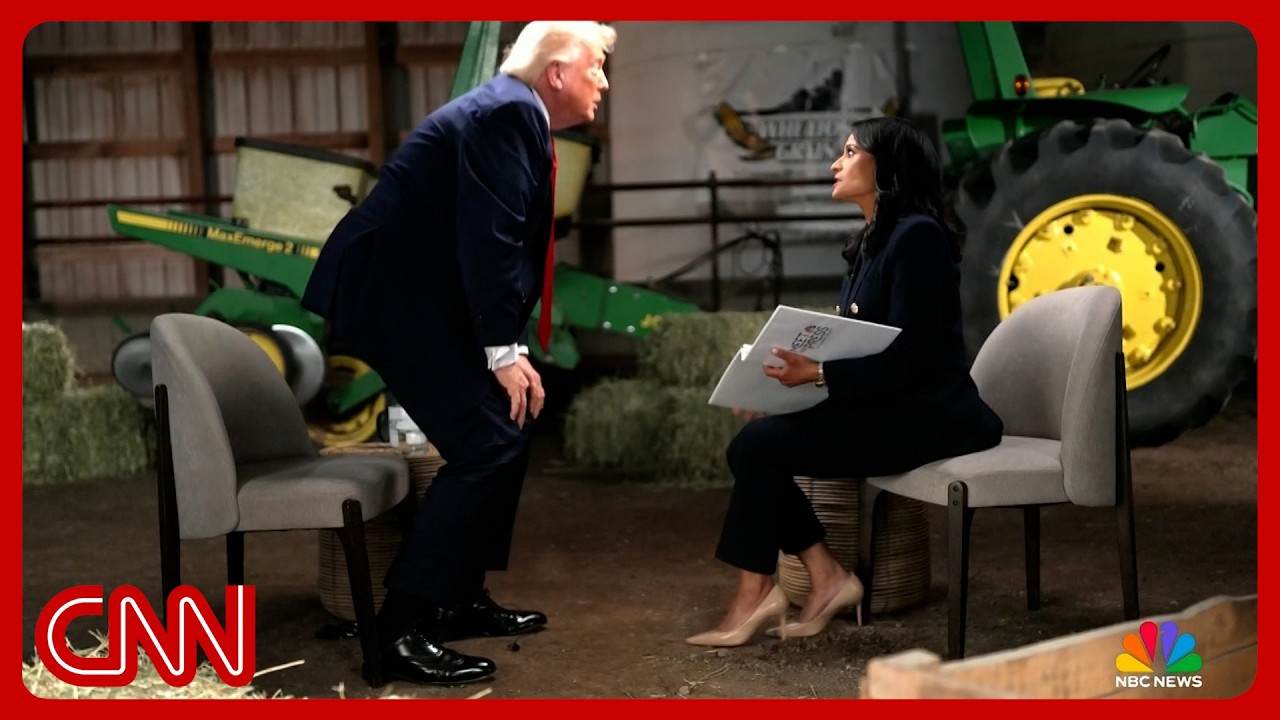
In a recent episode of NBC’s Meet the Press, President Donald Trump exhibited behavior typical of contentious interviews. During the pre-taped segment with Kristen Welker, he abruptly left after she pressed him for evidence regarding his claims of widespread election fraud, particularly in California. This incident underscores the ongoing tension between the media and a figure like Trump, whose contentious relationship with journalism has become a defining aspect of his presidency.
The atmosphere of the interview was fraught, not only because of the pressing nature of the questions but also due to the literal backdrop—a rain-soaked barn in Wisconsin. Trump’s annoyance was palpable, with reports suggesting that the rain served as a distraction during an already charged exchange. His frustration seemed to compound as Welker sought to hold him accountable for his unfounded allegations about election integrity. Citing “crooked” elections and labeling the media as complicit in what he perceives as corruption, Trump’s rhetoric leaned heavily on emotionally charged catchphrases rather than factual assertions.
When pressed about the specifics of his claims, including the assertion that California’s elections are rigged, Trump resorted to familiar conspiracy theories. His declarations about the January 6th Capitol riots further clouded the interview, a tactic that appeared designed to deflect from the immediate subject. Welker’s persistent inquiries about evidence for his allegations provoked a defensive reaction from Trump, leading to his abrupt departure from the set.
In the aftermath, commentators noted a significant distinction between "access" and "accountability" in Trump’s interactions with the press. While he remains accessible—often appearing on various media platforms—his willingness to engage in substantive discourse appears limited when faced with direct questions that challenge his narratives. This dichotomy raises questions about the nature of presidential accountability in an age dominated by rapid information dissemination and often, misinformation.
The incident did not merely highlight Trump’s aversion to accountability; it also illuminated the broader struggles media organizations face in navigating a landscape where misinformation persists. Journalism has an obligation to push for truth, even when that means confronting the leader of the free world. Welker’s commitment to asking hard questions exemplifies the role of the media as a check on power, a principle that, arguably, should apply to all political figures.
Trump’s reaction to this interrogation was not simply an emotional outburst; it was emblematic of his long-standing grievances against the media. His dismissal of legitimate inquiries often veers into personal attacks, particularly when the questioner is a woman or of a minority background. Yet, as observers note, this behavior prompts a critical conversation about whether the media should continue to grant him a platform, given his tendency to undermine democratic processes and truth.
In the broader context of journalism’s role in democracy, Trump’s departure from the interview serves as a stark reminder of the challenges the press faces in holding leaders accountable. The interview is but one recent example of how mainstream media outlets risk being caught in a cycle of sensationalism when reporting on Trump. As he continues to make baseless claims, particularly regarding electoral fraud, the challenge intensifies: to report honestly without inadvertently endorsing his narratives.
In the immediate aftermath of the escapade, Trump’s willingness to return to the media for further interviews—he even committed to another session with NBC—suggests a complex relationship with the press. Despite his ire towards individual reporters or outlets, the president still craves media attention, highlighting a paradox in his engagement with journalism: he despises scrutiny but thrives on coverage.
This incident invites reflection on the responsibilities of journalists in addressing not just the content of Trump’s statements, but the implications of their coverage in a polarized society. As the political landscapes continue to evolve, questions linger about how best to confront misinformation while ensuring that the tenets of democracy remain intact. The pursuit of truth remains an imperative, one that will continue to test the boundaries of media engagement with power.