A Clash of Ideologies: Pope Leo XIV vs. President Trump
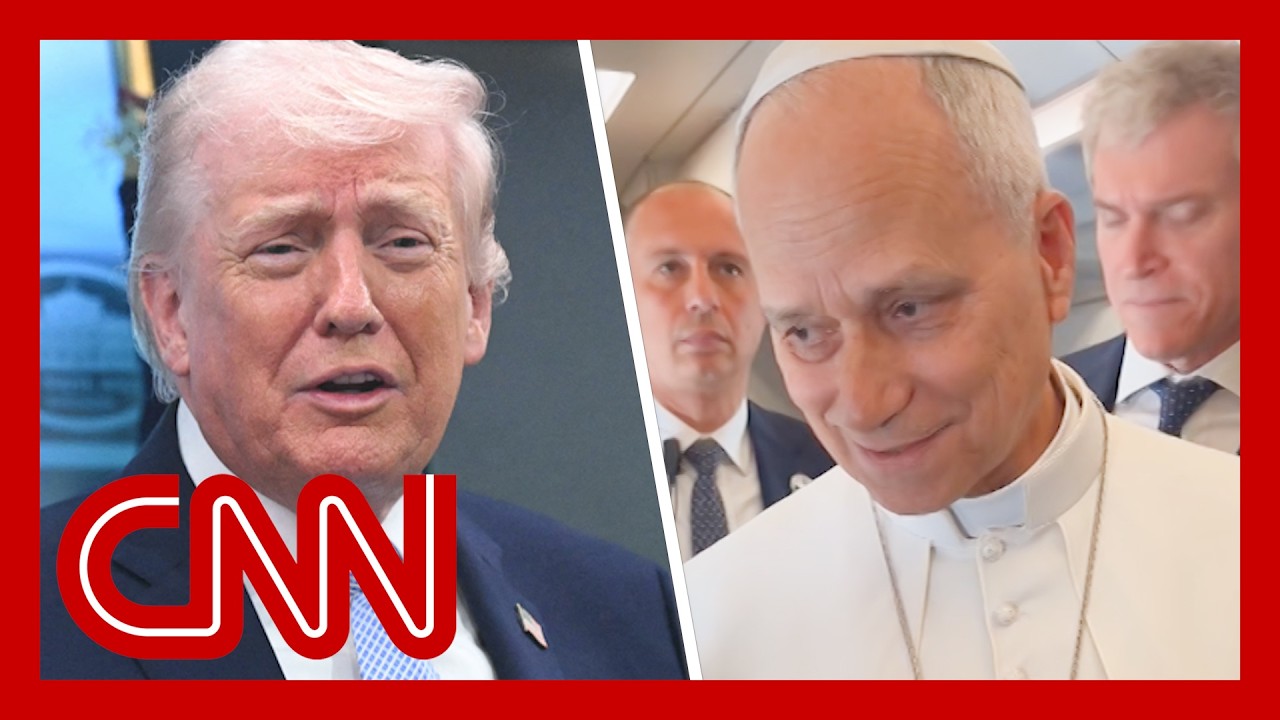
In an unprecedented exchange of words, Pope Leo XIV has confidently challenged the Trump administration following sharp criticisms from the President himself. This unfolding drama between religious leadership and political power marks a turning point not only for the Vatican but also for the political landscape in America.
Pope Leo addressed the conflict head-on, stating unequivocally, “I have no fear of the Trump administration.” His message, steeped in the tradition of the Gospel, centers on the principle “Blessed are the peacemakers.” This statement diverges sharply from President Trump’s assertions about the Pope’s perceived weaknesses, specifically calling him “weak on crime” and inadequate in foreign policy. With these remarks, Trump positioned the pontiff as simply another politician, missing the deeper spiritual implications these discussions entail.
Alina Train of CNN reported directly from the White House, noting how Pope Leo’s comments are not just a reflection of personal conviction but resonate with a significant demographic—53 million American Catholics, roughly 20% of the voting public. This community includes notable figures such as First Lady Melania Trump and Senators like Marco Rubio, who could find themselves amidst the polarization these comments evoke.
The contours of this confrontation begin to unfold more clearly when we consider the historical context. Pope Leo, the first American pope, is not just bearing the weight of spiritual leadership; he navigates the complexities of being a representative of a global faith in an increasingly fragmented political space. For example, under the previous papacy, criticism rarely transitioned into direct counterattacks. With Leo, however, we see a distinct evolution in the papal approach.
In the face of President Trump’s contentious remarks, the Pope’s response has been characterized by calm resolve. Emphasizing that he does not view himself as a political figure, he resists being drawn into partisan bickering. “The message of the Gospels was not meant to be abused in the way that some people are doing,” he asserted, signaling an unwavering dedication to peace.
Moreover, Pope Leo’s vocal opposition to the ongoing U.S. military actions in Iran marks him as a significant counterweight to Trump’s foreign policy. Criticizing the President’s rhetoric—particularly a recent threat that a “whole civilization would die tonight”—the Pope advocated for dialogue and reconciliation rather than aggression.
Christopher Lamb, CNN’s Vatican correspondent traveling with the Pope, conveyed that Leo’s statements are grounded in a principled stance on peace. This notion of peace contrasts markedly with the increasingly militaristic tone observed from certain segments of the current administration. The Pope, addressing journalists aboard the plane en route to Algeria, reiterated his commitment to speaking out against war, emphasizing that his mission is deeply spiritual and rooted in the tenets of the Gospel.
What adds to the complexity of this situation is the potential rift it could create within the American Catholic community itself. As observed by various commentators, the evolving landscape of U.S. politics appears to deepen ideological divides within the faith. The administration’s seemingly anti-Catholic sentiment, as expressed through its actions—such as neglecting traditional Catholic observances—could alienate many faithful followers.
As the Pope embarks on a four-country tour of Africa, the message he carries transcends borders. It weaves together a narrative of understanding and diplomacy rather than enmity. Contrary to the aggression witnessed within U.S. politics, Pope Leo is advocating for dialogues across faiths, fostering cooperation rather than conflict.
In conclusion, the exchange between Pope Leo XIV and President Trump represents more than just a clash of personalities; it signifies a deeper struggle between two starkly different worldviews. The Pope’s unwavering commitment to peace is challenged by a political climate that often prioritizes aggression. As this story continues to unfold, it remains to be seen how these ideological battles will shape not just the Catholic Church but the broader American society in years to come. The juxtaposition of a pontiff dedicated to healing and a president asserting dominance might very well serve as a pivotal moment in the ongoing discourse surrounding morality, leadership, and the essence of what it means to serve the common good.