A Fragile Peace: President Trump’s Ceasefire Announcement and Its Implications
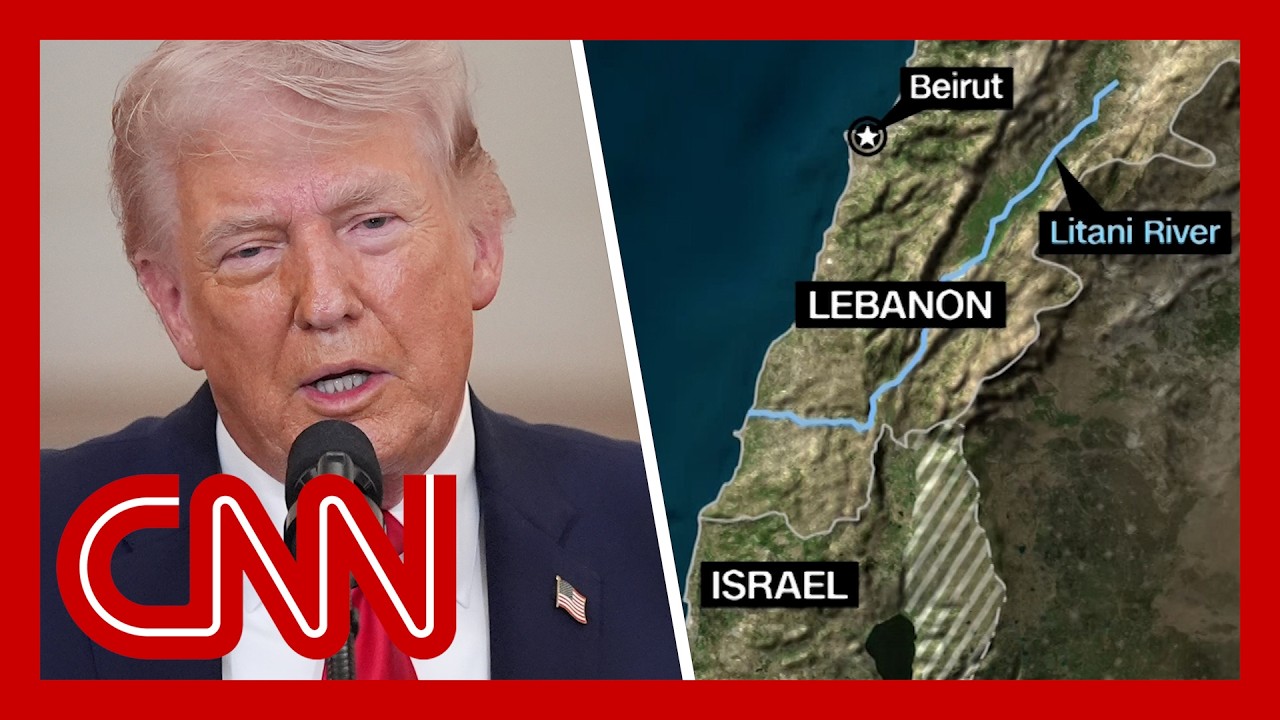
In a surprising development, President Trump recently announced a ten-day ceasefire between Israel and Lebanon, effective at 5 p.m. Eastern Time today. The announcement, made via Truth Social, was met with mixed reactions from various political landscapes. While it offers a glimmer of hope for peace in a historically volatile region, numerous challenges lie ahead.
One significant aspect of the announcement is President Trump’s invitation to Israeli Prime Minister Benjamin Netanyahu and Lebanese President Joseph Ion to the White House for further discussions. This potential summit indicates a level of diplomatic engagement seldom seen in the decades-long conflict. Both leaders’ agreement to the ceasefire hints at a willingness to explore negotiations, albeit carefully constrained by their respective domestic audiences.
Nic Robertson, CNN’s international diplomatic editor, contextualizes this development, noting the strategic leverage gained by Pakistani negotiators engaging with Iranian officials. Pakistan’s involvement underscores Iran’s explicit desire for a cessation of hostilities between Israel and Hezbollah, indicating that Tehran’s influence remains a pivotal factor in regional dynamics. The Iran-Pakistan dialogue may further affect U.S.-Iran relations as discussions pivot towards broader ceasefire agreements.
However, the influence of President Trump cannot be overstated. His personal intervention to broker the ceasefire, especially given the previous reluctance from Netanyahu’s government, signals a shift in U.S.-Israel relations. An interesting paradox emerges: while some Israeli cabinet members are reportedly frustrated at not having approved the ceasefire before its announcement, the pressure from the U.S. has undeniably steered discourse in a new direction. Trump’s insistence on a ceasefire represents a tactical maneuver aimed at stabilizing the region while concurrently addressing U.S.-Iran tensions.
The domestic ramifications within Israel present further complexities. Prime Minister Netanyahu now faces the delicate task of framing this ceasefire positively to a public that largely supports military action against Hezbollah. Amid widespread discontent regarding a perceived capitulation to outside pressures, Netanyahu’s political future may hinge on how effectively he communicates the strategic significance of this ceasefire. Public sentiment remains staunchly security-oriented, as evidenced by polling showing about 80% of Israelis favor continued military action against Hezbollah. This creates a palpable tension for Netanyahu, who must balance international diplomacy with domestic expectations.
As the clock ticks down to the ceasefire’s commencement, key questions endure. What are the implications for Israeli military positioning within Lebanese territory? Reports indicate that Israeli forces currently encroach up to ten kilometers into Lebanon. The ceasefire does not guarantee any withdrawal; hence, military dynamics could shift unpredictably.
From the Lebanese perspective, this ceasefire is seen as a necessary prerequisite for negotiations. However, the Lebanese military’s tenuous relationship with Hezbollah complicates the narrative. The capacity to enforce disarmament remains a formidable challenge. While political will exists among official circles in Lebanon to ease tensions, the fear of reigniting civil strife looms large.
On a broader scale, Iran’s response to these developments will be critical. The prospect of Israel and Lebanon forging a closer relationship, particularly under U.S. auspices, raises alarms in Tehran. While Iran may outwardly express support for the ceasefire, its long-term strategy will likely involve efforts to undermine any rapprochement between these neighboring states.
In conclusion, the announced ceasefire between Israel and Lebanon, driven by President Trump’s unexpected intervention, provides a tentative pathway toward peace. Yet, myriad obstacles—from domestic political pressures in both nations to enduring regional tensions—cloud its future viability. As we observe the unfolding of this situation, it becomes increasingly clear that achieving long-lasting peace will require sustained efforts from all parties involved. The coming days could be pivotal, but whether this ceasefire will lead to a meaningful resolution or merely serve as a temporary lull remains uncertain.