The Financial Windfall of Donald Trump: An Unsettling Trend in American Politics
In recent days, a comprehensive review of President Donald Trump’s financial activities has revealed astonishing figures that raise significant ethical concerns. The newly released financial disclosure for 2025 indicates that Trump amassed an impressive total income of over $2.2 billion—an extraordinary leap from the $622 million he reported in 2024. This staggering sum is a stark reflection of how Trump’s financial landscape has shifted since returning to the White House.
The 927-page report, mandated by the Ethics in Government Act of 1978, showcases Trump’s wealth derived from an eclectic range of sources, including cryptocurrency holdings, royalty payments, and various business ventures. Of particular interest are his cryptocurrency earnings, which alone reached approximately $1.4 billion during his first year back in office. This surge is no doubt linked to Trump’s proactive stance on cryptocurrency policy, making them a focal point of his administration.
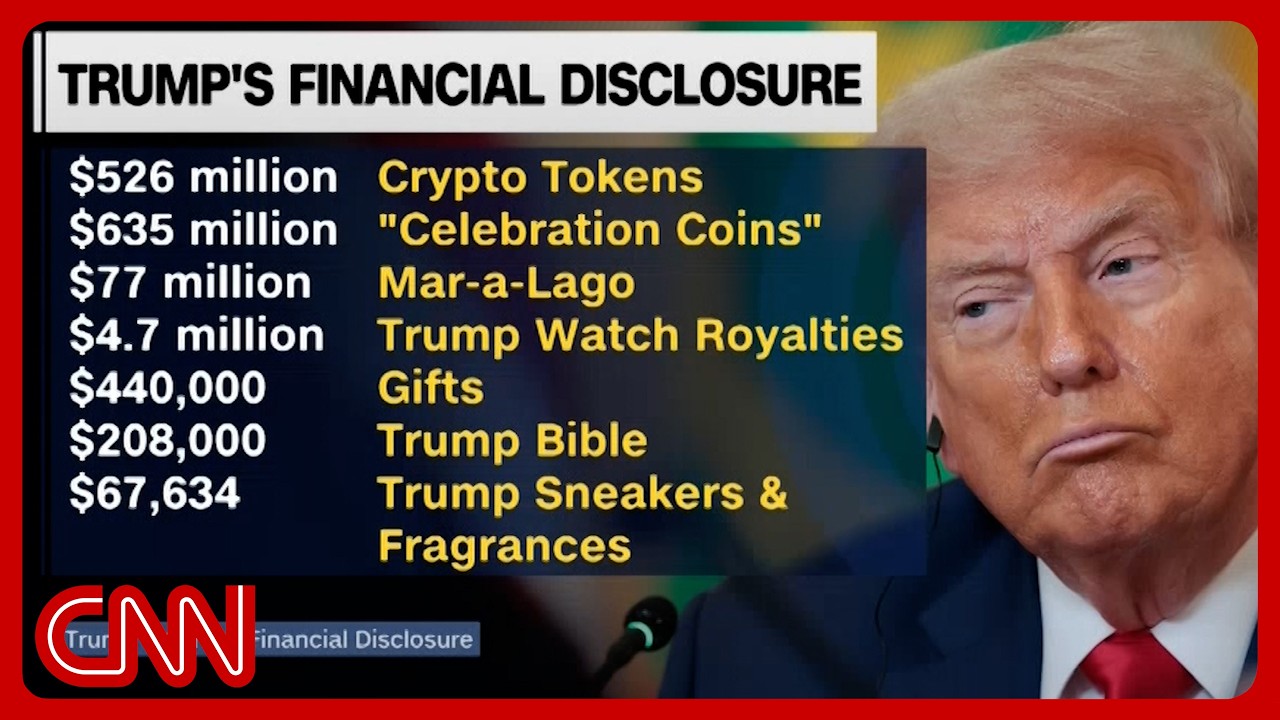
For instance, Trump’s financial disclosures detail over $526 million earned from sales tied to World Liberty Financial LLC, a firm partly managed by his sons, Eric and Donald Trump Jr. Furthermore, a lucrative agreement with Celebration Coins reportedly netted Trump another $635 million, though it seems this venture has since lost significant value in the market, raising questions about investor protection and regulatory oversight.
Another substantial revenue stream for Trump is the Mar-a-Lago Club, which generated $77 million in resort-related income—an increase from approximately $50 million the previous year. This high-profile destination offers unique access to the former President, further blurring the lines between personal gain and public service.
Trump has long been known for lending his name to various products and ventures, reaping significant royalties in the process. For instance, Trump Watches reportedly generated $4.7 million in royalties. His financial disclosures also list smaller amounts from promotional endeavors, such as $28,000 from a Bible he frequently endorsed and over $67,000 from Trump-branded fragrances.
In addition to traditional business earnings, Trump’s financial activities have included settlements from various media companies following lawsuits. These include $8 million from Twitter and substantial donations from ABC, CBS, and Meta—each contributing $16 million to the Donald J. Trump Presidential Library Foundation. Such receipts have drawn scrutiny, as they suggest a convergence of personal finance and public service, exacerbating concerns about ethical conflicts.
Critics argue that Trump’s prolific earning during his presidency marks an unprecedented blending of business and governance. As these financial revelations continue to unfold, many wonder how they align with the integrity expected from a sitting president. Although Trump downplays concerns regarding his substantial earnings, asserting that "the stock market’s going up" is benefiting everyone, the reality is far more complex.
The notion that Trump’s financial windfall is merely a byproduct of market performance is simply insufficient to address the ethical implications of his actions as president. With direct ties to crypto ventures and an administration that appears to casually tread the line between public interest and private gain, the potential for conflict of interest becomes alarming.
Adding to the contentious narrative are the allegations of questionable foreign dealings. Reports indicate that Trump leveraged foreign relationships to enrich himself, including significant investments from the UAE that coincided with favorable policy actions. Such arrangements not only raise ethical flags but also evoke concerns about national security and the integrity of decision-making.
As the political landscape continues to evolve, the question arises: what precedent are we setting for future administrations? Should we expect that every subsequent president will exploit the office for personal gain? As public discourse shifts, many constituents express a sense of disillusionment, particularly as average Americans grapple with economic hardships while their president profits handsomely from various avenues.
While some individuals may remain unwavering supporters of Trump, driven by a belief in his business acumen, the broader implications of his financial disclosures cannot be ignored. The reality remains that a strikingly wealthy individual occupies the highest office in the land, and the intertwining of his personal interests with public service warrants urgent scrutiny.
Whether Americans can or will hold their leaders accountable for ethical lapses remains a pressing question as we navigate this complex intersection of politics and personal profit. As we look towards the future, it’s clear that the principles laid down by previous generations must serve as our guiding light, helping to ensure that integrity prevails in our nation’s governance.