Unraveling the Incident at the Reflecting Pool: A Legal Perspective
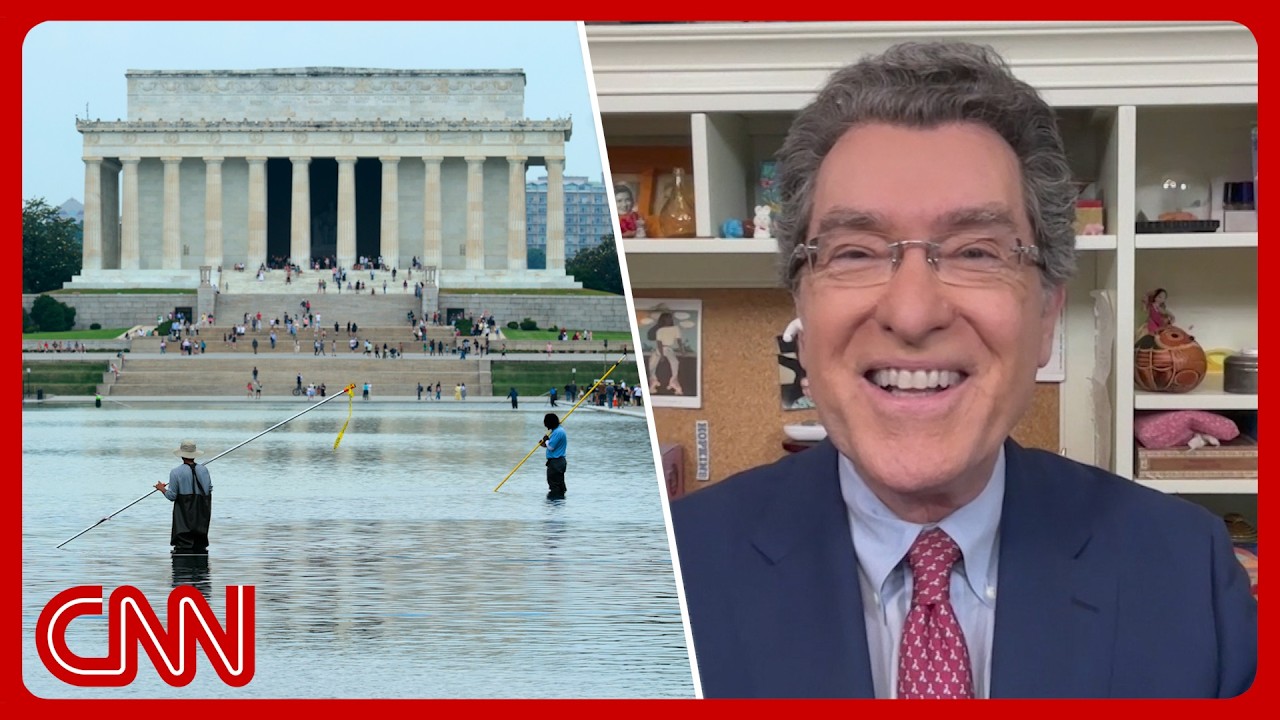
On a seemingly ordinary Friday, the arrest of former U.S. Olympian David Hearn sent ripples of concern throughout the nation. Hearn, known for his illustrious sports career, found himself embroiled in a controversy linked to the reflecting pool in front of the Lincoln Memorial. Represented by attorney Norm Eisen, the details of the case illuminate not only the legal challenges ahead but also the overarching implications it holds for American citizens.
Norm Eisen, who gained prominence for his role as counsel to the House Judiciary Committee during Donald Trump’s first impeachment, provided a recap of the events leading to Hearn’s arrest. Eisen asserted that Hearn was on a routine bike ride, an activity familiar to many, when he decided to check out what he described as a “mess” caused by the Trump administration’s handling of the reflecting pool. “He did not break the law,” Eisen emphasized, highlighting the absurdity of the situation. As he put it, Hearn acted as a concerned citizen, not a lawbreaker.
The crux of the issue lies in President Trump’s allegations that individuals had been tampering with the reflecting pool using tools like knives. Eisen refuted these claims outright, stating that Hearn, during his detainment, bore no evidence—no tools or paint chips—that might imply he participated in any wrongdoing. “This is a meritless prosecution,” he declared emphatically. The lack of evidence, Eisen noted, should cause every American to reflect on the implications of such government actions.
Hearn’s ordeal lasted five hours, during which he was mistakenly detained before being released on misdemeanor citations. “He’s innocent,” Eisen reiterated, categorizing the charges as baseless and rooted in thin evidence, if any at all. “It’s terrible that they’re doing this to the American people,” he remarked, emphasizing that targeting innocents is a troubling trend under the current administration.
Moreover, the controversy surrounding the reflecting pool raises further questions about the impact of political decisions on civic life. Algae blooms in the pool have become a focal point of tension. As reported by Matt Viser from The Atlantic, experts indicate that governmental attempts to manage the algae, including the use of hydrogen peroxide, have inadvertently led to the proliferation of a less toxic—but more rapidly growing—variety of green algae. This has turned the pool into a veritable "incubator" for these organisms, complicating any efforts to resolve the situation.
The conversation around the reflecting pool extends beyond mere aesthetics or ecological concerns; it delves into a larger narrative about governance and accountability. Viser noted the incompetence manifesting through governmental actions, where initiatives intended to beautify the area could actually exacerbate environmental issues. His findings suggest that former President Trump’s decisions, including changes in the pool’s waterproof lining, created an environment conducive to algae growth—an irony that further complicates the narrative surrounding its maintenance.
As the situation continues to unfold, it becomes increasingly evident that the reflecting pool incident is emblematic of broader governance issues. Political leaders are now held accountable not only for their policies but also for how those decisions affect the lives of ordinary citizens. Discussions on both sides of the political aisle have raised concerns about the implications of prosecuting individuals, like Hearn, who inadvertently find themselves caught in the crossfire of political machinations.
In essence, the unraveling events at the reflecting pool serve as a microcosm of larger societal tensions at play. The intersections of law, individual rights, and governmental accountability continue to spark debate. As David Hearn prepares to return to court to contest the charges against him, the outcome will undoubtedly resonate far beyond his individual case. The implications of this situation serve as a wake-up call for citizens and leaders alike—a reminder that when the line between governance and justice blurs, it is the rights of individuals that hang in the balance.