Trump’s Grip on the GOP Solidified in Indiana Primaries
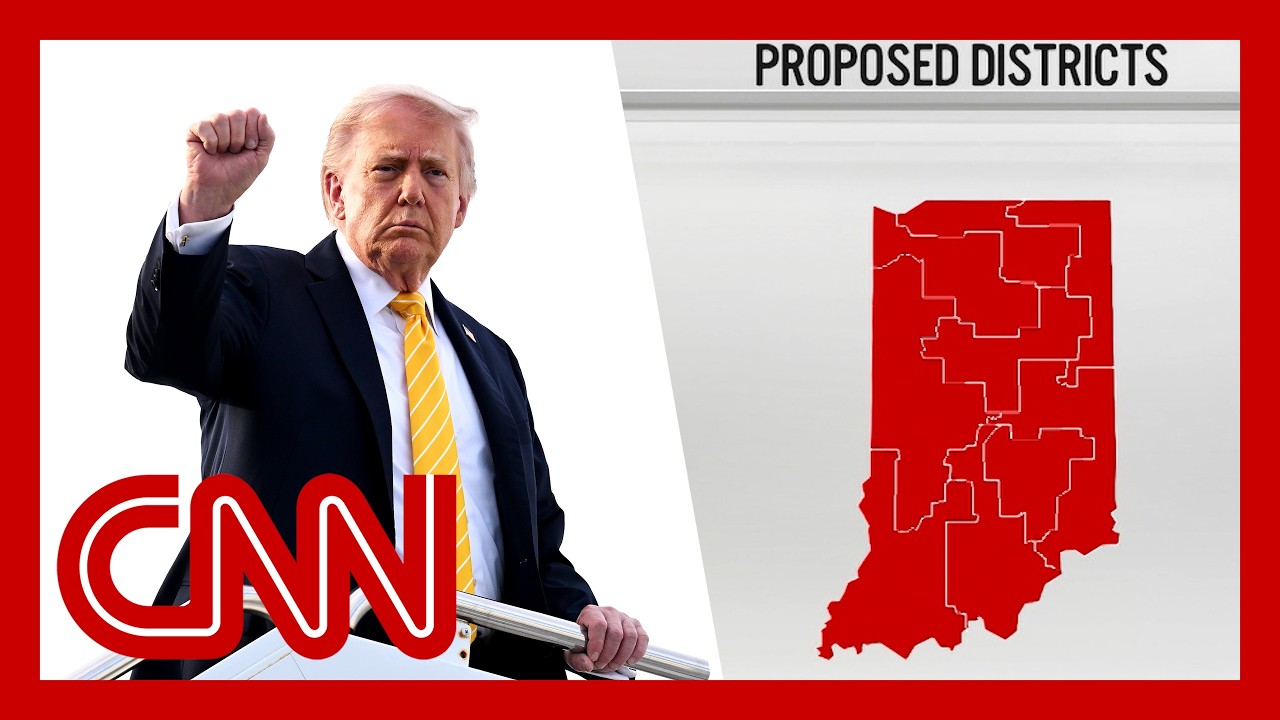
In the realm of political maneuvering, few figures exert as decisive an influence as former President Donald Trump. This was vividly demonstrated in Indiana during the recent state Senate primaries. Trump made a notable statement: it remains his Republican Party. The ripples of political retribution were felt as he vowed payback against seven Republican state senators who had opposed his demand to redraw Indiana’s congressional maps. On primary night, he extracted that revenge.
Five of the seven incumbents who defied Trump found themselves ousted by candidates backed by the former president. The sheer scale of this political operation was impressive. Trump’s allies injected a staggering $13 million into Indiana’s Senate contests—a stark contrast to the mere $280,000 spent on state Senate primary advertisements in 2024 across all races. This onslaught of funding underscores the lengths to which Trump is willing to go in securing loyalty and punishing dissenters.
CNN’s Arlette Saenz reported the details of the night, noting that, while these legislative races typically do not capture national attention, they bore significant implications for the future of the Republican Party. The outcomes signal to lawmakers across the country that crossing Trump can have severe consequences. Among those who survived the night was State Senator Greg Good—an exception rather than the rule.
Counterarguments emerged from those who sought to defend their decisions against Trump’s wishes. One such senator, Spencer Deiri, emphasized his commitment to conservative principles, arguing that allowing the government to redraw maps arbitrarily undermines individual voter power. Yet, his explanation could not protect him from the political fallout in the age of Trump.
The repercussions of these elections extend beyond Indiana. They could embolden Republicans in other states grappling with redistricting challenges. States like Louisiana are now under scrutiny as lawmakers there seek to redesign congressional maps in response to shifting electoral dynamics. The political landscape appears ripe for Trump to maintain his iron grip over the party as he capitalizes on regional debates about redistricting.
While Trump’s national approval ratings may be waning, his influence within conservative circles remains robust. This dynamic raises alarms not only for Republican legislators contemplating defiance but also for candidates in other states, including Kentucky and Louisiana, who may soon face similar scenarios.
Political analysts stress that primary elections serve as a barometer of party loyalty. Historically, these elections attract the most engaged members of a party. Consequently, candidates like Thomas Massie in Kentucky and Bill Cassidy in Louisiana could face precarious futures if they choose to strike out on their own. A growing number of voters seem committed to Trump’s brand of conservatism, suggesting there is little room for dissent within party ranks.
Those who have supported Trump thrive in a landscape increasingly shaped by extremes. Many of the voters who participate in Republican primaries are staunch in their support for the former president, which contrasts sharply with mainstream centrists who tend to save their votes for general elections. This shift could indicate a potential fracture within the party, complicating the electoral calculus as the midterms approach.
With Trump continually demonstrating his capacity to mobilize significant resources and create electoral outcomes that reflect his interests, the ramifications for the GOP are profound. Candidates must walk a fine line. They cannot alienate the base, yet they must seem palatable to a wider electorate in the general elections—a dilemma that increasingly shapes the party’s landscape.
As Indiana’s primary results illustrate, Trump remains a formidable force, casting a long shadow over the Republican Party. His message is clear: dissent does not go unpunished. The political scenery leading up to the midterm elections is fraught with challenges for Republicans as they grapple with their identity in a post-Trump era. The upcoming races will serve as critical tests of loyalty and strategic alignment within the party.
Ultimately, Trump’s hold on the Republican Party showcases not just his individual influence but the shifting sands of American politics, where primary voters increasingly dictate the terms of engagement. The lessons learned from Indiana may well shape political strategies across the nation, as candidates navigate the precarious path laid before them by a former president who refuses to fade from the spotlight.