U.S. Military Troop Deployment to the Middle East: A Strategic Overview
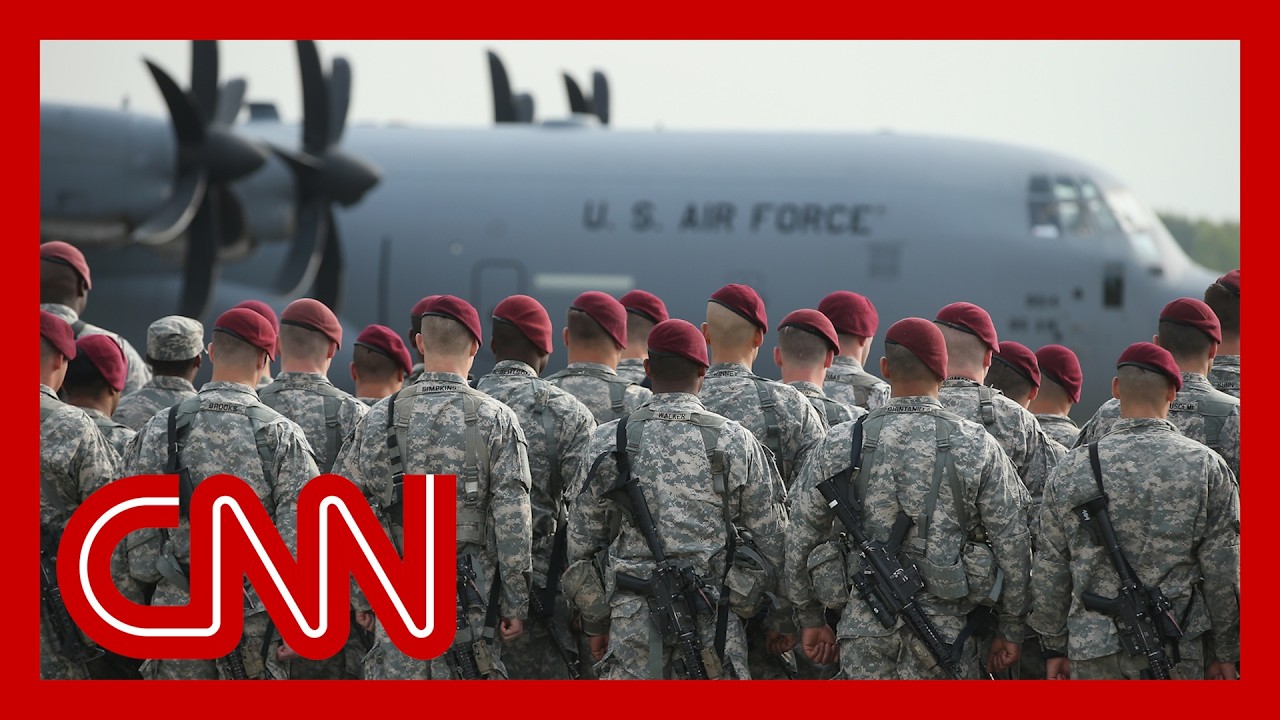
Recent developments indicate that approximately 1,000 U.S. Army paratroopers from the 82nd Airborne Division are slated to deploy to the Middle East in the coming days. This deployment raises significant questions about U.S. military strategy, particularly in relation to ongoing diplomatic efforts concerning Iran. While President Trump has asserted that negotiations with Tehran are progressing, the rapid military buildup suggests a complex interplay of diplomacy and potential military action.
On the ground in Tel Aviv, CNN’s chief national security analyst, Jim Sciutto, pointed out that this troop deployment is one piece of a larger military strategy that includes not only paratroopers but also a variety of naval and aerial forces. The situation mirrors the conditions just weeks prior to the outbreak of recent conflicts, when diplomatic talks coincided with a substantial military presence in the region. Whether this latest deployment signals a commitment to ground operations in Iran remains to be seen.
The U.S. military’s operational capabilities in the region have been bolstered further by elite special operations forces already stationed in strategic locations such as Jordan and Israel. Malcolm Nance, a retired U.S. naval intelligence officer, has underscored the offensive nature of the current military posture. The involvement of the 82nd Airborne Brigade, usually tasked with rapid deployments to capture critical objectives, hints at a readiness to conduct assertive military operations.
A Dual Approach: Diplomacy and Military Readiness
The deployment of troops serves a dual purpose: it reinforces military readiness while maintaining a veneer of diplomatic engagement with Iran. However, skepticism remains high regarding the effectiveness of negotiations. Many experts believe that the ongoing military buildup undermines any genuine diplomatic effort. If recent history has taught us anything, it is that military options often overshadow diplomatic pathways, resulting in a scenario where military action becomes increasingly likely.
The configuration of U.S. forces suggests strategic intentions that extend beyond mere deterrence. According to Nance, a range of specialized units, including Delta Force and the Navy SEALs, will provide the necessary capabilities to execute complex operations, potentially even seizing key Iranian assets like Kharg Island. The focus on these high-value targets signifies a shift toward a more aggressive military posture, which complicates the diplomatic narrative being presented by the administration.
The Strategic Landscape: Potential Outcomes
The strategic objectives of the U.S. deployment raise several critical questions. Are we witnessing a calculated military strategy in preparation for a possible ground operation in Iran? Or are forces being deployed reactively in response to escalating tensions? Nance asserts that while a coalition with regional partners such as Saudi Arabia and the UAE is feasible, achieving stability and degrading Iran’s military capabilities will require sustained and targeted military engagement over an extended period.
While military action may seem imminent, the implications of such aggression are vast. Engaging in conflicts within the Strait of Hormuz or on Iranian territory could escalate to regional instability, drawing in more actors and complicating the geopolitical landscape. Notably, regional players have expressed hesitance to escalate the conflict, with a preference for diplomatic resolution over military engagement.
Conclusion: A Crossroads of Diplomacy and Military Might
As the U.S. prepares a substantial military presence in the Middle East amidst purported diplomatic dialogues with Iran, the international community watches closely. The unfolding situation points to a crucial paradox: how to balance military preparedness with the quest for peace. Given the region’s historical complexity and the volatility of U.S.-Iran relations, the coming days and weeks will be decisive in determining whether diplomacy can succeed against the backdrop of military readiness. The dual tracks of diplomacy and military action may present a precarious balancing act, one that could shape the future of U.S. involvement in the Middle East for years to come.