A Dissected State of the Union: Trump’s Polarizing Address
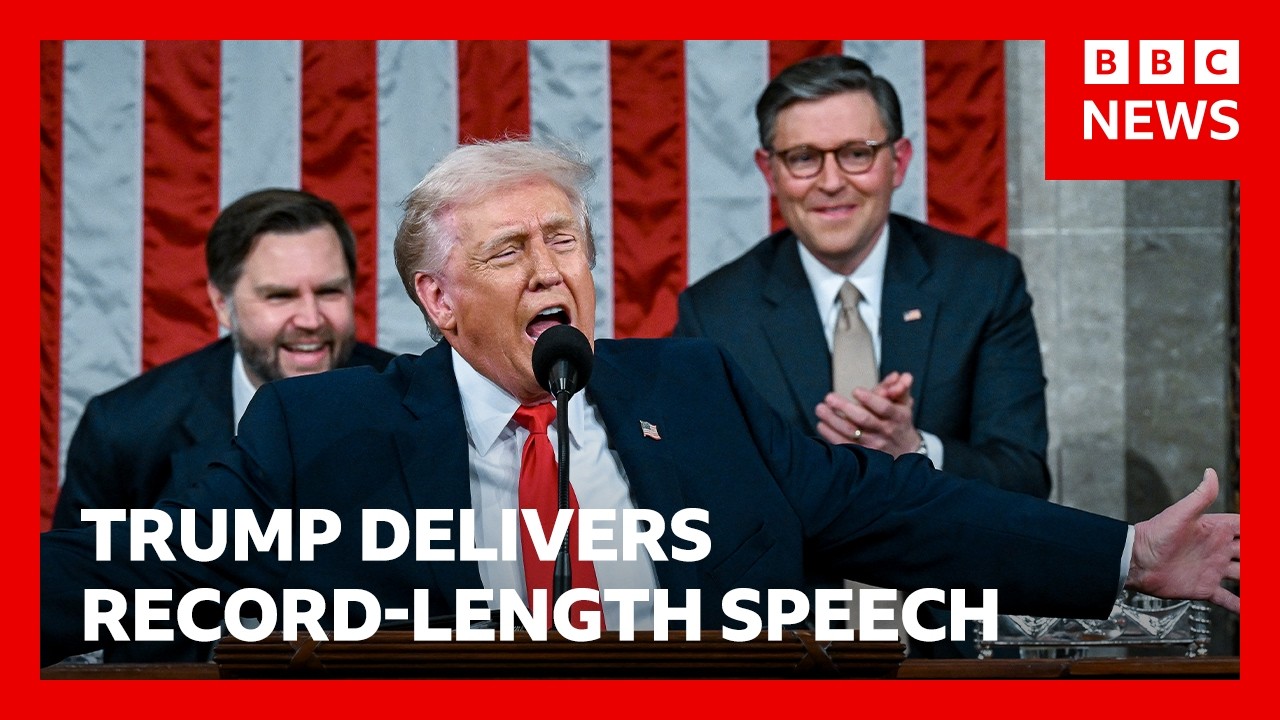
In a charged atmosphere in Congress, President Donald Trump delivered a State of the Union address that was as divisive as it was lengthy. Claiming a historic turnaround in his administration’s first year, he asserted that America is now “bigger, better, richer, and stronger than ever before.” However, his assertions about progress were matched by pronounced criticisms of Democratic lawmakers, signaling an ongoing rift in American politics.
Trump’s address, reportedly the longest in history, sought to fortify his legacy amid declining approval ratings and growing concerns about economic affordability among Americans. While he painted a picture of national prosperity, the reality was clouded by rising issues such as inflation and the cost of living.
“My greatest hits were on full display,” he proclaimed, rejuvenating his signature themes—tariffs and immigration reform. “The only thing standing between Americans and a wide-open border right now is President Donald J. Trump and our great Republican patriots in Congress,” he asserted, eliciting both cheers and jeers from the audience. Within moments of Trump’s declarations, tensions flared, reflecting the deep partisan divides. Democratic Congresswoman Ilhan Omar called out, “You should be ashamed of yourself,” underscoring the palpable discord among lawmakers.
Amid dramatic applause for Olympic athletes and musical interludes, Trump’s contention around immigration became a focal point of contention. He claimed, “After four years in which millions of illegal aliens poured across our borders, we now have the strongest and most secure border in American history.” This statement requires careful unpacking. While it is true that a significant drop in illegal crossings has been reported, assertions of “zero illegal aliens” entering the U.S. remain misleading. Data shows continued, albeit reduced, activity at the southwestern border, indicating that the reality is far more complex.
Equally contentious were his comments regarding national safety, particularly the murder rate. Trump asserted last year saw “the single largest decline in recorded history,” tempting applause. Yet, context is essential. The FBI’s crime reports, which lag in their release, suggest that a decrease in murder rates is indeed occurring, but how drastic remains to be fully authenticated. While positive trends in crime statistics can be noted, framing these figures as definitive may overlook the nuanced realities of local law enforcement dynamics across the country.
Turning to economic issues, Trump proudly declared a significant drop in gasoline prices, claiming they had fallen below $2.30 per gallon in many areas. This statement, while referencing a reality of decreased fuel prices, was also slightly romanticized. Current averages suggest a rate closer to $3 per gallon for many consumers, with the alleged $1.85 observed in Iowa lacking verifiable data. Trump’s penchant for using hyperbole serves to reinforce his narrative but clouds the planning of future policies.
The Democratic response from Virginia Governor Ralph Northam offered a stark contrast. He criticized the President for “misleading Americans” and called out the need for accountability among politicians. This is emblematic of a broader sentiment among Democrats, who view Trump’s framing of American progress as overly simplistic and at odds with lived experiences, particularly in economically challenged regions.
As the nation moves closer to the midterm elections, Trump’s ambitions for the Republican Party were clear. The address aimed to consolidate support among his base while voicing contentious issues that galvanize voter turnout.
In the end, the chasm between parties deepened during the address—highlighting a nation grappling with uncertainties. While Trump heralded progress, the opposition articulated a preference for accountability and transparency in governance. The stakes are high as the electorate prepares to weigh these contrasting visions of America’s future.