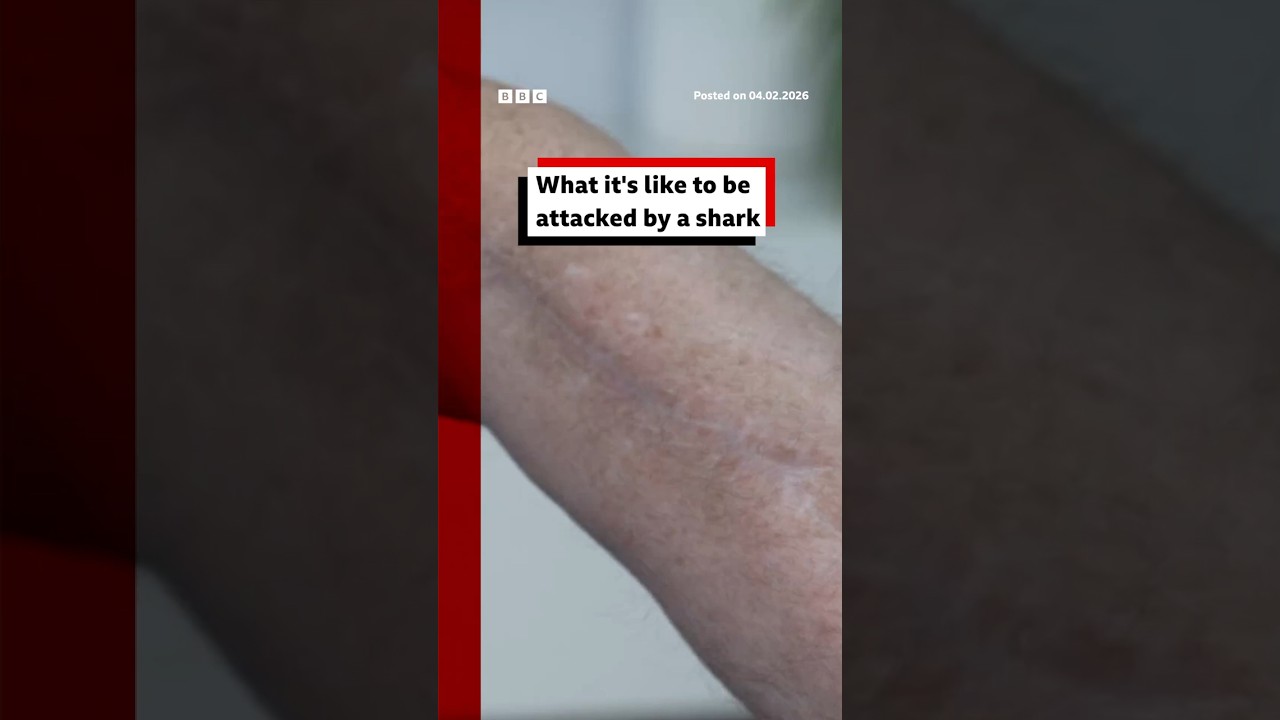
Surviving the Unthinkable: Peter Smith’s Encounter with a Bull Shark
In a moment that changed his life forever, Peter Smith, a resident of England, found himself at the epicenter of a harrowing incident involving a bull shark while vacationing in the Caribbean island of Tobago nearly two years ago. This singular occurrence, which marked the first and only documented shark attack in Tobago, offers a chilling yet remarkable insight into survival amidst chaos.
On that fateful day, Peter waded into waist-deep water, unaware of the predator lurking beneath him. “I felt a very heavy object hit my leg really hard. I looked down and there was a shark,” he recounts, shaken yet composed. He estimated the shark’s size to be between eight and ten feet. Instinctively, Peter fought back. “I started punching the shark, and I can honestly say I’ve never hit anything as hard as I actually hit that shark.” His instinct for survival kicked in, driving his desperate response against the formidable predator.
Accompanying Peter were friends John and Moira, who were also caught in the maelstrom of fear and confusion. “I remember Moira screaming and shouting for help. Um, I remember John coming to help me fight the shark.” Their immediate reactions encapsulate the sheer panic of those moments. The bond of friendship, tested under terrifying circumstances, became crucial in Peter’s fight for survival.
In the aftermath, John’s memory of the scene is etched in his mind, a visceral reminder of the fragility of life. “I remember going into the water and seeing his terrible injuries. It was just awful; you could see bones.” The stark reality of Peter’s injuries thrust into view the gravity of the encounter. His battle with the shark left him with multiple bite wounds that required extensive medical treatment in both Miami and London.
Remarkably, Peter’s perspective on his situation is one of gratitude rather than despair. “People say you were unlucky because of the shock, but I feel incredibly lucky— incredibly lucky because of the help I received,” he reflects. His resilience speaks volumes, illuminating the strength of the human spirit in the face of extraordinary adversity. It serves as a reminder of the unpredictable nature of life and the instincts that emerge when one’s survival is at stake.
With shark incidents being rare in Tobago, this attack ignited conversations about marine life and human encounters in aquatic environments. Experts point out that bull sharks are often found in shallow coastal waters and can be territorial. However, such encounters usually result in minimal risk for humans. Peter’s case, while extreme, has highlighted the importance of understanding marine ecosystems and the creatures that inhabit them.
Peter’s recovery journey has been long and arduous, marked by both physical and emotional challenges. The scars on his body are a permanent record of that day. But they also symbolize survival—survival not just from a physical attack, but the mental strength to reclaim one’s life after trauma. His story serves not only as a cautionary tale but as a beacon of hope for others who may face unexpected calamities.
As he moves forward, Peter continues to advocate for shark conservation and awareness. He realizes that while he cannot erase his experience, he can channel it into meaningful dialogue about the relationship between humans and sharks. The ocean remains a magnificent but unpredictable environment, and understanding it is essential for coexistence.
In summary, Peter Smith’s encounter with a bull shark merges harrowing reality with remarkable survival. It is a story that underscores the unpredictability of nature and the resilience inherent in the human spirit. As he learns to navigate life post-attack, Peter’s message resonates: preparedness, awareness, and respect for nature can foster a deeper understanding between humanity and the ocean’s most formidable inhabitants.