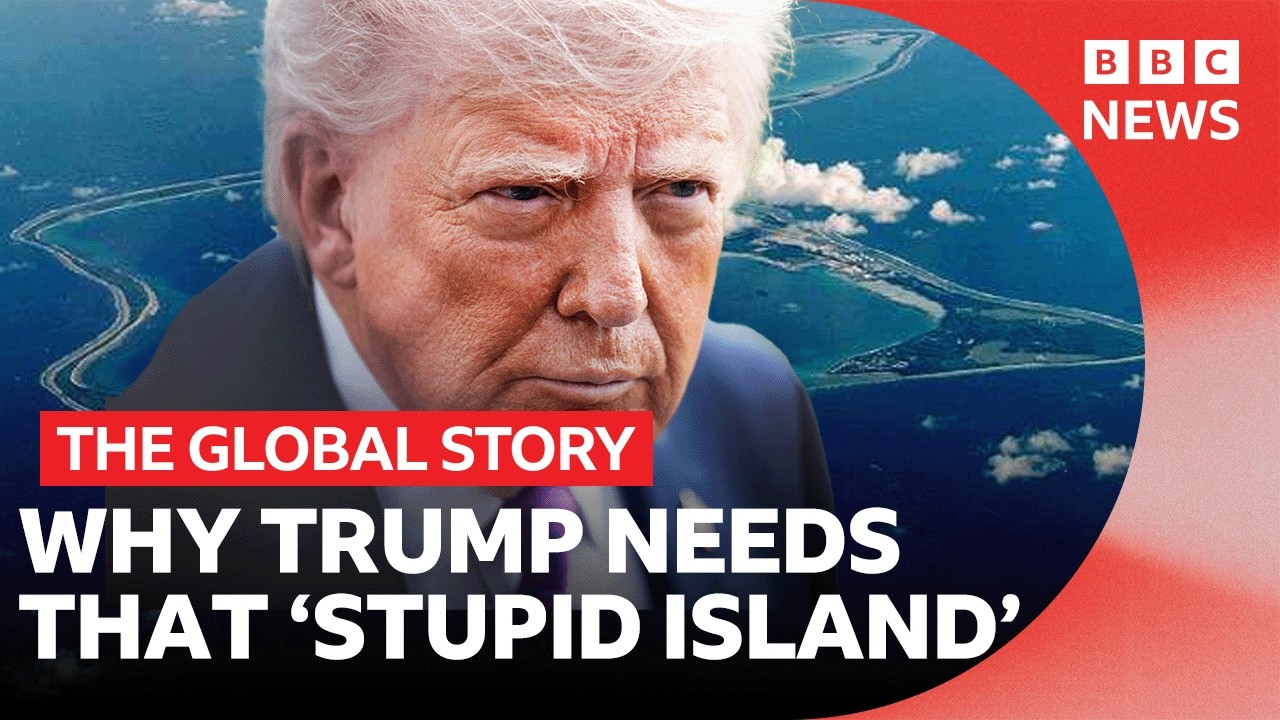
The Diplomatic Intricacies Surrounding the Chagos Islands: A Modern Geopolitical Dispute
The Chagos Islands, an archipelago in the Indian Ocean, have recently ignited a significant diplomatic dispute between the United Kingdom and Mauritius, with the United States watching closely. On the surface, this might seem like a peculiar focus for international politics, but the underlying issues are rooted in history, sovereignty, and national security.
The journey of the Chagos Islands into contemporary discourse is marked by a complex history. Acquired by Britain during the Napoleonic Wars, the islands retained British control until the mid-20th century. Following Mauritius’s independence in 1968, Britain retained the Chagos Islands, ultimately establishing the British Indian Ocean Territory. The British government compensated Mauritius for relinquishing its claim to the islands. However, this arrangement has long been contentious.
In recent years, Mauritius has asserted that the agreement allowing Britain to govern the Chagos Islands was unjust and has sought to reclaim sovereignty. The turning point came in 2019 when the International Court of Justice issued a non-binding advisory opinion deeming the UK’s occupation illegal. Prompted by this ruling, the British government initiated negotiations to return the islands to Mauritius—a deal that would involve leasing the Diego Garcia military base back to the UK for 99 years.
The United States has played a crucial role in this ongoing saga. Diego Garcia serves as a strategically vital military base, serving American interests in the Indian Ocean and beyond. Its potential for housing long-range bombers and acting as a naval hub makes it an asset of great import to U.S. military operations. Consequently, U.S. officials have been vigilant about any changes to sovereignty over these islands.
In January 2023, Donald Trump publicly intervened, expressing opposition to the deal, framing it as an act of "great stupidity." His conflicting comments on this subject have further complicated the diplomatic landscape. Initially, Trump appeared ambivalent or even supportive of the agreement, only to pivot sharply, intertwining his stance on the Chagos Islands with issues concerning national defense, particularly regarding tensions with Iran.
Experts suggest that Trump’s evolving position reflects broader themes of American foreign policy under his administration. His approach often emphasizes unilateral national interests over multilateral agreements. For Britain, this has created a precarious situation: the need to vindicate its actions based on international law while simultaneously accommodating U.S. demands and expectations.
The implications extend beyond the immediate geopolitical landscape. Mauritian citizens have voiced grievances over their historical displacement from the islands, resulting in a divided opinion on their future. Those advocating for justice argue that regardless of sovereignty, the narratives of those forcibly evicted must not be overlooked. These voices emphasize the importance of acknowledging past injustices in shaping future policies.
The ongoing situation has been exacerbated by the recent conflict with Iran. The British government’s cautious response to U.S. military actions has become a point of tension. Initially reluctant to allow the use of British bases for strikes, UK officials re-evaluated their stance as the situation intensified, granting access under certain conditions. Trump’s response to these developments has further strained U.S.-UK relations, with his criticism directed at the British Prime Minister for hesitancy he deems unfavorable.
As negotiations for sovereignty and strategic leases are placed on hold, the Chagos Islands issue encapsulates larger questions about international law, national interests, and the evolving dynamics between states in a multipolar world. Britain’s struggle to reconcile its historical role with contemporary expectations places it at a crossroads, grappling with what it means to uphold international standards of justice while navigating the pressures exerted by key global players.
In this unfolding drama, the fate of the Chagos Islands serves as a litmus test for international diplomacy in the 21st century. The resolution may well shape not only the future of these islands but also the broader trajectory of UK, US, and Mauritian relations amidst a rapidly changing global landscape.