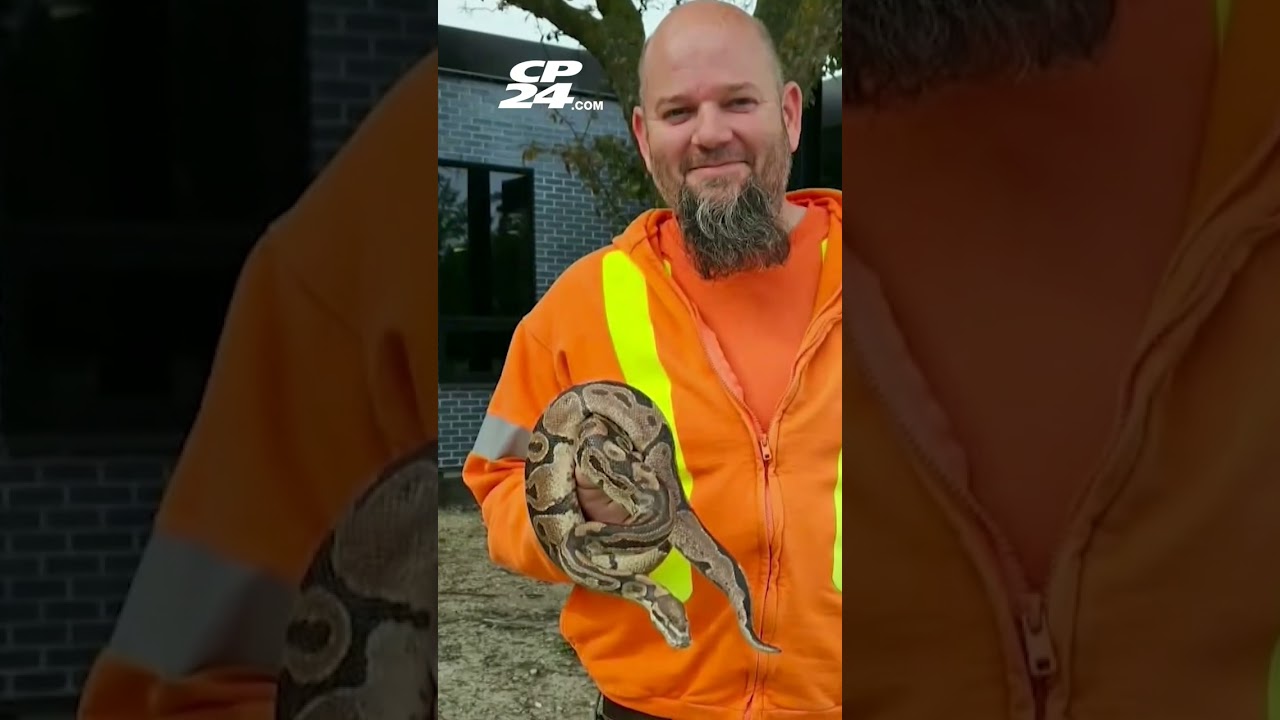
In an unexpected turn of events, a dedicated staff member at a sewage treatment facility in Windsor, Ontario, stumbled upon a nearly four-foot-long ball python. This unusual encounter not only startled the employee but also prompted a swift response that led to the reptile’s rescue and eventual naming: Wilbur.
The discovery took place within the confines of the sewage plant, an environment one might not typically associate with exotic wildlife. However, the world of wildlife is often fraught with surprises. In this instance, the python’s escape from a domestic setting and subsequent emergence into public view raised questions about responsibility and awareness surrounding pet ownership.
Ball pythons, known for their docile nature, are popular among reptile enthusiasts. Yet, they require specific care and conditions, making them less suited for casual ownership. When such reptiles are improperly cared for or housed, they can become escape artists, slipping away from their enclosures with an uncanny ease. Wilbur’s tale serves as a poignant reminder of the challenges that come with owning exotic pets.
After being found, Wilbur was safely transported to the local humane society, where staff members ensured he received the care and attention he needed. The humane society played a pivotal role, not only in providing temporary shelter but also in assessing Wilbur’s health. The swift action taken by the sewage plant employee and subsequent intervention by animal care professionals underscore the importance of community vigilance when it comes to wildlife safety.
As news of Wilbur’s story spread, it quickly captured the attention of the local community. Social media platforms buzzed with discussions about the unexpected arrival of the python and the importance of responsible pet ownership. Many residents took the opportunity to reflect on the implications of keeping exotic species as pets, emphasizing the need for thorough research and understanding before committing to such animals.
Moreover, the incident highlighted a broader issue related to the safety of wildlife and the challenges posed by domesticated animals that find themselves in unfamiliar surroundings. Reptiles, though not known for causing harm to humans indiscriminately, can become a nuisance or a danger if released into the wild. Their new environments may lack the requisite conditions for survival, leading to their suffering or even causing disruptions to local ecosystems.
Wilbur’s experience also raised questions about local laws and regulations surrounding pet ownership, particularly for exotic animals. In many regions, there are stringent guidelines concerning the ownership of reptiles and other non-native species. Such regulations aim to ensure public safety, as well as the well-being of the animals themselves. Though Wilbur’s adventure ended happily with his rescue, the incident serves as a cautionary tale for those considering exotic pets.
Importantly, incidents like this also offer an opportunity for education. Local organizations and humane societies can leverage these experiences to inform communities about the responsibilities involved in caring for exotic animals. Workshops, informational sessions, and outreach programs may help to engage residents in conversations about wildlife safety, animal care, and the importance of making informed decisions before bringing an exotic creature into their homes.
In conclusion, the unexpected discovery of Wilbur the ball python at a sewage plant serves as a multifaceted lesson. It underscores the complexities of pet ownership, the importance of community engagement in wildlife issues, and the need for robust educational initiatives. For residents of Windsor, Ontario, Wilbur’s story is more than just the tale of a lost pet; it signifies a reminder of the delicate balance between humans and the natural world. As the community reflects on Wilbur’s escape, they must also consider their own role in ensuring that such creatures remain safe and sound, whether in their homes or the wild.