Navigating Tariff Threats: Europe’s Response to Trump’s Greenland Gamble
In the latest episode of the Global News podcast, our Europe correspondent Nick Beak sheds light on the intricate and often tumultuous relationship between Europe and the U.S., particularly in light of President Trump’s controversial pursuit of Greenland. This situation encapsulates not only the geopolitical tensions that can arise from territorial disputes but also the complex dynamics of international trade.
Greenland, a territory of Denmark and thus part of the European Union, is not for sale, a position firmly held by European leaders. President Trump, however, views the acquisition of Greenland as a matter of national and global security. He argues that, in an ever-evolving landscape dominated by threats from China and Russia, American ownership of Greenland would bolster the U.S. position. The divergence in perspective is stark: while Europe emphasizes sovereignty and diplomatic relations, Trump leans toward manifesting might through economics and strategy.
In response to perceived threats, President Trump has announced potential tariffs on eight European countries supporting Denmark’s stance on Greenland. This has heightened the stakes for European leaders as they strive to devise a counter-strategy against what they see as bullying from the U.S. administration. The challenge lies not just in retaliatory measures but in uniting a diverse coalition of nations with differing priorities and concerns in the face of such external pressure.
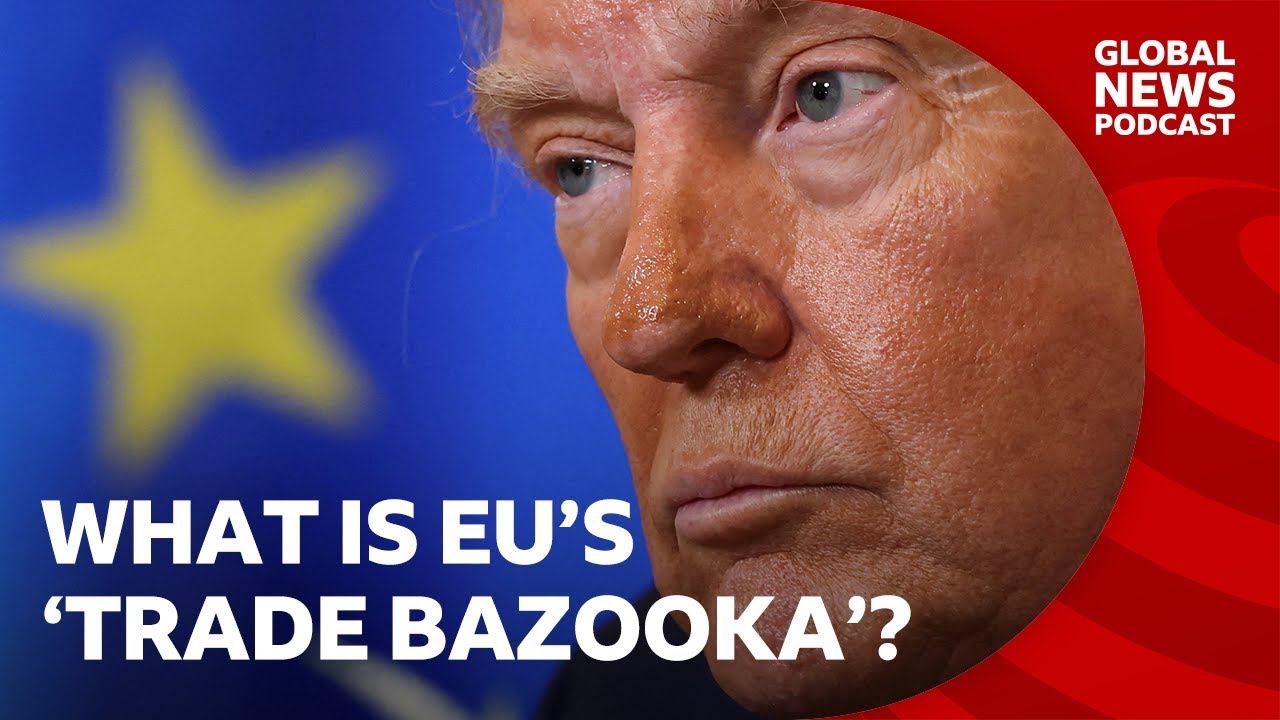
The "trade bazooka" is one tool European leaders are contemplating. Initially designed to respond to Chinese economic maneuvers, it serves as a powerful economic response against hostile actions directed toward the EU. The proposed mechanism could include countermeasures such as retaliatory tariffs aimed at U.S. goods, restrictions on American companies in European markets, and potential bans on U.S. firms seeking contracts in Europe. French President Macron and other leaders hint at the viability of this approach, yet unease persists about escalating a trade war with a key partner like the U.S.
Beyond the trade bazooka, Europe might consider reactivating discussions of tariffs worth €93 billion that were last proposed after Trump’s initial tariff threats in 2019. This past negotiation produced a 15% tariff on various European goods flowing to the U.S., a deal perceived by many as unjust given the lack of reciprocal tariffs on American exports to Europe. With renewed threats from Trump, discussions about these potential tariffs are resurfacing, suggesting a willingness to leverage economic tools to gain leverage in ongoing dialogues.
The question arises: how will President Trump respond to European countermeasures? His fixation on acquiring Greenland is palpable. It seems unlikely that retaliatory tariffs or economic measures from Europe would sway him from his stated goals. Trump’s mentality, shaped by a businessman’s pursuit of negotiation victories, might not allow him to entertain the idea of compromise without a seemingly favorable outcome for the U.S.
Crucially, European unity is being tested under these pressures. While leaders like Georgia Meloni of Italy are wary of engaging in conflict with their largest trading partner, Ukraine’s ongoing crisis illustrates that national interests often overshadow collective European action. The EU’s foreign policy chief has warned that disunity could embolden adversaries like Russia and China, highlighting the geopolitical risks of fragmentation.
Currently, the specter of a global trade war looms large. European diplomats express a desire to avoid escalating tensions that could destabilize already fragile global economic conditions. A cautious approach—monitoring Trump’s next moves while maintaining open lines for negotiation—appears to be the preferred strategy among European leaders. The situation is delicate, requiring diplomatic finesse to navigate the currents of trade, security, and geopolitics.
The prospect of reaching a deal between the U.S. and the EU remains obscure. With entrenched positions on both sides—Europe’s steadfast refusal to sell Greenland and Trump’s unyielding demand for a resolution—the gulf seems unbridgeable. Nevertheless, ongoing discussions might pave the way for some form of compromise in the future.
In summary, the European response to Trump’s Greenland intentions underscores a critical moment in transatlantic relations. As leaders grapple with the complexities of diplomacy and trade relations, the stakes remain high for both regions. How they choose to navigate this precarious landscape could have lasting implications for international relationships in a rapidly shifting global order.